
150城试行无条件基本收入:成效与局限并存
自2019年加州斯托克顿启动首个试点以来,美国已有超过150个城市推出无条件基本收入项目。近期多项研究显示,这类每月无条件现金补助有效缓解了住房、食品等基本需求压力,并改善了受助者的心理健康,但在促进长期就业和财务自给方面效果有限。部分城市已扩大或永久化该项目,也有州政府以“助长依赖”为由加以禁止。
Over the past five years, unconditional basic income pilot programs launched in cities across the United States have shown significant results in meeting basic needs such as housing and food, and improving mental health, but their impact on long-term financial security remains unclear, experts and program administrators say.
Since the first pilot in Stockton, California, launched in 2019, the number of cities rolling out such programs has surged. Unconditional basic income programs provide specific residents with monthly cash payments with no strings attached. According to Sukhi Samra, director of the advocacy group Mayors for a Guaranteed Income, more than 150 cities now run some form of such a program.
Many programs were launched after mayors observed the impact of federal economic impact payments, included in COVID-19 relief packages, on millions of Americans, noted Mary Bogle, principal research associate at the Urban Institute.
Recently, several evaluations have released reports and studies assessing the results of pilot programs.
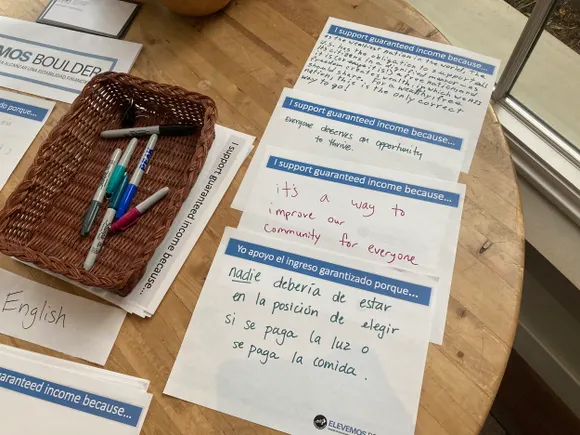
Boulder, Colorado, reported that its 2023 pilot program, which provided 200 residents facing extreme poverty with $500 per month for two years, did not have a clear impact on recipients' employment status. This means the program may not necessarily help them achieve long-term financial security, a city-funded report said. At the same time, the program also did not bring significant improvements in recipients' ability to pay for medical care, childcare, and transportation.
Nevertheless, the impact of direct payments on recipients was "significant and immediate," said Elizabeth Crowe, deputy director of Boulder's Housing and Human Services Department.
The report noted that nearly one-third of recipients sought additional education or training during the program, and the program also helped recipients buy food, pay for housing and utilities, and pay off debt.
Crowe said that once basic needs were met, participants were able to relax a bit and stop worrying about supporting their families or paying rent. They could spend more time with their children and engage in supportive work and social environments because they could give up extra gigs.
The program showed that people with less money "can be trusted to make truly wise decisions for themselves and their families, thereby meeting basic needs and making progress," Crowe said.
"A good use of our money"
Bogle said that many cities, while responding to spikes in homelessness and evictions after the pandemic, used federal funds from the 2021 American Rescue Plan Act to set up unconditional basic income programs to help fill gaps in household budgets.
These city mayors saw that during the pandemic, some low- and middle-income people saw their lives improve because the extra income from federal economic security payments allowed them to stay home with their children, she said.
This led some mayors to believe that unconditional basic income programs are "a good use of our money, because we know that when citizens lack basic income, they suffer," she said.
Boulder's guaranteed income program showed that people with less money "can be trusted to make truly wise decisions for themselves and their families, thereby meeting basic needs and making progress."
Elizabeth Crowe
Deputy Director, Boulder Housing and Human Services Department
Programs have launched in communities large and small, including Austin, Texas; Evanston, Illinois; Louisville, Kentucky; and Los Angeles County. Each city and county has developed its own process for determining recipients, Samra said.
Some cities target residents based on area median income, admitting those who are not considered poor, may not qualify for other federal assistance, but still struggle due to the high cost of living in the community, Samra said. Others target specific vulnerable groups, such as single parents and caregivers, youth aging out of foster care, and survivors of domestic violence, she said.
For example, Birmingham, Alabama's program targets single mothers, Samra said. Santa Fe, New Mexico's program provides payments to community college students; Gainesville, Florida targets people with incarceration histories.
Monthly payments typically range from $500 to $1,000, although some are as low as $300, Bogle said. They usually last one to two years.
Overall, according to research estimates from Mayors for a Guaranteed Income, the University of Pennsylvania, and Stanford University, 35% of cash expenditures in unconditional basic income programs go to retail and services, 32% to food and groceries, and 9% to housing, utilities, and transportation.
Several Republican-led states, including Iowa and Texas, have banned or are trying to ban cities from launching unconditional basic income programs, arguing that they make people dependent on government.
Despite this, some cities are continuing or even expanding their programs based on initial success. Cities such as Richmond, Virginia; Tacoma, Washington; and Madison, Wisconsin have expanded their programs beyond the initial recipient groups.
In November of this year, Cook County, Illinois, became the first county in the United States to establish permanent funding for unconditional basic income, following the successful operation of its $42 million pilot program, which provided more than 3,000 residents with $500 per month for two years.
Overall, unconditional basic income program participants are "more likely to find long-term employment, pursue further education, and improve household economic security," Samra said. "No pilot has shown a decline in employment."
"A better member of the community"
In Minneapolis, 200 low-income residents who received $500 per month for two years through a pilot program were able to address immediate needs such as food, housing, and utilities, pay off debt, increase savings, and improve mental health, said Mark Brinda, the city's workforce development manager.
"In the short term, we did see some immediate needs being met fairly effectively," Brinda said.
But the program did not improve labor supply, according to a report by the Federal Reserve Bank of Minneapolis that reviewed the pilot's impact.
Brinda said that an extra $500 per month for two years does not necessarily prompt recipients to enroll in vocational training or start a new career, because participants often prioritize immediate needs.
This raises some questions, he said: How long do people need to receive payments before they are stable enough to invest in education and training, or move to higher-paying jobs? What long-term effects would payments beyond two years have on participants?
"Moving from one job to another that might pay more is actually a longer-term process, similar to buying a home," Brinda said.
Bogle noted that in some cases, cities observed slight declines in employment or work hours during the first year of unconditional basic income programs. Some people gave up extra gigs after receiving payments. But that is not necessarily a bad thing, she added.
Bogle said it is unrealistic to expect programs like those in Minneapolis and Boulder to bring about long-term economic stability.
When people fall behind, they use the money to pay off debt, including back rent, and to cover basic needs such as food, including balanced meals. Some people use the economic stability brought by the program to spend more time with their children, or take time off for additional vocational training, she said.
Neither Minneapolis nor Boulder currently has immediate plans to continue their programs. Both programs had budgets of $3 million, primarily funded by the American Rescue Plan Act.
According to Crowe, Boulder is actively fundraising to continue the program, perhaps on a smaller scale. The program succeeded because it brought dignity and trust, which are lacking in government programs that require people to constantly prove their poverty, she said.
Recipients felt "like a better member of the community," Crowe said. "They want to continue living here... They feel seen, heard, and supported, which most government programs do not provide."
