
美国城市应对行人死亡危机:每日20人丧生,多城推进系统性改革
美国每年有超过7500名行人在交通事故中丧生,平均每天约20人。贫困、种族隔离与基础设施缺陷是主因。亚特兰大、芝加哥、波士顿等城市正通过数据驱动、社区参与和街道设计改革应对这一危机。
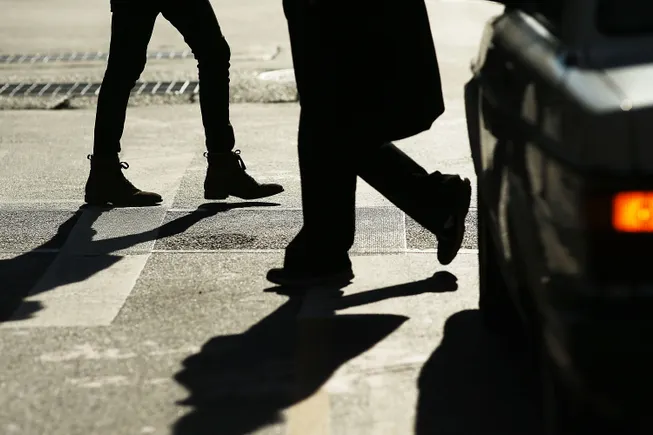
On April 5, 2022, a speeding pickup truck struck and killed a 35-year-old man walking his dog in Houston, making him one of 117 pedestrians killed in the city that year. Eleven days later, in Brooklyn, a driver ran a red light and killed a 31-year-old woman on a crosswalk not far from her home. On a day this spring, a 72-year-old man was struck and killed by a hit-and-run driver on a street in Los Angeles. According to an analysis released in June by the Governors Highway Safety Association, more than 7,500 people were killed by motor vehicles while walking to church, grocery stores, bus stops, or other destinations across the United States last year.
The issue of pedestrian safety—or its absence—is closely linked to larger economic and social forces. "There is a perfect correlation between poverty and danger," said Beth Osborne, director of Transportation for America, a program of Smart Growth America. A report released last year by SGA found that people living in the lowest-income census tracts are 3.3 times more likely to die in road crashes than those in the highest-income areas. According to the 2022 SGA report, low-income communities account for more than 30% of all pedestrian deaths. Black (African American) pedestrians are twice as likely to be killed as white pedestrians.
Black and Latino pedestrians face higher risk of death
A study published this year in the American Journal of Public Health, which examined pedestrian safety in the United States between 2010 and 2019, found "a significant association between historical redlining policies and contemporary neighborhood-level pedestrian death inequities through structural racism." The SGA report said the pandemic exacerbated these inequities, noting that "low-income communities are significantly less likely to have access to parks and other safe walking and recreational opportunities, and are less likely to have sidewalks, crosswalks, and street designs that support safer, slower speeds."
An analysis of fatal pedestrian crash data by Smart Cities Dive shows that even in communities with lower overall pedestrian fatality rates, people of color and low-income individuals die at higher rates than other residents. This article is the first in a series focusing on three cities working to address these disparities and reduce pedestrian deaths. The second article will explore geographic differences in pedestrian fatality rates: the latest data shows that Sun Belt cities have higher pedestrian death tolls than northern cities. The third article will examine federal and state-level barriers that hinder city and regional leaders from reducing deaths, as well as some national and international efforts.

Atlanta: Focusing on "Communities of Concern"
According to data analyzed by Smart Cities Dive, pedestrian deaths in the city of Atlanta more than doubled in two years, rising from 14 in 2020 to 36 last year, ranking its pedestrian fatality rate 10th among large U.S. cities. In this city of 500,000 people, Black and African American residents make up 48% of the population, and the poverty rate is 18.5%, far higher than the national rate of 11.5%, according to the latest U.S. Census Bureau data.
Betty Smoot-Madison, Atlanta's deputy commissioner for strategy and planning, said many neighborhoods lack sidewalk infrastructure, especially those that "heavily rely" on walking, cycling, and public transit. She previously served as director of mobility planning for the Atlanta Department of Transportation. She explained that the city uses data on race, income, age, single-parent households, families with school-age children, and other factors to identify "communities of concern" under its Vision Zero initiative. Vision Zero is an effort to eliminate all traffic deaths and serious injuries among road users, based on the principle that people make mistakes, so roads should be designed and managed with that in mind.
In 2020, the Atlanta Department of Transportation launched the Traffic Safety Leadership Academy, aimed at engaging community members and educating them on "how government works, and how they can become community advocates by bringing in resources to improve road safety," Smoot-Madison said. The program includes five weeks of training, and participants receive a stipend. After attending the academy, residents of the Adams Park neighborhood—identified by the Atlanta Department of Transportation as a "community of concern"—won a grant from Bloomberg Philanthropies for an asphalt art installation to connect sidewalks and improve pedestrian safety near an elementary school, bus stops, and local businesses.
Despite these efforts, Smoot-Madison acknowledged, "As a city, we have a lot of catching up to do, especially when it comes to pedestrian facilities." She said some changes the city wants to make are not within its control, because many of Atlanta's streets are owned by the state of Georgia. The Atlanta Department of Transportation is holding workshops with the Georgia Department of Transportation to review "long-standing state policies that are typically auto- and car-commute-oriented."


Chicago: Community Engagement and Education
In 2022, Chicago was the third-safest city for pedestrians in the United States on a per-capita basis: according to the city of Chicago and an analysis by Smart Cities Dive, 46 people died in traffic crashes last year, down from a spike of 60 in 2021. But that figure masks a more complex story of pedestrian risk. Romina Castillo, director of outreach and engagement for the Chicago Department of Transportation, called Chicago "a highly segregated city." She said the neighborhoods with the worst pedestrian death tolls are mostly in the city's West, Southwest, and South Sides. These areas have higher poverty rates and more Black and Hispanic residents than the North and East Sides.
Since 2001, the Chicago Department of Transportation has engaged with schoolchildren and seniors through its Ambassador Program to educate them on pedestrian and cycling safety. The city has also committed to a Vision Zero initiative and developed a Vision Zero action plan in 2017. "The key is building strong relationships with community leaders and everyday residents to best understand their transportation priorities," said Michael Kent, Vision Zero coordinator for the Chicago Department of Transportation.
Kent said lowering speed limits and adding curb extensions to slow right turns at intersections have been effective in calming traffic, but he takes a broader view of road safety. "Having safe streets is directly related to many other issues," he said, including land use, economics, social issues, "and ultimately the 100 other factors that influence how people behave on the road."

Boston: Safest but Disparities Persist
For pedestrians, the safest large city in the United States is Boston. This city of nearly 700,000 people has a long history. Europeans first settled here around 1630, and many of Boston's streets remain winding and narrow, limiting speeds and enhancing walkability. It is also one of the most traffic-congested cities in the world, according to Inrix.
According to Smart Cities Dive's analysis, five pedestrians died in traffic crashes in Boston in 2022. From 2012 to 2022, Boston recorded 63 pedestrian deaths—fewer than the number of deaths in Memphis, Tennessee, in just the last year. Brendan Kearney, co-executive director of WalkMassachusetts, explained that many of Boston's streets "are not wide, straight, and fast." And because many residents walk, bike, and use public transit, drivers are accustomed to watching for other road users, he said.
As early as 2001, Boston issued a residential street pedestrian safety guide, which the document said was part of "a long history of implementing pedestrian safety improvement strategies." The city provides an online dashboard showing crash and fatality data for pedestrians and cyclists, updated monthly.
But Boston also has a long history of race-based restrictive real estate covenants and redlining, followed by "white flight" to expanding suburbs. According to an analysis of 2020 Census data by the Othering & Belonging Institute at the University of California, Berkeley, the city ranks 20th in segregation among U.S. cities with populations over 200,000.
Last year, 71% of pedestrian deaths in Boston occurred in environmental justice communities, which the state defines based on median household income, the proportion of minority residents, and the proportion of households that speak English "less than very well."
In a 2021 Streetsblog analysis of 210 motor vehicle crashes in Massachusetts between 2018 and 2020 that killed pedestrians or cyclists, 25% occurred in communities with above-average Black (African American) populations. "It's those places that have experienced disinvestment, that have been historically redlined," that have the highest pedestrian fatality rates, Kearney said. "Now, what's the next step? How are we going to focus on these issues and address them, invest in the injustices of the past?"