
Waymo 为冬季天气部署无人驾驶出租车做准备
Waymo 正将其无人驾驶出租车服务拓展至冬季气候严酷的美国东北部城市,包括华盛顿特区、波士顿、纽约和费城。此前其运营主要集中在气候温和的亚特兰大、洛杉矶、凤凰城、旧金山和奥斯汀。专家指出,在东北部收集“四个季节的数据”对安全至关重要,而 Waymo 尚未验证其在积雪环境中进行完全无人驾驶的能力。
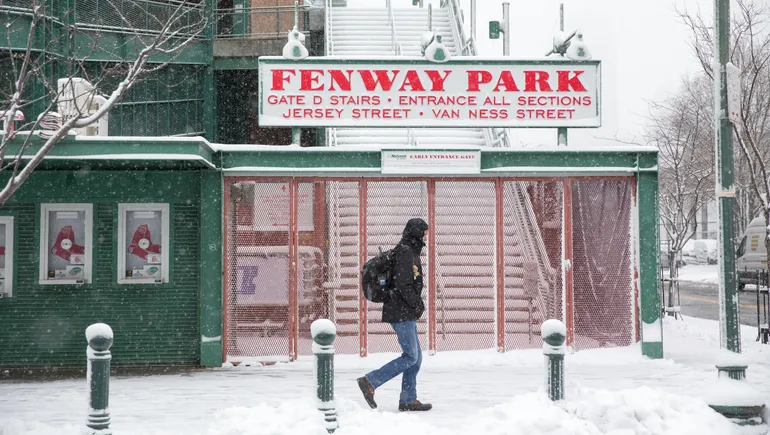
Waymo plans to bring its driverless taxi service to Washington, D.C. next year and is conducting autonomous driving tests with safety drivers in cities such as Boston, New York City, and Philadelphia. These cities may all experience harsh winter weather. To date, Waymo's operations have been mainly limited to milder climates, including Atlanta, Los Angeles, Phoenix, San Francisco, and Austin, Texas. These expansions could test how its autonomous vehicles perform in snow, freezing rain, and long nights.
"Entering regions with vastly different climates will have a significant impact on safety and operational capabilities," said Ben Bauchwitz, a scientist at Charles River Analytics who researches human-centered artificial intelligence. The company focuses on AI and related fields.
Bauchwitz noted that Waymo must first collect "four seasons of data from the Northeast" before offering services to paying passengers. Last winter, the driverless taxi company tested vehicles in upstate New York, Michigan, and Truckee, California. Truckee is a town in the Sierra Nevada at an elevation of nearly 6,000 feet.
"The key to safety lies in situations you didn't anticipate but actually occur," said Philip Koopman, professor emeritus at Carnegie Mellon University and an autonomous driving safety expert, in an interview in January.
Eran Ofir, CEO of autonomous driving software company Imagry, acknowledged that Waymo will face "weather conditions not encountered in the western region." He said these conditions include snow, ice, black ice, strong winds, long nights, and interference from low-angle winter sunlight on vehicle cameras.
Waymo spokesperson Ethan Teicher said in an email that the company is making "significant progress" in developing safe driving capabilities for winter weather. "In the near future, we will treat snowfall like any other cautious driver, and if weather conditions exceed the scope of our technology's capabilities, we will pause operations," he said. "We currently operate in San Francisco, Los Angeles, Phoenix, Austin, and Atlanta, so we have already experienced heavy rain, dense fog, bright light, dust storms, and ice storms."

How autonomous vehicles perceive the road
Waymo's autonomous vehicles rely on multiple types of sensors, includingcameras, radar, and lidar. Before launching driverless taxi services in new cities, Waymo first deploys vehicles driven by human operators tocreate detailed maps of the planned service areas. According to Bauchwitz, the result is that "under any given weather conditions, there is usually at least one sensor data stream that can penetrate the environment."
Since 2023, Tesla vehicles haveused cameras onlyin their Autopilot system. CEO Elon Musk insists that its cameras and AI are the"digital equivalent of eyes and brain"。
Some experts disagree, noting that Tesla's advanced driver assistance system requires human drivers to monitor vehicle behavior and be ready to take over control at any time.
Ofir is more confident in Tesla vehicles' ability to operate in winter weather conditions. He said that map-dependent autonomous vehicles may encounter problems during winter storms, while Tesla's AI system "takes cues from various objects in the surrounding area" and understands what it sees—"the same way we process scenes."
Ofir said that vehicles equipped with multiple sensors need to compare and contrast incoming data, which could delay their reaction times. He said Imagry has practical experience in this regard, having run three pilot projects in Israel usingautonomous buses without map technology. He said the system can respond to events in less than 100 milliseconds, "at least three times faster than a well-trained driver."
Waymo usesartificial intelligence and machine learningas well as sensors to perceive the environment, predict road user behavior, and navigate in real time. In a document dated October 31, 2024, the company said its next-generation architecture will "further push the boundaries of cutting-edge capabilities and AI."
Where Waymo might encounter tricky winter weather
Teicher said Waymo "is ready to serve passengers in Washington, D.C. next year." Earlier this year,Waymo returned to the nation's capitalfor more testing, following a round of tests in 2024, in preparation for upcoming driverless taxi operations. Waymo also announced plans to begin service inDallasnext year. Although Texas is in the Sun Belt, Dallas winters can also bring freezing temperatures, high winds, sleet, and snow.
The company begantesting with human drivers in New York Cityin July. It hasapplied for a permit to operate ride-hailing services in the city, but New York state law prohibits it from operating without a driver. Waymo also begantesting in Philadelphia。
in July. Waymo driverless taxis appeared in Boston in May and June, but according to amedia report, the service faces "deep skepticism, even open hostility" from local leaders. At acity council hearingon July 24, as reported by Boston.com , officials from Mayor Michelle Wu's administration and some city councilors expressed concerns about autonomous vehicles operating in the area.
"Many areas of our city have narrow streets that do not follow a typical grid layout," said Jascha Franklin-Hodge, Boston's director of street affairs, at the hearing. "Compared to other U.S. cities, our pedestrian and bicycle usage rates are among the highest, which adds additional risk and complexity for vehicles."
City Councilor Sharon Durkan, who chairs the Planning, Development and Transportation Committee, expressed concerns about snow, ice, and sleet, and asked Waymo representatives at the hearing: "Is there a scenario... where an autonomous vehicle might decide to operate on the road when it's not safe to do so?"

Waymo driverless taxis "not yet verified in snow"
David Margines, Waymo's director of product management, said the company is testing its autonomous driving technology, called the "Waymo Driver," in snowy environments, adding: "We have not yet verified the Waymo Driver's ability to operate fully driverlessly in conditions such as snow accumulation and snow on the ground."
Bauchwitz said Waymo needs to understand the relevant physics "to predict how driving inputs will react in different types of snow."
Waymo has also faced opposition from organized labor in Boston. Teamsters Local 25 is calling for an ordinance to study the impact of autonomous vehicles on the economy, traffic, and public safety. "Waymo is sweeping through cities across the country, disregarding workers and residents. They are doing this because they want to make trillions of dollars by eliminating jobs," said union president Tom Mari in a statement on July 25.
Franklin-Hodge also raised other concerns, including that Waymo vehicles could interfere with emergency vehicles, double-park when picking up or dropping off passengers, struggle to navigate construction zones, and increase congestion on city streets with empty vehicles. State lawmakers are considering legislation to establish aregulatory framework for driverless taxis and other autonomous vehicles.
The U.S. Department of Transportation released a new autonomous vehicle framework in April, aiming topromote innovation in autonomous vehiclesand "prevent a harmful patchwork of state laws and regulations," the department said in a press release.
Despite the testing, Boston residents may still have to wait a while before riding in driverless Waymo taxis. "Waymo currently has no official plans for a commercial launch in Boston," said Matthew Walsh, Waymo's director of state and local policy for the Eastern region, at the hearing.