
Transit Agencies Face Tough Budget Choices as Ridership Recovery Lags
As public transit ridership remains below pre-pandemic levels, agencies across the U.S. are grappling with budget shortfalls. S&P Global Ratings has downgraded the sector's outlook, and some agencies are considering fare increases or service reductions. Meanwhile, others are exploring zero-fare programs and alternative strategies to balance finances and serve communities.
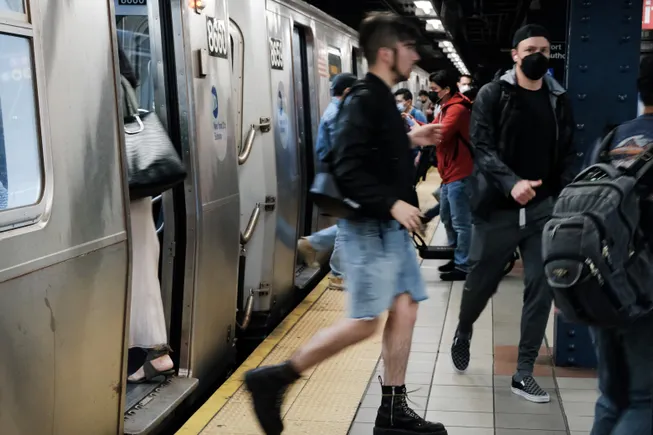
Ridership is returning to public transportation, but not fast enough for agencies that depend heavily on fare revenue to cover operating costs. The shortfall may force fare hikes, service cuts, or both, making 2023 a year of difficult decisions for transit managers.
Federal stimulus funds kept transit running during the worst of the pandemic, and some agencies still hold portions of that aid. However, this month S&P Global Ratings revised its outlook for the public transit sector from stable to negative. The rating agency warned that "some public transit operators face an operating fund fiscal cliff — especially if they are unable to identify new revenue sources or right-size operations reflecting lower expected ridership levels — once the federal assistance aid now compensating for diminished passenger fare revenues is depleted."
Nationally, ridership has recovered to just 70% of pre-COVID levels on average, according to the American Public Transportation Association (APTA). S&P Global Ratings projects ridership will only return to between 80% and 85% of 2019 levels by 2026, noting that transit ridership was already declining before the pandemic. The agency attributes the slow recovery to remote work, as well as concerns about safety, reliability, and service levels.
In major cities, ridership remains depressed. On a typical weekday in January 2023, San Francisco’s Bay Area Rapid Transit (BART) was running at less than 40% of its May 2020 weekday ridership. In Greater Boston, the Massachusetts Bay Transportation Authority (MBTA) reported reaching 59% of average weekday ridership in November 2022 compared with the same month in 2019. The Southeastern Pennsylvania Transportation Authority (SEPTA), Washington Metropolitan Area Transit Authority (WMATA), and Los Angeles County Metropolitan Transportation Authority (LA Metro) are all working to win back riders.

Commuter rail lines are especially struggling. Chicago’s Metra is seeing half the riders it once had. Caltrain, which serves Silicon Valley; Virginia Railway Express; and Southern California’s Metrolink are all down more than 60%, according to data compiled by APTA.
The nation’s largest transit agency, the New York Metropolitan Transportation Authority (MTA), has factored a 5.5% fare and toll hike into its 2023 budget. In a Dec. 21, 2022, press release, the MTA warned that without additional federal, state, or city funds, "service cuts, staffing reductions, higher fare increases, cancellation of capital projects, and/or the faster spend-down of remaining funds" would be necessary to balance the budget.
Similarly, the Chicago transit system projects a $730 million budget gap by 2026. Leanne Redden, executive director of the Regional Transportation Authority of Northern Illinois, acknowledged in December that ridership is unlikely to return to 2019 levels. WMATA has proposed a fare increase for its riders.
Not all agencies face the same pressure. In early January, APTA data showed Seattle’s Sound Transit, the Southwest Ohio Regional Transit Authority, Utah Transit Authority, and Cleveland’s METRO Regional Transit Authority are all near or above pre-pandemic ridership.
"You could say that mobility is a right, and we should start treating it as so."
— Alex Rosander, Program Associate, Shared-Use Mobility Center
Agencies like Dallas Area Rapid Transit (DART) that rely less on fares are less affected by poor ridership. Although total ridership was off 39% in 2022 compared with 2019, DART CEO Nadine Lee said in a November interview that "DART is not struggling financially."
Beyond budget gaps, transit agencies face other challenges. Labor shortages are reflected in the signing bonuses they offer bus operators. Many agencies are investing heavily to electrify their bus fleets. New approaches to better serve communities have led some agencies to redesign bus networks and experiment with alternative fare strategies, including fare capping, discounted fares, and eliminating fares.
Transit is essential for many communities, said Alex Rosander, program associate at the Shared-Use Mobility Center, in a phone interview. "You could say that mobility is a right, and we should start treating it as so."
Zero-fare public transport programs, such as the one Kansas City started citywide in 2020, aim to increase ridership and improve access for low-income communities. When COVID-19 arrived, other cities adopted rear-door boarding for buses to reduce driver interaction with passengers, speed up stops, and address inequities for transit-dependent riders.
Happy fare free bus day from the Route 29. Excited to be here for the start of this two-year pilot on three key routes in Boston. pic.twitter.com/aW1kMgxyEZ
— Jascha Franklin-Hodge (@jfh) March 1, 2022
When Boston Mayor Michelle Wu took office in January 2021, she asked the City Council for $8 million to eliminate fares on three bus lines. A pilot on Route 28, which overwhelmingly serves riders from low-income households, older adults, and people with disabilities, began in August of that year. A report issued in March 2022 found that ridership increased 38%, bringing it back to near-2019 levels. That month, zero fares took effect for at least two years on the three lines Wu requested.
Zero-fare transit can offer other benefits. Candace Brakewood, an associate professor in the department of civil and environmental engineering at the University of Tennessee-Knoxville, said in an interview that fare boxes and fare gates are costly and require staff to maintain equipment and securely retrieve cash payments daily.
On the other hand, with zero-fare transit, "anybody can be using the service, even if they don't actually need to get somewhere, and that could actually detract from other riders who would no longer feel comfortable on the service," said Kari Watkins, associate professor of civil and environmental engineering at the University of California, Davis, in an interview.
As homelessness has grown in many major cities, transit user complaints often focus on people experiencing homelessness who take shelter in the transit system. In New York City, Mayor Eric Adams — a former NYPD captain — has turned to law enforcement and a policy of removing people with mental illness from the transit system. Other agencies, like SEPTA and LA Metro, have added outreach teams to assist homeless individuals with access to shelters and other services.
Consistent, respectful enforcement is essential to addressing the use of transit as shelter, according to a 2016 report from the Transit Cooperative Research Program, but "enforcement alone does not work," the report concluded. Based on a survey of 55 transit agencies, the report found that partnering with social service and nonprofit agencies is essential, and that intake centers at transit stations could be "very effective in persuading individuals who are homeless to seek and accept help." The report also warned that homelessness is beyond the ability of a transit agency to solve alone.
Cities across the country have also experienced increases in crime on public transportation vehicles and facilities. According to a recent study by the Mineta Transportation Institute, the U.S. leads in the number of criminal attacks on public transit among a group of economically advanced countries. New York City subway crime soared 30% last year, according to media reports. Cities and transit agencies have responded with both enforcement and social assistance strategies.
While agencies wrestle with homelessness, crime, equity, labor shortages, and stubbornly low ridership, they still need to find ways to pay the bills while continuing to serve their communities.
In Chicago, RTA’s Redden sees the need for greater public funding. In New York, MTA Chair and CEO Janno Lieber is pleading with federal, state, and city governments to provide more money to avoid fare hikes and service cuts. The MTA is also working through the process of getting traffic congestion pricing approved, which would help fund the agency’s capital projects.
Data compiled by the Eno Center for Transportation identified 16 transit agencies that relied on fares to cover more than 40% of their operating expenses in 2019. Eno concluded that agencies and policymakers "will need to be creative" to find additional revenue sources and attract new kinds of riders.
"At some point, there has to be something that's going to fill in that gap if the ridership is not back to what it once was," Watkins said. "And the hard part about substantial service cuts is that's the No. 1 predictor of [lower] ridership. It's this negative spiral that they don't want to get stuck in."