

Financing climate resilience: 3 ways cities are pivoting as federal funding dwindles
Facing the dual pressures of frequent extreme weather and federal funding cuts, U.S. cities are exploring sustainable financing pathways for climate-resilient infrastructure. A Clark University expert panel pointed out that cities face not only funding gaps but also deficiencies in planning and implementation capacity. This article outlines three response strategies—tiered project design, development of innovative financing mechanisms, and structural community engagement—and cites practical cases from Riverside, California; Massachusetts; and ICLEI USA.
Financing climate resilience: 3 ways cities are pivoting as federal funding dwindles
Facing the dual pressures of frequent extreme weather and federal funding cuts, U.S. cities are exploring sustainable financing pathways for climate-resilient infrastructure. A Clark University expert panel pointed out that cities face not only funding gaps but also deficiencies in planning and implementation capacity. This article outlines three response strategies—tiered project design, development of innovative financing mechanisms, and structural community engagement—and cites practical cases from Riverside, California; Massachusetts; and ICLEI USA.

Fair housing construction accessibility complaints now have a deadline, HUD says
The U.S. Department of Housing and Urban Development (HUD) announced on Tuesday that it will limit the time to file accessibility violation complaints under the Fair Housing Act for multifamily housing design and construction to one year after the initial certificate of occupancy, reclassifying such violations as discrete acts rather than continuing violations. The National Association of Home Builders views this as adding certainty, but the National Fair Housing Alliance argues it weakens the rights of people with disabilities.

AI oversight still lacking in NYC despite city progress: state audit
The New York State Comptroller's Office released a follow-up audit report on August 27, indicating that New York City has made some progress in artificial intelligence governance, but multiple areas still require improvement. The report states that the NYC Office of Technology and Innovation has only partially implemented the three recommendations from the 2023 audit, and has not yet completed key tasks such as AI tool approval requirements, data quality assurance, and accuracy and bias monitoring.
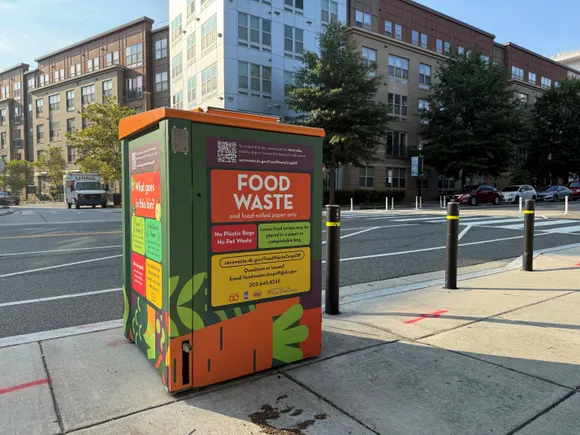
Food waste collection for multifamily housing expands in D.C.
The Washington, D.C. Department of Public Works announced that 20 new sealed smart food waste recycling bins will be installed citywide this fall, bringing the total to 51. Since the program began in 2024, residents have deposited over 1 million pounds of food waste through the network. The project focuses on serving residents of multifamily housing, addressing their lack of composting access. The city is also advancing complementary measures such as battery recycling and transfer station redevelopment to support its zero-waste goal by 2040.
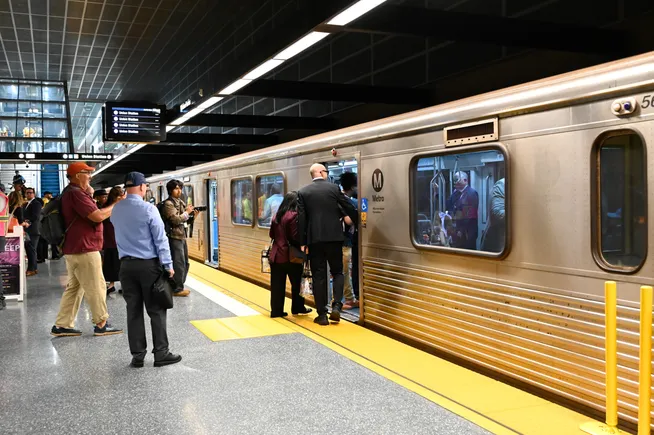
Ridership up, crime down on LA Metro transit system
Latest data from the Los Angeles County Metropolitan Transportation Authority (LA Metro) shows that as of July 2025, system ridership has grown for eight consecutive months, driven mainly by new line openings, World Cup events, and improved safety conditions. Meanwhile, violent crime within the system fell 6.7% year-over-year, and the homeless population decreased by 57% compared to 2024.

Local government is fragmented. Here’s how AI is helping residents navigate it.
Local government departments are numerous and functions are dispersed, and residents often struggle because they are unclear about which department to contact. Today, AI virtual assistants are changing this situation: Mari in Maricopa County can answer questions about adopting pets across websites, while DC Compass in Washington, D.C., can search thousands of datasets and generate maps. These tools not only serve residents but also assist internal government decision-making, making data access more equitable and convenient.
Local government agencies are dispersed, AI assistants help residents navigate efficiently
To help residents cope with fragmented municipal websites, multiple U.S. cities and counties have launched AI virtual assistants. Tools such as Mari in Maricopa County and DC Compass in Washington, D.C., support natural language queries, provide conversational responses, links, and maps, and integrate cross-departmental data to streamline access to public services.

Cityfi joins CannonDesign to broaden design’s role in shaping cities of the future | Smart Cities Dive
CannonDesign announced that Cityfi, a strategy and innovation firm focused on the future of cities, transportation, and public life, has officially joined its advisory business. The Cityfi team will retain its original name and integrate into CannonDesign's advisory framework, providing clients with full-chain support across policy, funding, and implementation, while strengthening CannonDesign's comprehensive service capabilities in health, education, commercial, and public sectors.