
Intercity Buses: From Transportation's Overlooked Stepchild to a Renewed Urban Priority
Intercity buses, often overlooked in U.S. transportation planning, are experiencing a resurgence. In 2023, they carried 50 million passengers—75% more than Amtrak—and reached three times as many destinations. With new terminals in Atlanta, Dallas, and Boston, and ongoing efforts in Philadelphia and Chicago, cities are recognizing the mode's value. However, challenges remain, including aging infrastructure and the need for better intermodal connections.
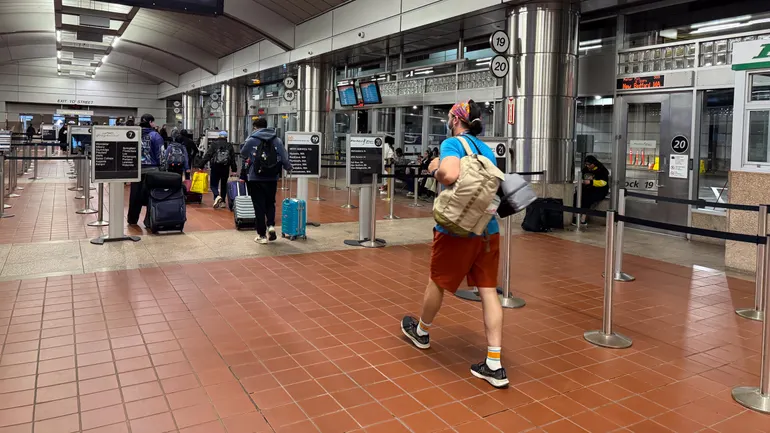
Intercity buses have long been regarded as the neglected stepchild of the transportation family. “If a stakeholder doesn't ride the bus, they don't think about the bus,” said Kaitie Czuchaj, head of government affairs at Flix North America, in an interview. This perception, however, is shifting as ridership climbs and cities invest in modernizing bus terminals.
The industry faced a severe downturn during the COVID-19 pandemic, and recovery was uneven. In some cities, conditions worsened for bus riders after Greyhound’s acquisition by FlixMobility in 2021, which did not include most of its bus stations. Many passengers were left waiting on curbsides for buses arriving from distant cities, lacking shelter and basic amenities.
Jim Jalbert, owner and president of C&J Bus Lines, is critical of curbside stops. “What kind of experience is it for a customer who sits out in inclement weather on a street corner … or who has to wait in the cold and doesn't have a safe environment from which to travel to and from?” he asked.
Despite these challenges, intercity bus ridership is on the upswing. In 2023, intercity buses carried approximately 75% more passengers than Amtrak—50 million compared with 28.5 million—and served more than three times as many destinations. This growth underscores the mode's importance in the U.S. transportation network.
“The flexibility of bus — both in the urbanized and non-urbanized areas — is critical.”
Jim Jalbert, Owner and President, C&J Bus Lines
A 2024 report from the U.S. Department of Transportation’s Climate Change Center highlighted the benefits of intercity buses, citing their “competitive pricing, flexible schedules, and a viable alternative for those seeking to reduce their environmental impact.” The report also emphasized that “successful intercity bus networks rely on strong local, State, and private sector collaboration,” recommending that state and local agencies invest in bus stops with adequate shelter and amenities, as well as transit hubs that facilitate seamless transfers among modes.
Some intercity bus operators already own their stations. C&J, which serves New Hampshire and Massachusetts with routes to New York City, owns its primary terminal in Portsmouth, New Hampshire, and completed a new facility in Seabrook, New Hampshire, in 2020. The company also uses Boston’s South Station and the Port Authority terminal in New York City. Jalbert emphasized the critical role of bus flexibility in both urban and rural areas.
Public bus stations represent an “efficient use of public resources,” according to Czuchaj. “Taxpayer dollars, federal resources, have gone into building these beautiful facilities, and when intercity bus [lines come] in, we contribute to operating expenses.”
Cities are taking note. Several are renovating and expanding bus terminals or adding bus facilities to existing intermodal stations, enabling riders to connect more easily with public transit. Below is a status update on intercity bus stations in eight major U.S. cities.
Boston
Boston’s South Station serves Amtrak and Massachusetts Bay Transportation Authority commuter and subway trains. An adjacent bus terminal is nearing completion as part of a multiyear project to modernize and increase capacity by more than 50%. Once finished, new escalators, stairs, and elevators will improve connections between the bus and train terminals, making transfers easier for passengers.
“Boston's done an awesome job,” said Peter Picknelly, CEO and chairman of Peter Pan Bus Lines, which serves Northeastern cities including Boston. The renovated terminal brings better connections among the bus lines that serve Boston, he added.
New York
In New York City, the 75-year-old Port Authority of New York and New Jersey’s Midtown Bus Terminal near Times Square will be replaced with a new 2.1 million-square-foot, $10 billion facility on the same site. The project includes a new entrance along a closed section of 41st Street and a “simplified connection” to the subway network.
“We're very supportive of enlarging the Port [Authority bus terminal], offering more gates,” Picknelly said. Currently, “there's virtually no layover space,” where buses wait between trips, “so you’ve got to drop off and get out, and then it's really hard to find places to park [your bus].”
Atlanta
Last year, a new 14,000-square-foot Greyhound terminal opened in Atlanta with funding from the Federal Transit Administration. The two-story facility includes eight bus slips and connections to Metropolitan Atlanta Rapid Transit Authority rail and buses. Greyhound partnered with the Georgia Department of Transportation on construction and now manages the facility, according to Czuchaj.
“It's also open to other intercity bus providers,” Czuchaj said. “When you start building a public-private partnership or a public infrastructure solution, all providers should have the opportunity to come.”
Dallas
Flix North America, the parent company of FlixBus and Greyhound, will move its main Dallas bus station from an older downtown Greyhound station to a new intercity bus terminal in northwest Dallas next month. The facility, adjacent to a Dallas Area Rapid Transit station, will become the company’s primary hub in the Dallas-Fort Worth metropolitan area.
“This new terminal offers better connectivity for DFW-area travelers and reflects our commitment to multimodal solutions,” Kai Boysan, CEO of Flix North America, said in a statement.

Los Angeles and Washington, D.C.
Czuchaj said intermodal stations are the most important passenger benefit, pointing to Los Angeles Union Station as a prime example. Greyhound and FlixBus operate from the downtown facility, which also offers connections to Amtrak, Metrolink commuter rail, light rail, local bus lines, and an express bus to Los Angeles International Airport.
“We've only grown since we've moved into [LA] Union Station,” Czuchaj said. She also cited the bus terminal at Washington, D.C.’s Union Station, which connects Amtrak, Maryland and Virginia regional commuter trains, the Washington Metropolitan Area Transit Authority subway, and local and intercity bus lines.
Philadelphia
Philadelphia and Chicago lack modern public bus stations. Peter Pan stops at two Philadelphia locations: an intersection a few blocks from Amtrak’s 30th Street Station and another at the Spring Garden station for the regional subway system, SEPTA, where Greyhound also stops.
Peter Pan’s Picknelly said he’s working with the Philadelphia city government to expand both locations. He offered to buy a possible site and lease it back to the city, according to WHYY. The best the city could offer in a May City Council meeting was that they would begin community engagement on a permanent site this fall, extending into next year. The city has hired a consultant to evaluate potential locations.
Chicago
Greyhound’s lease on its Chicago bus terminal expired last fall, although Flix continues to use the facility on a month-by-month basis. The city of Chicago has joined discussions around a permanent solution for intercity bus passengers. “People are finally coming together,” Czuchaj said. “There has been no disruption in service, and I don't see one coming, either.” She expects to see “a successful end to that project.”