
Elderly people use technology to cope with the 'loneliness epidemic'
During the pandemic, American seniors have maintained social connections through technologies such as virtual centers, and local governments and nonprofit organizations are working to bridge the digital divide to address the physical and mental health harms of loneliness.
Editor's Note:U.S. Surgeon General Vivek Murthy announced on May 2 that the United States is facingan "epidemic of loneliness and isolation". To this end, the editorial team of Smart Cities Dive hopes to republish this January 2022 report, focusing on how communities addressed loneliness among older adults during the pandemic.
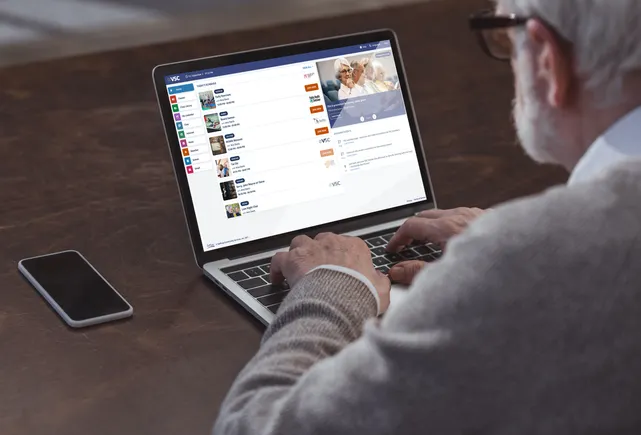
Before the pandemic, Susan Schwitzer, a New Jersey resident and senior citizen, did not know what Zoom was. Now, she is sometimes on "Zoom" from 9 a.m. to 9 p.m., participating as an active member of a virtual senior center operated by Selfhelp, a New York nonprofit that provides human services to older New Yorkers, including Holocaust survivors.
Schwitzer said that in the early days of the pandemic, she grew tired of watching movies and TV shows all day. "There are only so many books you can read," she said. After joining the virtual center, her days were filled with online socializing and classes covering chair tai chi, self-care, history, crime mysteries, and computer classes. It was like "opening up a whole new world," she said. The center helped her stay connected with the outside world.
The internet and related technologies were crucial during the pandemic for keeping older adults, including Susan and her friends at the center, connected.
As the COVID-19 pandemic approaches its second anniversary, cities are preparing for a wave of federal broadband investment, and some local leaders are seizing the opportunity to help bridge the significant digital divide facing older adults. Through these efforts, they hope to address what the AARP Foundation and United Health Foundation described in areportreleased last year as an "epidemic of loneliness and social isolation among adults."
Physical and Mental Health Concerns
As the pandemic intensified feelings of loneliness among many city residents, mental health hasrisen to the top concern of U.S. mayors regarding the long-term impacts of the pandemic。
The health consequences of loneliness should not be underestimated. According to the U.S. Centers for Disease Control and Prevention, social isolation can significantlyincrease an individual's risk of premature death from various causes, "a risk that may be comparable to smoking, obesity, and physical inactivity."
Digital isolation can also pose serious health risks. More than 80% of COVID-19 deaths have occurred among people over 65, and 40% of those adultsmay lack access to online resources such as telehealth and social connections, according to a report released in early 2021 by the Humana Foundation and Older Adults Technology Services (OATS). OATS is a New York-based nonprofit affiliated with AARP that trains and mentors U.S. older adults in using technology.
Tom Kamber, executive director of OATS, said that getting older adults online not only benefits their physical and mental health but also the local economy. The nonprofit found that when older adults learn to use technology, they also start businesses, extend their working years, and participate more actively in their communities.

Building Digital Connections
Although the United States still has a long way to go in closing the digital divide for older adults—according to OATS, 58% of adults aged 65 and older have home wired broadband access, compared to 73% of adults aged 18 to 64—the pandemic has spurred many efforts to help older adults get online and stay active in digital communities.
In the early days of the pandemic, OATS was one of many organizations that quickly moved its services online. According to Aaron Santis, who leads the Senior Planet program in Colorado, the organization developed phone hotlines and proactively called older adults to help them use Zoom, ultimately reaching thousands of seniors. Senior Planet is a proprietary program of OATS licensed from AARP.
In addition to moving all programs online, the organization offers tech talks that answer questions such as: How do I use Netflix? What is a podcast? What is cloud storage? It also helps older adults become familiar with their devices, teaching basic functions such as how to use the mute button, said Ryan Kawamoto, regional director of Senior Planet in Palo Alto, California.
OATS has also shown that its programshelp improve social connectedness. OATS' Senior Planet program in San Antonio helps local residents over 60 stay socially connected by providing connected devices for free, technology training courses, and other efforts.
OATS reported that in 2019, 88% of older adults who participated in the program achieved "measurable improvements" in social connectedness. Older adults also reported an average increase of 1.56 "healthy days" per month. Healthy days are aCDC-defined measure of health-related quality of life。
"The solution to loneliness is not just saying we're going to give everyone an iPad. But what are they going to do with it? ... How is it going to enhance their ability to age gracefully?"

Laura Trejo
Director of the Los Angeles Department of Aging
Selfhelp also uses a "loneliness index" to measure how individuals feel at different stages of using the nonprofit's virtual senior center. The center currently has about 1,200 participants on its virtual platform, and it has a direct impact on people's feelings of loneliness and reduces social isolation, said Russell Lusak, chief operating officer of Selfhelp.
While internet and social media use may beassociatedwith feelings of isolation among younger people in certain contexts, this is not always the case for older adults.
Evidence shows that older adults do well psychologically on the internet, and they use it differently than younger people, Linda P. Fried, director of the Robert N. Butler Columbia Aging Center at Columbia University's Mailman School of Public Health, said at aColumbia University aging conferenceearlier this year. The program aims to train journalists about the challenges facing the aging population.
'Deconstructing' Barriers to Going Online
Getting older adults online can be more complex than simply giving individuals devices and teaching them how to use the technology.
"The solution to loneliness is not just saying we're going to give everyone an iPad," said Laura Trejo, director of the Los Angeles Department of Aging. "What are they going to do with it? What programs are there? What content is there? How is it going to enhance their ability to age gracefully?"
The Los Angeles Department of Aging receives an average of $40 million annually from federal, state, and local sources, and aims to "deconstruct" the barriers that hinder digital connectivity for older adults, Trejo said.
For example, many local residents use low-income phone plans that limit their data and the number of calls they can make, she said. These individuals must use their resources very carefully. "How do we make it easier for them to access services?" she asked. "How do we leverage resources coming into the city to expand Wi-Fi so older adults can access it without needing their own data plans?"
To bypass these barriers, leaders in the Los Angeles area aim to adopt an age-friendly perspective. For example, instead of requiring older adults to complete applications online, local leaders mail paper applications, highlight the sections where older adults need to fill in information, and include pre-addressed, postage-paid return envelopes to ensure successful applications.
Lack of familiarity with platforms such as email or social media can also pose challenges for older adults staying connected online.
Sourcewise, the designated area agency on aging in Santa Clara County, California, conducted a "Stay-at-Home Order Impact Survey" last year and found that many local older adults had difficulty accessing technology and entertainment services. Older adults also reported increased feelings of loneliness and isolation due to the lack of regular in-person entertainment programs, said Elizabeth Brown, a regional planner at Sourcewise.
In response to these findings, the agency helped support efforts for local older adults, including Latino and Asian American communities, enabling them to participate in remote programs designed to build technology confidence. Classes include lessons on using devices, Facebook, and email.
"One of the most important resources for getting through the pandemic has been the resilience of older adults."
Tom Kamber
Executive Director of Older Adults Technology Services
Santa Clara County is in the heart of Silicon Valley, so it has a significant responsibility to meet the technology needs of its older adults, she said.
Sourcewise also partnered with Google to provide approximately 1,300 Google Home smart speakers and one year of subsidized internet service to eligible adults.
So far, recipients have used the speakers in various ways, Brown said. Older adults have the speakers tell jokes, check for new movies, or listen to music. Caregivers have also used the speakers to set reminders for loved ones to drink water, take medication, or water plants.
Upcoming Federal Investment
Federal investment may also help more older adults get online and establish digital connections with friends and family.
The federal Emergency Broadband Benefit has helped get older adults online, Trejo said. According to AARP, as of this fall, more than 7 million U.S. householdshad used the benefit, with 40% of those households including individuals over 50.
The Infrastructure Investment and Jobs Act willinvest $65 billionin expanding broadband. Of that,$14.2 billionwill make the Emergency Broadband Benefit permanent in January, renaming it the "Affordable Connectivity Program." The revised program will provide eligible households with $30 per month, instead of the current $50.
Federal investment can also help older adults purchase new devices. Eligible households canreceive a one-time discount of up to $100to purchase a laptop, desktop computer, or tablet under certain conditions.
Despite these efforts, "urban internet deserts" still exist, said Majd Alwan, director of the LeadingAge Center for Aging Services Technologies. The application process itself can be a barrier to certain services, he said. For example, certain discounted internet applications are designed to be completed by individuals, whereas in some cases, it would be more efficient for affordable housing providers to apply for services in bulk on behalf of individuals, Alwan said.
Looking ahead, as federal and local leaders continue to address these challenges and adapt to the pandemic, OATS' Kamber said these leaders should focus on older adults in their communities.
"One of the most important resources for getting through the pandemic has been the resilience of older adults," Kamber said. "They lived through Watergate; they lived through the Vietnam War; they lived through 9/11."
As we come out of COVID, are we just going to go back to senior centers and play bingo? he asked. How can a smart city use the lessons learned over the past two years to adjust funding and local programs to strengthen and capture the energy and creativity of older adults?