
Cities Race to Declare Climate and Housing Emergencies, but Do Declarations Really Bring Change?
This article explores the phenomenon and actual impact of emergency declarations issued by multiple U.S. cities on issues such as climate change and housing crises. Using Hoboken, multiple cities in Minnesota, and San Diego as examples, it analyzes how declarations drive specific policies, funding, and accountability, and points out that many challenges remain in moving from rhetoric to action.
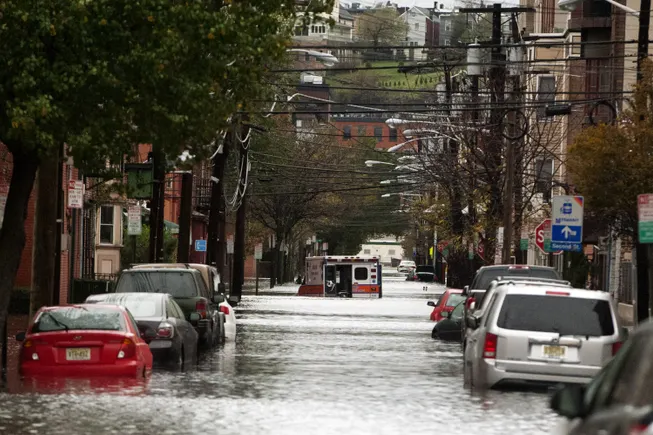
Hoboken, New Jersey, knows firsthand the impacts of global warming. As a coastal city along the Hudson River in the New York metropolitan area, Hoboken is heavily affected by increasing rainfall. After Hurricane Sandy in 2012, the city received federal grants to build levees.
In 2017, Hoboken declared a climate emergency, becoming the first city in the United States to do so.
"We declared this emergency recognizing that we had been adapting to the impacts of climate change for quite some time—I think since about 2010," said Jen Gonzalez, Hoboken's Director of Environmental Services and Chief Sustainability Officer. "But then we realized we needed to go beyond adaptation and look at mitigating our contributions to climate change."
Gonzalez said the city is now working to reduce greenhouse gas emissions to lessen the adaptation work needed in the future.
Hoboken is just one of many cities that have issued declarations in recent years on persistent social, economic, and environmental issues. The Evanston, Illinois, City Council recently approved a climate emergency resolution. Milwaukee County, Wisconsin, and New York City have also passed declarations recognizing racism as a public health crisis. Portland, Oregon, and Miami-Dade County, Florida, have declared housing and affordability emergencies.
Whether these declarations are public relations gestures or catalysts for real change depends on local governments and their subsequent implementation.
Climate change becomes a policy priority
Hoboken's declaration spurred the city to develop a climate action plan and conduct a greenhouse gas emissions inventory. Two years after the declaration, the city completed this work.
Gonzalez said the inventory showed that residential and commercial energy consumption combined were the largest sources of Hoboken's greenhouse gas emissions, so the city took steps to shift to more renewable energy supplies. These measures included converting municipal facilities to 100% renewable electricity and launching a program for residents to make their home electricity use 10% more renewable than state requirements. The city also allows homeowners to choose up to 100% renewable electricity. Additionally, it launched a community solar program enabling low- and moderate-income residents of the Hoboken Housing Authority to use electricity generated by solar installations on a nearby warehouse roof.
Keeping the climate resolution on the official record shows that city leadership values climate action, Gonzalez said. "It's something we're committed to putting resources toward," she said.

Many cities followed Hoboken's lead and issued their own climate declarations. But in Minnesota, more than a dozen cities joined forces.
The Minnesota Cities Climate Caucus was formed to let local elected officials share policy best practices and have a greater influence on climate change issues at the state level. Larry Kraft, the caucus's organizer, recalled a series of extreme weather events in recent years, including drought, rising temperatures, and days when summer air quality made it impossible to go outside due to wildfire smoke.
Kraft said a declaration involving multiple Minnesota cities would be an opportunity to mobilize around the crisis. He is a citywide council member in St. Louis Park, a Minneapolis suburb.
"There are a lot of cities acting individually," he said, "but if we act together, or many of us act at the same time, we can have a greater impact within our own communities, drive more action and visibility, and also achieve the goal of greater influence at the state level."
Kraft said earlier this year, 18 Minnesota cities and one county signed the declaration. These include rural and suburban cities, which helps bridge the urban-rural divide.
Although the resolution template provides cities with suggested actions they can take based on community needs, it carries no formal authority. Kraft said getting so many cities to sign a binding declaration would take more time and reduce the flexibility for each city to tailor its approach.
Kraft said one of the declaration's goals is to gain more funding and technical support from the state. Some smaller cities do not have dedicated sustainability staff.
Kraft's city has launched multiple initiatives. St. Louis Park offers additional incentives for people who install solar panels, which has increased the community's solar capacity. Residents can also take advantage of home energy audit services, where professionals from the nonprofit Center for Energy and Environment visit homes to make energy efficiency improvements. They seal doors and windows, replace light bulbs, install low-flow showerheads, and generate energy reports. Because St. Louis Park subsidizes the program, the service costs between $35 and $50.
Kraft said commercial uses account for about 60% of the city's emissions, so another program offers free energy audits for businesses.
Government declarations of climate emergencies are not new. For example, the 1997 Kyoto Protocol was an international agreement to reduce greenhouse gases. But Rushad Nanavatty, managing director of urban transformation at RMI, said things are different now. He said declarations like the Kyoto Protocol were driven by political movements, while today's declarations come from people who have experienced climate change impacts firsthand through events like heat waves and floods.
"Now it's all very, very tangible. I think that's probably the difference from past periods of declaration surges," Nanavatty said. "It's related to cities and communities around the world seeing and feeling the impacts very directly now. Climate change is no longer abstract for anyone."
Declarations are necessary to signal leadership commitment and give city staff the mandate to act differently, he said. But translating those commitments into concrete action is more difficult.
Nanavatty said a mayor or city council issues a declaration, but it's really up to the city's energy manager, public works department, or other departments to figure out how to achieve the goals.
For example, when the public works department needs to repave a road, it typically uses the lowest-cost asphalt. Nanavatty said if climate is a priority, the department is more likely to choose a solution that reduces the urban heat island effect or helps with stormwater management.
But often after major declarations, city staff face a lack of funding and technical knowledge.
"A declaration from leadership matters because it helps boost morale. It signals to every department within the city that this is a priority," Nanavatty said. "But that's different from truly embedding climate logic into decision-making."
Holding cities accountable for housing goals
San Diego's homeless population ranks fifth in the United States. The city declared a state of shelter crisis in 2017, 2019, and earlier this year. This allows the city government to suspend some housing, health, and safety laws in order to create more shelter space for homeless residents.
But San Diego's city council president believes the declaration is less a solution than a way to reduce harm.
"We need declarations like this to respond to the shelter crisis, which is a failure of public policy," said Sean Elo-Rivera. "From a public health policy perspective, from a social perspective, many things went wrong that led us to a place where the best we can do right now is dramatically cut red tape and create shelter opportunities."
Elo-Rivera said the declaration allowed San Diego to quickly convert Golden Hall, a convention center next to City Hall, into a shelter. It also increased the number of city-funded shelters. According to data provided by the city, the number of beds has nearly tripled compared to 2017, now at 1,468.
He said the value of the declaration is not just in making it easier to create shelters, but also in providing a benchmark for residents to hold city officials accountable.
"When a city takes action and puts its name on something, it creates a different level of accountability," he said. "If we're not making enough progress, especially on shelter, I think it really gives residents and advocates a tool to say: 'Look, you put your name on it. You declared a shelter crisis. Why haven't you taken more decisive action to address this crisis?'"
Maxwell Palmer, associate professor of political science at Boston University, said declarations can draw attention to issues like housing and also signal to activists that their concerns are being taken seriously.
But whether declarations achieve results beyond short-term media attention depends on the city and its follow-through.
"Mayors give speeches all the time laying out policies and priorities," Palmer said. "But moving from rhetoric to action is complicated, and there are many obstacles. I'm not sure declarations are any different from other types of speeches."
How to make declarations go beyond a starting point for conversation
To ensure declarations are not just talk, cities need to follow up with action.
Kraft said the Minnesota Cities Climate Caucus continues to meet monthly and track progress. He hopes the state government will pay more attention. There is a state bill that, if passed, would provide $5 million in grants for city climate action plans. Additionally, leaders of several state-level commissions have attended caucus meetings, which Kraft said did not happen before the declaration.
"This isn't a one-time thing," he said. "You have to understand why you're doing it and stay focused and follow through."
Elo-Rivera said city leaders also need to communicate to residents what the city government has achieved.
Hoboken's Gonzalez emphasized the importance of community engagement. For example, when residents expressed concerns that flood protection projects would block Hoboken's waterfront views, the design was changed.
Nanavatty said governments must be willing to invest real political capital in substantive actions that face opposition.
"Few people will oppose high-level declarations about the importance of climate action," he said. But reforming zoning policies, ending highway expansions, giving more street space to public transit, and criticizing poor utility planning decisions often anger many people and industries.
"Those are the things that can have truly enormous impacts, and they require much more political courage and political capital than declarations do."