
Ithaca Uses Private Equity Fund to Electrify 6,000 Buildings and Cultivate Regional Green Workforce
Last year, the city of Ithaca announced a comprehensive decarbonization plan targeting the electrification of 6,000 buildings by 2030. The city, in partnership with BlocPower and Alturus, leverages approximately $105 million in private funds, using securitization to reduce upfront costs, and plans phased implementation. The project faces challenges such as labor shortages and grid upgrades, but it has the potential to serve as a blueprint for other cities.
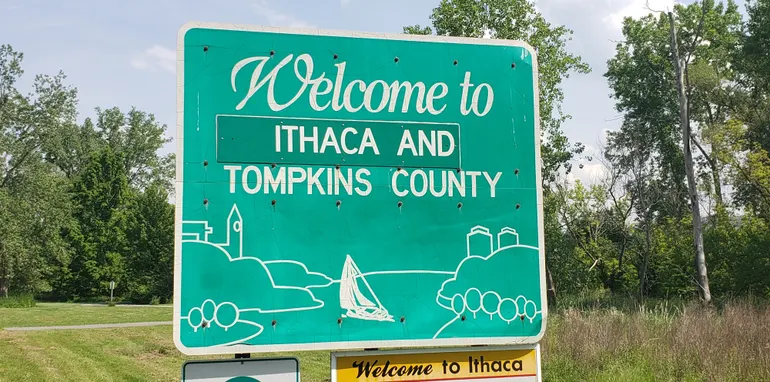
Ithaca, New York, made headlines last year when its city council voted tofully decarbonizeTo meet the 2030 goal, it will require decarbonizing the grid, electrifying transportation, and deploying heat pumps across the city's 6,000 aging commercial and residential buildings.
Ithaca is known for its progressive politics — in the 1990s, for example, the city pioneeredtime-based currencyto stimulate local spending. But according to Sustainability Director Luis Aguirre-Torres, the decarbonization plan is one of its most ambitious efforts.
"When I came to Ithaca last year... my task was to develop a plan to decarbonize in eight years. I told the mayor: 'You're crazy. This is very difficult to achieve,'" said Aguirre-Torres, who took office in April 2021.
Ithaca's plan is "innovative," said the executive director of the Building Decarbonization Coalition,Panama Bartholomy(Panama Bartholomy), and is an example of work many cities are exploring.
"It's encouraging to see a city take a holistic approach to buildings rather than adopting more passive policies," Bartholomy said. "Every major city in the U.S. is now trying to figure out the right model."
About 40% of Ithaca's homes are over 100 years old, and the city says fully retrofitting each building could cost $600 million. So how does a city of about 30,000 residents with anexpected revenue of about $80 millionfinance such an ambitious project?

Installing heat pumps and making other efficiency improvements makes economic sense for some buildings: energy savings will pay for the improvements. Other projects may come close to breaking even, or may not be profitable at all. In any case, savings accrue slowly. So, to decarbonize all buildings, the city is aggregating building portfolios to manage project risk, then securitizing the projects to attract private capital.
"Similar to the way the mortgage crisis happened," Aguirre-Torres said. But he was quick to add that the plan is also very different because the number of aggregated buildings is relatively small.
"Some [buildings'] numbers work, some don't. But ultimately, as a whole, it works for investors," Aguirre-Torres said. He explained that the program is essentially a way to cover the upfront costs of building improvements and turn them into "electrification as a service," generating long-term leases or low-interest long-term loans.
Ithaca's decarbonization plan investors are Brooklyn-based climate tech company BlocPower and Boston-based private equity firm Alturus. Together, the two companies have committed about $105 million to provide low- or zero-interest loans to residents and businesses for heat pumps and other electrification technologies, with BlocPower serving as program administrator and leveraging its expertise in building energy use analysis.
"This is a unique opportunity to build a blueprint for how to accelerate the adoption of all technologies," said the head of strategic partnerships at Alturus,Tommy Freeman(Tommy Freeman), at the AprilBloomberg Green Summit.
But how will these companies help Ithaca decarbonize? What does the city need to achieve its goals? And are there concerns about using private equity funds?
The 'simple' challenge of building electrification
Aguirre-Torres said Ithaca emits about 400,000 metric tons of carbon dioxide annually, with about 40% from buildings, 40% from transportation, and 20% from waste and other sources.
2021 energy codes will soon prohibit gas connections in new Ithaca buildings, "so my job is simple," Aguirre-Torres joked: figuring out how to make existing buildings carbon-neutral.
Conversations with local efficiency and construction firms and nonprofits led to an estimate of $50,000 per building on average to retrofit and electrify Ithaca's residential buildings. That figure includes multifamily and single-family homes and is an average cost per building (not per unit). For commercial buildings, retrofits average $70,000, including electrical panels and wiring to the utility pole.
Aguirre-Torres estimates at least 1,000 buildings are needed to achieve the necessary economies of scale, reducing the cost of electrification components and labor, and giving the city bulk purchasing power to negotiate heat pump prices.
But because of differences in loan underwriting for commercial and residential buildings, financing must be executed separately. So, to gain economies of scale, Ithaca developed a plan to first retrofit 600 commercial buildings and 1,000 residential buildings over the next three to four years. The remaining 4,400 buildings will be addressed in a second phase.
BlocPower raised the equivalent of $55 million for the initial electrification work, while Alturus committed $50 million.
Financing structure
Even with financing in place, setting up the Ithaca project is complex, especially on the residential side.
The actual work — replacing gas appliances with electric ones — is "straightforward," Bartholomy said. The success of electrification projects comes down to: "Did you run the right financial model? Did you provide the right value proposition to customers and installers?"
New York State's constitution does not allow municipalities to guarantee loans for private parties, so Aguirre-Torres negotiated with the state. "Ultimately we had a loan loss reserve, which basically guarantees loans for low-income people and reduces project risk," Aguirre-Torres said.
State funds and expected incentives are also being used to lower the cost of capital, meaning lower costs for community electrification. To secure federal funds from the American Rescue Plan Act and further reduce risk, the city hired BlocPower as project manager, focusing on customer acquisition and building analysis.
BlocPower will analyze buildings Ithaca wants to decarbonize, develop work plans, and charge a fee, passing customer information to local firms and contractors for the actual work.
"Because we reduced the customer acquisition cost and sales cycle for local companies, they're happy to pay this fee because it's even lower than their [customer acquisition] cost," Aguirre-Torres said.
A community advisory council is also helping BlocPower better understand community needs, Aguirre-Torres said. On customer acquisition, the city of Ithaca is working with community groups, local engineering firms, and Cornell University to identify buildings for electrification.
The need for private equity in decarbonization efforts
Aguirre-Torres said there is some local concern about using private equity to fund efficiency and electrification efforts. Some activists worry that local contractors or businesses will suffer, or that BlocPower and Alturus will profit too much from the deal.
But Aguirre-Torres said there is also growing recognition that private equity funding can be a boon for electrification and efficiency efforts because of the large amounts of capital that can be deployed so quickly. Ithaca's investors may see a 3-4% return on investment, he said, while ultimately enabling the city to decarbonize 1,000 buildings per year.
Experts say Ithaca's approach is a recognition of the urgency of climate change.
"There's no question we're going to need private equity involved in this transition," Bartholomy said. "If you look at the speed and scale of the energy transition, public capital alone — taxpayer or ratepayer money — cannot help us make this journey if we're going to try to meet our goals. We need private capital."
"The key is to really protect homeowners and residents," Bartholomy said.
Alyssa Giachino, campaign and research director at the watchdog group Private Equity Stakeholder Project, said the entire economy needs "creative and aggressive" decarbonization efforts, but using private equity funds can be risky for communities.
"Public entities as public interest managers must establish strict guardrails because private equity has no obligation to the public interest," Giachino said. "They only have obligations to their investors or shareholders. So they have a single purpose, which is to maximize profit."
To alleviate concerns, Ithaca strives to be transparent and financially protect residents from the project's impact. "Funding comes either from taxes, ratepayers, or private sources," Aguirre-Torres said. "Some people think that by using Wall Street money, we're selling out the town."
Ithaca's approach was "validated" in January, Aguirre-Torres said, when Governor Kathy Hochul (D) directed the New York State Energy Research and Development Authority toconsider private equity financing strategiesto electrify buildings in the state. The state wants to develop 2 million "climate-friendly, electrified, or electrifiable homes" by 2030.
Freeman said decarbonization will require hundreds of billions of dollars in global investment.
"If we put this burden on every business owner or homeowner to come up with the upfront investment, it's not going to happen — at least not in time," he said. "This is obviously a bit risky because the city is the first to do this. But that's also what's exciting about it."
Decarbonization pilot will focus on hard-to-reach 30%
Ithaca's electrification project is just getting started, and the city is accepting applications for the first building upgrades. There's been a lot of publicity around the electrification push, which helps spread the word among residents.
The project's success will depend on the city's ability to reach low-income residents and those not immediately interested in the energy transition, Aguirre-Torres said.
The city has early-adopter residents who already drive electric vehicles, and electrification is a natural next step, he said. Similarly, there's a segment that still resists the concept of climate change and is unlikely to make the electrification switch anytime soon.
"That leaves me with about 50%, half of whom are low-income," Aguirre-Torres said. "But I have incentives, even financial incentives, to pay for some of them. So I think it's just about talking to representatives of these communities."
Ultimately, the hard work of decarbonization will depend on reaching about 30% of the city's population, Aguirre-Torres said. The electrification project will focus on homes using baseboard resistance heating, oil, or propane heating.
Aguirre-Torres said Ithaca, along with Cornell University, developed a tool that can look at the energy usage of any building in the city. "Before doing an energy assessment, I know if it's worth it. Because if they have a brand-new gas furnace, it doesn't make sense."
"When you have data on all 6,000 buildings in the city, you can start layering and prioritizing," said BlocPower CEO and founderDonnel Baird(Donnel Baird) at the Bloomberg summit. "You can use statistical modeling to identify which buildings' furnaces are about to fail, because you can analyze the installation date of the gas furnace in the home."
Baird said BlocPower builds digital models of buildings, helping building owners understand how to save money while upgrading to all-electric energy, improve health outcomes, and use less energy.
"All of this creates value for building owners, so you need to market to different owners based on what matters most to them," Baird said.
Developing a green regional workforce
What kind of workforce does it take to electrify 1,000 buildings in one year?
Currently, about 70 people in Ithaca are capable of doing the work required for electrifying buildings. BlocPower's contract has restrictions preventing it from taking more than 20% of the job opportunities it provides.
"We want to create local jobs," Aguirre-Torres said, estimating the Ithaca pilot will need about 400 workers, and ultimately 1,000 for the full program. "The idea is to work with local companies and self-employed individuals."
So Aguirre-Torres traveled to nearby New York cities Binghamton, Rochester, Syracuse, and Elmira to discuss job opportunities with local officials and workforce development organizations. These cities, along with 120 organizations statewide including unions, formed a "green jobs corridor" and are working to share transportation, education, childcare, and language support opportunities to develop a regional green workforce.
"I'm proud of this," Aguirre-Torres said. "It's going to expand."
Not only will the local economy expand, but as more workers become available to electrify homes, Aguirre-Torres said, more communities may make similar decarbonization commitments.
"We're doing a lot of work sharing wisdom," he said. "Hopefully this can become a blueprint."
Grid impact and phase two
The program will move quickly, especially once the workforce issue is resolved. About 20 buildings are expected to be completed in the first year, ramping up as quickly as the workforce allows thereafter.
The slow start will also allow New York State Electric & Gas to upgrade the city's grid, which is considering non-wire alternatives to avoid major investments. Ithaca is also adding "as much solar as possible," Aguirre-Torres said.
But even assuming retrofitted buildings are 30% more efficient, winter electricity loads are expected to eventually triple as the city electrifies. If the city continues electrifying but fails to upgrade the distribution system, "by 2026, we have three substations that will catch fire," Aguirre-Torres said.
How the second phase of Ithaca's electrification efforts — the other 4,400 buildings — unfolds will depend on pilot data. But Aguirre-Torres said that as long as the pilot succeeds, the city "now has firm commitments of funding." Alturus has committed to providing an additional $50 million if initial targets are met.
"Alturus has about $600 million on hand, and they could fund the entire project, but we need to make sure it works," he said. "That's why we work so closely with them to ensure we meet their expectations and ensure they get a return."