
Sidewalk Delivery Robots: FedEx and Amazon Retreat, but Industry Insiders See a Path Forward
FedEx and Amazon have ended their sidewalk delivery robot experiments, but industry leaders, researchers, and regulators believe a sustainable business model is still possible. They point to rising labor costs, inflation, and the need for density and diversification as key factors that could accelerate adoption, despite challenges in funding, range, and public acceptance.
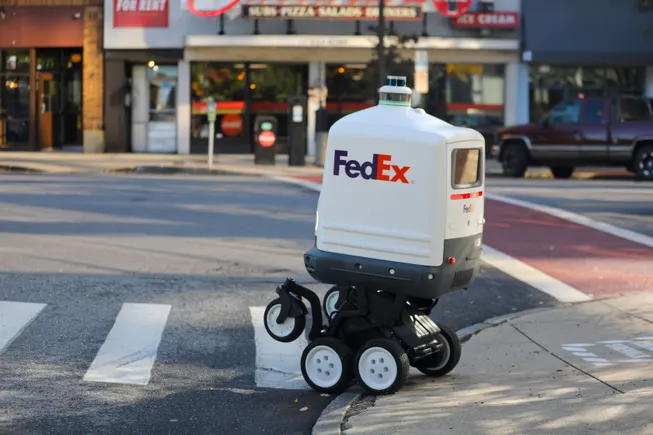
For a brief moment, a prototype FedEx robot made last-mile delivery look so compelling that it earned a spot on late-night television. “This is the future right here,” Jimmy Fallon said in 2019, as the company’s autonomous bot—later named Roxo—delivered a pizza to the host.
Yet despite the hype, the road to widespread adoption of sidewalk-roaming delivery robots in the U.S. has been anything but smooth. FedEx scrapped Roxo less than four years after its flashy debut, according to an October statement. Amazon, meanwhile, ended field tests of its own delivery bot after it failed to meet customer needs.
If logistics giants struggle to crack the code for delivery bot operations, can a long-term, sustainable business model ever emerge? Many executives, researchers, and regulators interviewed by Supply Chain Dive say yes—and they argue that current labor and inflation pressures could help this transportation mode gain traction sooner than expected.
Still, insiders caution that the industry must confront major hurdles around funding, segment diversification, and more before true success is possible.
Why delivery bots could gain post-pandemic momentum
Although FedEx and Amazon have stepped back, the delivery bot sector still has seasoned and growing players. Leaders at these tech companies say using robots to bring goods to consumers—rather than a human courier in a vehicle—offers advantages that have become more evident in recent years.
Chief among them is the potential to lower costs in the final mile, widely considered the most expensive step in shipping. With autonomous or remotely operated capabilities, delivery bots are insulated from rising courier wages that standard providers pass on to end customers. They are also less exposed to spikes in gas prices, which took a toll on carriers—and then their shippers—last year.
“After COVID, you had challenges with labor,” said Ali Kashani, co-founder and CEO of Serve Robotics, a delivery bot developer and operator. “Then you had inflation and the cost of labor going up, and then you have the cost of gas going up. Every one of these things that has happened has become a tailwind for us.”
While sidewalk bots lack the range and capacity of gas-powered vehicles, they are well-suited for quick, on-demand deliveries of small payloads from nearby businesses. This has led many bot companies to focus on food and convenience deliveries. Serve’s robots have completed orders on Uber Eats’ platform for Los Angeles customers, and 7-Eleven recently partnered with the company for testing in West Hollywood, California. Food delivery operations are also flourishing on college campuses, with Grubhub rolling out partnerships with tech firms Kiwibot and Cartken to serve on-campus demand.
The open question is whether that niche is large enough for these businesses to mature into self-sustaining operations. For Coco, whose bots make restaurant deliveries in Los Angeles, food is the logical starting point, said co-founder and CEO Zach Rash. It’s a high-frequency category with strong local demand and a need for speed. However, he acknowledged that over time, diversification into other categories will be necessary to maximize robot utilization.
“You need a lot of scale and you need a lot of density,” Rash said of the formula for long-term success in the delivery bot space. “Food is the best way for us to build up to that while making sure that we can maintain profitability on the way there.”

Although bots won’t become a one-size-fits-all solution for last-mile delivery, executives see other areas where adoption could increase. Starship Technologies, for example, has robots delivering spare parts, testing supplies, and samples in industrial campuses, mostly in Germany. And one day, industry players could work directly with parcel vans and trucks to make deliveries, said CEO Alastair Westgarth.
“We’re adding a new modality to delivery, not taking over the entire world of delivery,” he said.
Complex challenges clash with immediate needs
The volume of deliveries completed by automated vehicles is still “barely measurable” today, acknowledged Cartken CEO Christian Bersch. To gain share from traditional transportation methods, robot operators will need funding to expand service coverage, improve technology, and ultimately offer lower costs than competitors.
But economic uncertainty has thinned the pool of venture capital and private equity funds available, company executives say. Starship, a major player in the robotics space, cut back its staff and service areas last year in a more difficult funding environment.
“We wanted to make sure that we adjusted to that dynamic and focused on making sure our company’s viable forever, so to speak,” Westgarth said, adding that Starship prioritized improving its unit economics.

Although larger, diversified companies may have the financial muscle to scale their own bot programs, success requires patience as hurdles related to adoption, infrastructure, and regulations loom large. Current range limitations mean reaching new customers in suburban and exurban areas will be difficult. Starship’s Westgarth said cities and universities dominate the company’s business, with 90% of its focus in those two categories.
Long-term challenges can clash with near-term needs, as was the case with FedEx. The company said in its October statement that it canceled Roxo to “prioritize several nearer term opportunities” as overall demand for its services slowed.
Companies exclusively focused on bot deliveries can’t simply cut the cord; they still need to grow at a pace that meets investors’ expectations. Many executives say they remain cautious about ramping up too aggressively without enough community buy-in, fearing a backlash similar to what e-scooters saw years ago.
Bern Grush, executive director of the Urban Robotics Foundation, doesn’t buy it.
“You want to tell your investor, ‘We don’t want to have 20,000 robots’?” said Grush, whose foundation helps member municipalities coordinate robot-related policies. “You want to tell your investor, ‘We’re happy with 12 robots’? … This whole industry needs to deliver a million things an hour.”