
HUD Research Grant Could Speed Commercial-to-Residential Conversions
The U.S. Department of Housing and Urban Development has announced a notice of funding opportunity (NOFO) to support research on commercial-to-residential conversions. The initiative, offering up to $860,000, seeks to compile case studies since the start of COVID-19, identify effective policies and incentives, and create a resource guide. Industry experts believe this could halve project turnaround times, though economic feasibility remains a challenge.
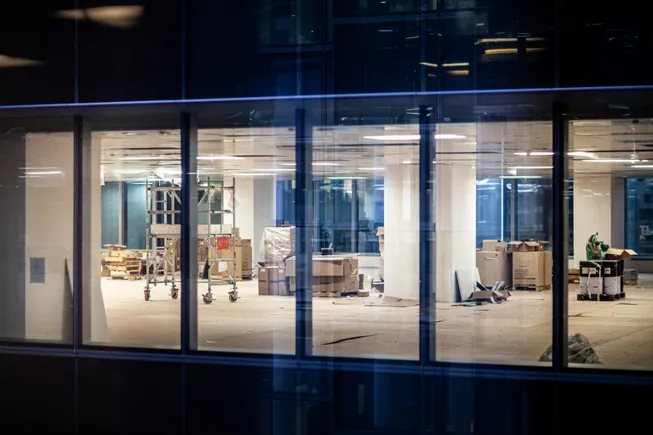
The push to convert vacant or underused commercial properties into residential and mixed-use spaces is gaining traction as government agencies step in to ease the process for developers, property owners, and facilities managers.
Building industry experts suggest that a new research grant from the U.S. Department of Housing and Urban Development (HUD) could accelerate the completion of such projects, which a number of major cities are looking to spur. The HUD initiative may also reduce operational burdens, boost productivity, and give facilities managers a stronger voice in the process.
HUD's Notice of Funding Opportunity
Last week, HUD announced a notice of funding opportunity (NOFO) that will provide up to $860,000 to assemble case studies of conversion projects completed since the start of the COVID-19 pandemic. The goal is to identify policy measures, subsidies, and incentives that can improve the economic viability of such conversions.
The housing authority intends to create a resource guide for local agencies and development practitioners. Solomon Greene, principal deputy assistant secretary for policy development and research at HUD, expects the funding to offer examples of overcoming structural and financial barriers. This will help property managers and facilities leaders understand what steps city officials have taken since the pandemic to support these projects.
“It will provide practical guidance and insights that they can use in their cities. We hope that the research will be used to accelerate progress in meeting our nation’s growing housing supply shortage, by learning from innovation and creative problem solving on the ground in reusing buildings and assets that already exist in our communities,” Greene told Facilities Dive in an email.
Overcoming Barriers to Adaptive Reuse
Zoning hurdles and outdated permitting processes have slowed adaptive reuse efforts in states like California, despite strong demand for Class A facilities and new construction. Nevertheless, the building industry is increasingly embracing adaptive reuse as an alternative to demolition and full restructuring.
William Leddy, founding principal at Leddy Maytum Stacy Architects in San Francisco, noted, “Adaptive reuse is going to be a lot faster to achieve than new building construction or even renovation projects. So, these buildings can come online a lot more quickly than new projects, and that means potential employment opportunities for facilities managers.”
Leddy, who also serves as vice president of climate action at AIA California, which pushed for a change in the state’s building code, believes the HUD initiative could halve the turnaround for adaptive reuse projects. “If you’re talking about the time required for permitting the design of a new building, demolishing an old one or even reconstruction, you’re looking at around six years in total. But, if you’re looking at an existing building and retrofitting for adaptive reuse, your approval time could be as short as three years,” he said.
Alex Stettinski, CEO of the San Jose Downtown Association and a board member at the International Downtown Association, agreed that the resource guides could shorten turnaround times. “If you have catalogs, there are mistakes that can be avoided and opportunities that can be replicated in other projects. It could therefore potentially expedite the completion of a project because you have case studies and guidelines — a template you can go by. That’s assuming that the case studies that will come in are comprehensive and useful,” he said.
Training and Technology Gaps
Despite the insights available, facilities managers may face challenges without adequate training. Leddy pointed out that modern building management systems in new and remodeled buildings have left many facilities managers perplexed, as they traditionally focused on repairing or upgrading aged equipment rather than automation and energy efficiency.
“This is a huge opportunity to educate facilities managers about new building management technologies, instilling a sense of urgency about why the status quo is obsolete, and preparing them for the future of high-performing low-carbon adaptive reuse projects,” he said of the grant. “We can no longer afford to leave the lights on. We have to start thinking more intelligently about resource reuse.”
Future Research and Application Details
The HUD-funded research is also expected to pave the way for future studies on office-to-housing conversions. In its grants notice, HUD stated that research proposals must emphasize how the knowledge generated will enhance understanding of federal, state, or local policies targeting commercial-to-residential conversions.
Stettinski expects fewer than 100 applicants, mostly architects, who are typically more involved in the design elements and research behind conversion projects. “I think facilities managers are trying to find solutions immediately. They don’t have time to sit down and do a study of that magnitude. Architects would though. That is their bread and butter. If architects can find ways to make a conversion happen, they’re providing a service to facilities managers by way of sharing best practices and insights with them,” he said. “Architects could utilize that money to put guides together and go to property owners and facilities managers and tell them, ‘We’ve done our research and here’s what we can offer.’”
He added, “And then there could be partnerships between architects, property owners, facilities leaders and cities,” noting that these alliances could provide a clearer picture of how to best implement adaptive reuse projects.
Economic Feasibility Concerns
Although turnaround times may be quicker, streamlining approvals could still impact economic feasibility. Kate Collignon, partner at HR&A Advisors, explained, “Even a building that’s 30% vacant right now would take the owner a significant amount of time to wait until other leases expire before the remainder of that building can be cleared out, so you’re assuming two to three years for conversion and lease buildup.”
On the other hand, she noted that a property owner could reduce rents slightly, pursue a different tenant profile, or invest more in office space if the resulting value generates higher cash flows than a residential unit might provide after conversion. “So, the economics don’t pencil correctly right now,” she said, referring to San Francisco’s move to invite proposals for reusing underutilized downtown commercial space.
Collignon and Stettinski both emphasized the need for direct incentives from federal, state, or local bodies to make conversion projects a reality.
Broader Policy Context
The HUD NOFO builds on the Biden administration’s vision of promoting commercial-to-residential conversions. The White House recently announced HUD’s decision to confer grants of up to $10 million to jurisdictions facing steep affordable housing demand. Last month, the U.S. Environmental Protection Agency also said it would roll out a $27 billion Greenhouse Gas Reduction Fund to mobilize capital for commercial-to-residential conversions and cost-saving retrofits, supporting zero-emission targets.
Proposals for the NOFO are due Oct. 12. Interested parties can apply through the U.S. Government’s portal.