
Robotaxi Expansion Set to Accelerate in 2025 as Waymo, Tesla and Others Push Forward
Self-driving robotaxis are expected to expand to more cities and states in 2025, with companies like Waymo, Motional, and Zoox deploying services city-by-city. A more favorable federal regulatory environment may bring standardized rules, while Tesla plans to launch a paid driverless ride-hailing service in Austin and California. However, safety experts question the reliability of current autonomous systems, citing limited data and high-profile incidents.
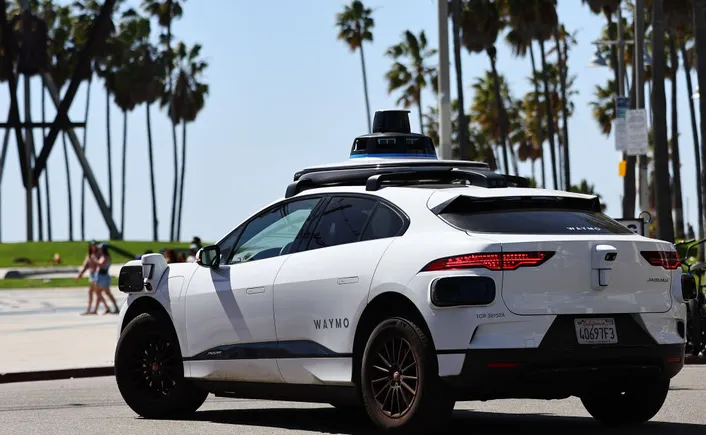
Self-driving robotaxis are poised to appear in more cities and states this year, propelled by a more favorable federal regulatory landscape, according to industry officials and observers. Despite the 2024 shutdown of General Motors' Cruise robotaxi business, research firm IDTechEx reports that over $100 billion in funding has flowed to companies developing and operating robotaxi technology over the past decade. These operators currently face few regulatory barriers, but the industry seeks greater clarity—and may find it in the current Congress.
“What you're likely to see in 2025 is steady progress with robotaxis, where you see companies like Waymo—but also other companies like Motional and Zoox—that are deploying on a city-by-city basis,” said Jeff Farrah, CEO of the Autonomous Vehicle Industry Association (AVIA). Ride-hailing giants Uber and Lyft have announced plans to roll out robotaxis in partnership with these and other providers.
Waymo, widely considered the leader in the field, began limited self-driving operations in the Phoenix metropolitan area in 2017 and now offers driverless robotaxi service in San Francisco and Los Angeles. The company reports that riders have taken hundreds of thousands of paid trips since March 2024, with 98% expressing satisfaction in a Waymo survey. Waymo is also providing trips to early riders in Austin, Texas, and will begin serving Atlanta later this year, a spokesperson said. In both cities, Waymo’s fully autonomous vehicles will be accessible through the Uber app.
The companies behind robotaxis have deep pockets, enabling substantial investment in software development, on-road testing, and expensive sensor technology. Waymo spun out of Google parent Alphabet, Motional is a joint venture between Hyundai Motor Group and Aptiv, and Zoox is owned by Amazon.
Despite these plans and capacity for growth, questions remain about potential federal regulation, and some experts continue to voice concerns about autonomous vehicle safety.
Federal Regulations Could Be Coming
More than 35 states currently allow robotaxis to operate under a patchwork of differing regulations, with cities having no say in when or where such vehicles can run. Existing federal rules apply mainly to safety. AVIA would like the federal government to step in and provide standardized AV regulation that would apply nationwide.
“From our perspective, we have not seen nearly enough activity out of the federal government when it comes to autonomous vehicle legislation and regulation,” Farrah said. That may change this year.
Rep. Bob Latta, a Republican from Ohio, first introduced the bipartisan Self Drive Act in 2017. He plans to reintroduce it this year, Latta said in an interview. “We want to get that piece of legislation out and introduced as soon as possible,” he said. Latta believes it will have a greater chance of passing this year with Republican control of the Senate. “We want to get a clear framework out there so that we don't have 50 states and the District of Columbia turning out different regulations,” he added.
Proponents see robotaxis as an accessible and safe transportation mode. “Transportation opportunities in many cities are not available in the way they should [be] to the elderly and persons with disabilities,” Farrah said. “We think that we can put vehicles on the road that are far more accessible for people that have been really not able to access transportation in a certain way.”
Farrah is optimistic about the industry’s growth. “I would expect that you'll see the leading companies in the robotaxi space continue to expand their footprint, both within the cities where they're already deployed, but also perhaps taking on some additional cities.”

Two Views on Robotaxi Safety
Waymo claims its robotaxis are “safer than even the most advanced human-driven vehicles,” citing research conducted in collaboration with Swiss Re, a global reinsurance company. The study examined liability claims for Waymo collisions across over 25 million autonomous vehicle miles and compared them with the reinsurance firm’s claims from human drivers in over 200 billion vehicle miles. Waymo’s self-driving cars were involved in 92% fewer bodily injury claims and 88% fewer property damage claims than accidents involving human-driven vehicles, the study says.
However, some experts take issue with the statistics that robotaxi companies publish. Philip Koopman, a Carnegie Mellon University professor and safety expert in autonomous vehicles, explained that robotaxi operators’ experience to date represents too small a sample size to support broad claims of safety. In the U.S. in 2022, the fatality rate was 1.33 people per 100 million vehicle miles for all vehicles, according to National Highway Traffic Safety Administration (NHTSA) data. “Waymo has gone 25 million miles, so they’re only a quarter of the way to their first expected fatality,” Koopman said.
Waymo’s software uses machine learning to understand objects and road features. The company says it tests its software on simulators, closed tracks, and public roads. Waymo also equips its vehicles with lidar, a system that uses lasers and sensors to detect objects in a 360-degree field of view. But, “machine learning is only good about things it knows,” Koopman said. “Humans are very good at dealing with unstructured situations,” he explained, adding that “safety is all about what happens in the rare, high severity case.”
It was just such an uncommon situation that may have contributed to Cruise’s demise. In 2023, a driverless Cruise vehicle struck a pedestrian who was thrown into its path after being hit by another vehicle. The robotaxi stopped, but then it pulled over to the side of the road with the victim trapped under the vehicle, seriously injuring the person. It’s unlikely a human driver would have done so, Koopman said.
California ordered Cruise to cease operations in the state, and the company soon recalled its vehicles from the other cities where it operated: Phoenix, Houston, and Austin. In December 2024, GM announced it would stop development on its Cruise robotaxis.
Given these issues, Koopman expects to see robotaxis expanding across the U.S., but slowly. “It's going to be a city-by-city grind, and it's not going to speed up as fast as anyone says because every city is different,” he said.
In June 2021, NHTSA ordered manufacturers and operators to report crashes involving vehicles equipped with automated driving systems or advanced driver assistance systems. As of May 15, 2022, the agency had received reports of 130 crashes involving automated driving systems, including 23 for Cruise and 62 for Waymo. For vehicles with advanced driver assistance systems—which commonly include technologies such as automatic emergency braking and lane centering assist—392 crashes were reported through May 15, 2022. Tesla vehicles were involved in 273 of them.

Safety Experts Question Tesla’s Self-Driving Capabilities
Tesla CEO Elon Musk announced Jan. 29 that the company will launch a paid, driverless ride-hailing service in Austin, Texas, in June, followed by California later this year. At an October event, he said it would use its Model 3 sedan and Model Y SUV with an advanced version of its driving software as robotaxis.
Auto safety experts have expressed concerns about Tesla’s robotaxi plans. Current Tesla vehicles available with what the automaker calls “Autopilot” or “Full Self-Driving (Supervised)” are not equipped with lidar or radar and are considered to be advanced driver assistance systems, Tesla states on its website. These systems require a human driver to monitor the vehicle’s actions and be ready to take control.
“The most concerns we have are with Tesla,” said Michael Brooks, executive director at the Center for Auto Safety. “All of the vehicles they're building rely on human supervision,” he said.
But Musk disagrees. In yesterday’s earnings call, he said that the cameras and digital neural nets or AI its cars are equipped with are the “digital equivalent of eyes and a brain.”
AMCI Testing, an independent automotive research firm, drove a Tesla Model 3 with the latest supervised “full self-driving” software in New York City last October. In over 300 miles, testers encountered the vehicles engaging in abrupt braking for no reason, speeding on a residential street at night, running stop signs, and making illegal right turns on red lights.
Brooks is not optimistic about the future for robotaxis. “It may just be, at least for the next 20 to 30 years, a matter of [them] replacing ride-share and taxi drivers.”
Human taxi drivers are already adapting to their robotaxi competitors, Dorel Tamam, director and head of the mobile business unit at Curb, a taxi and ride-hailing app, said in an email. Drivers are “leveraging their core strengths: personalized service, local expertise, and the ability to navigate the complexities of urban environments,” Tamam said. “These qualities remain vital, especially in scenarios that require human judgment and empathy, such as handling unpredictable traffic, adapting to challenges like road closures or inclement weather, and assisting elderly or disabled passengers.”
Correction: In a previous version of this article, Dorel Tamam was misidentified. He is the director, head of mobile business unit of Curb.