
HNTB Study: 125-mph Rail Link Could Cut Austin–San Antonio Travel to About an Hour
A new feasibility study released Thursday, commissioned by Travis County and prepared by HNTB, proposes a dedicated passenger rail line connecting Austin and San Antonio, Texas. The estimated $13.5 billion project could enable 125-mph trains to travel between the cities in about an hour, offering a faster alternative to the current Amtrak service.
Dive Brief:
- A dedicated passenger rail line between Austin and San Antonio, Texas, would carry an estimated price tag of $13.5 billion, according to a feasibility study commissioned by Travis County and released Thursday.
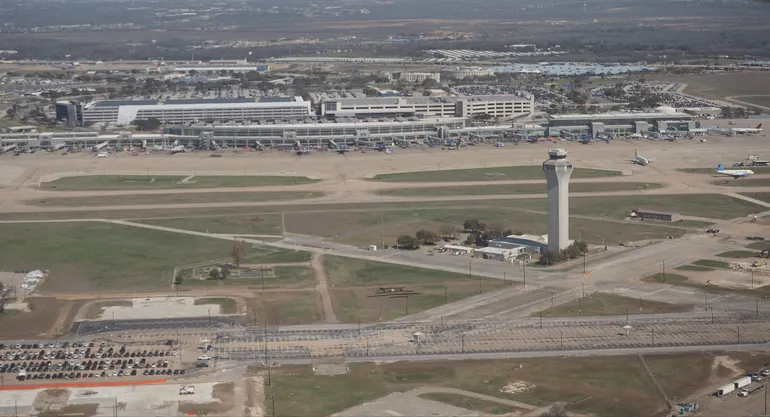
- The study, prepared by HNTB—an architectural and construction firm—recommends a route largely paralleling Interstate 10 and State Highway 130, with potential terminals at Austin-Bergstrom International Airport and downtown San Antonio's Alamodome.
- Commuter-style trains capable of 125 mph, similar to those used on Brightline's Florida railroad, could complete the end-to-end journey in 55 to 65 minutes, the study states.
Dive Insight:
Currently, the only daily passenger rail connection between Austin and San Antonio is an Amtrak train operating on freight railroad tracks, with a scheduled travel time exceeding 2.5 hours. Delays are common; Amtrak's 2024 host railroad report card indicates the train arrives on time only 56% of the time.
The study proposes acquiring six train sets at a cost of $360 million, which is included in the overall estimate. Operations and maintenance facilities would require approximately $300 million for construction. Annual operating and maintenance costs are projected at $140 million to $190 million in 2026 dollars.
To advance the project, the HNTB study recommends finalizing agreements with the Texas Department of Transportation and other government agencies for use of highway corridors, as well as conducting a market analysis for ridership and revenue projections. It also advises initiating environmental reviews and exploring funding options, including federal grants, local funding, and potential public-private partnerships.