
The Controversial $7.1 Billion Austin Transit Transformation Plan: Voters Poised to Decide
Austin voters will vote on November 3 on the Project Connect initial investment measure (Prop A), a $7.1 billion plan funded by an 8.75-cent per $100 property tax increase, to build light rail, tunnels, and an electric bus network. Supporters say it helps ease congestion, reduce emissions, and promote equity, while opponents question high costs and outdated technology. If it fails, some projects may still move forward.
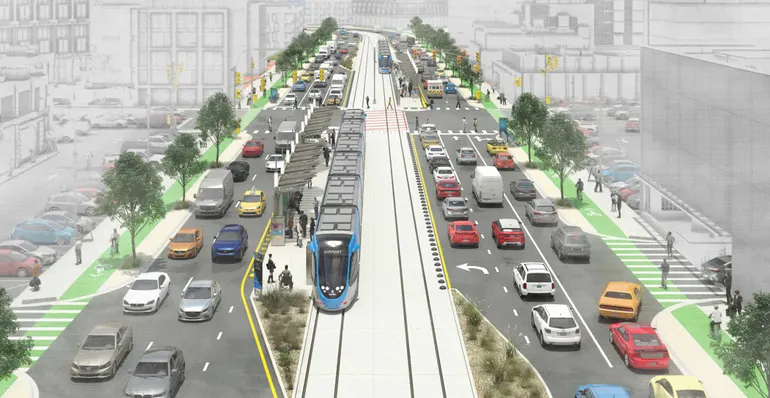
Voters in Austin, Texas will decide next month on a ballot measure that could reshape the region's transportation landscape and advance the city's climate goals — provided it can overcome opposition.
The measure, called the Project Connect Initial Investment and more commonly known as Prop A among Austin residents, would raise the initial funds needed for the city's comprehensive transit plan, which includes building a new rail system, a downtown bus tunnel, and expanding electric bus service. If the measure passes, property taxes would increase by 8.75 cents per $100 of value annually (about 4%), according to Capital Metro, Austin's transit agency.

Although some opponents call the plan a "mistake" and an improper use of taxpayer money, Mayor Steve Adler is pushing the measure to ease traffic congestion, reduce carbon emissions, and support underserved areas of the city.
"We're a growing city, but we don't have enough transportation options," Adler told Smart Cities Dive. "As this pandemic has forced us to see, there are serious inequities in transportation options for essential workers. There are large parts of our city that have historically been underfunded."
The COVID-19 pandemic has indeed made some supporters question whether now is the best time for a tax increase, but Adler said, "If we want to get out of this pandemic, this is the fairest thing we can do."
A transportation reset
Project Connect has a total cost of $7.1 billion, with 20% of the funding coming from the tax increase in the ballot measure and 45% expected from the Federal Transit Administration's (FTA) Capital Investment Grants program. The plan was originally estimated to cost $9.8 billion, but the city council approved a revised version that eliminated one line and scaled back another to make the project more affordable.
Under the $7.1 billion budget, Austin residents would get:
- New light rail lines connecting different parts of the city and the airport
- New and expanded commuter rail service
- A downtown bus tunnel separating rail from cars
- Expanded bus service, including an all-electric fleet, new routes, and on-demand circulator buses in some neighborhoods
- Nine new park-and-ride facilities near transit centers
- All-electric bike fleets at transit hubs
The proposed rail system and its tunnel are the largest part of the Project Connect plan and by far the most expensive, costing $5.8 billion. The system would include 27 miles of rail service and 31 stations, and would use the downtown tunnel to improve on-time performance.

Supporters are determined to ensure the rail system is built, providing an alternative to driving in a city historically centered on cars. The city suffers from some of the worst traffic congestion in the U.S. Most people rely on single-occupancy vehicles to get downtown, which makes this transit plan crucial, said Mateo Barnstone, executive director of the Congress for the New Urbanism Central Texas.
"We need to reset how the city moves," Barnstone said. "We're one of the fastest-growing cities in the region. We're a city of 1 million people in a region of 2 million. In the next 20 to 30 years, we're going to be a city of 2 million people in a region of 4 million."
Although the pandemic has temporarily reduced traffic, Mayor Adler said the city's vehicle miles traveled have recovered to 80% of pre-pandemic levels.
"This plan is built for the next 25 to 30 years. Thinking about COVID-19 on that timescale doesn't make much sense," Barnstone said.
Timeline
Jacob Calhoun, Capital Metro's Project Connect program manager, estimates the light rail lines would be completed within eight years. Bus rapid transit (BRT) lines could be implemented faster, on-demand circulator buses could be running within six to twelve months, and new bus routes could be launched in 3 to 4 years. Some buses would operate like shuttles, picking up passengers in a designated area and dropping them off in another designated area or destination.

Austin already has two BRT lines, but the Project Connect plan would add four more. Under the expanded BRT system, called MetroRapid, buses would arrive more frequently, make fewer stops, and be able to jump ahead at traffic signals or use priority lanes — all of which would speed up service. Capital Metro also plans to have 80 electric buses by 2024, eventually transitioning to an all-electric fleet.
Under the plan's circulator system, Capital Metro would partner with ride-hailing companies to provide taxi-style service. Metro Bike is also seen as a circulator tool. All-electric bike fleets would be stationed at transit hubs and integrated into the CapMetro app for bike rental and payment.
Environmental and health benefits
According to the Texas Public Interest Research Group (TexPIRG), which supports the ballot measure, transportation accounts for more than one-third of total greenhouse gas emissions in Austin and surrounding Travis County. Project Connect would reduce vehicle miles traveled by 109 million miles per year, cut about 30 tons of nitrogen oxides and 43,000 tons of carbon dioxide annually, and bring health benefits to residents, said Bay Scoggin, director of TexPIRG.
Project Connect aligns closely with Adler's work on addressing the city's climate change. During a September webinar hosted by Climate Mayors, Adler said Project Connect would be the city's "single largest investment in protecting the climate." Austin is one of six Texas cities in the Climate Mayors coalition.
The plan would also build on the Austin Strategic Mobility Plan (ASMP), approved last year, which includes 32 pages on the health and environmental benefits of enhanced mobility services.
"Right now, 90% of our trips are by car," Barnstone said. "The long-term goal is to get that down to 50%, through walking, biking, transit, scooters, and other modes. Every time people use something other than a car, it reduces the carbon load."
Anti-displacement funding
The initial investment measure includes $300 million for anti-displacement efforts, which Capital Metro says is the largest investment of its kind in a transit-related election. Most of the funding would go toward building or maintaining affordable housing near transit stations, with a goal of having 60% of income-restricted housing within "a half-mile walk of a station," Adler said.
The city council has also been involved in the plan's equity component, creating an equity assessment tool to inform funding recommendations for anti-displacement strategies. The council plans to work with the community to ensure local priorities are identified and tracked, and to establish performance triggers that, once met, would automatically be submitted to the council.
Anti-displacement strategies would vary by neighborhood, said John-Michael Cortez, special assistant to the mayor. For example, in some older, more established neighborhoods with elderly homeowners, the displacement fund would be used to help homeowners "clear title" or "help get senior exemptions."
"We'll be engaging with communities around stations to develop the strategy that best fits that community," Cortez said. "In places that haven't yet experienced gentrification, that could mean acquiring properties and land banking."
Facing opposition
Austin's Prop A is not the first light rail measure to face a voter referendum. Austin tried to pass light rail investment measures in 2000 and 2014, with the 2000 vote being "very, very close," said Scoggin of TexPIRG.
Before the COVID-19 pandemic, Project Connect had "broad support," said Calhoun of Capital Metro, but "it's more difficult now" as support has slowed. Overall, the city remains deeply divided on the ballot measure, mainly due to its high cost.
The political action committee (PAC) "Our Mobility Our Future" calls itself "a diverse coalition of Austin residents, taxpayers, business owners, and transit enthusiasts who believe Project Connect will be a heavy burden on our future." The group's transportation policy expert, Roger Falk, is a commercial landlord who calls himself "just a taxpayer advocate."
"For less than $700 million, you could do everything in Project Connect except light rail, without raising the tax rate," Falk told Smart Cities Dive, noting the PAC has no objection to the non-light rail parts. He warned the city should be aware of "all the options, and the emerging technologies sweeping the mobility space."
One of those key technologies is vehicle-to-everything (V2X) connectivity, which allows vehicles to communicate with each other and with transportation infrastructure. Falk said the city should invest in these innovations "rather than putting money into old technology like light rail."
"A lot of the money we need to move forward with V2X infrastructure in the future is going to be taken up by Project Connect," Falk said.
Prop A is not a bond.
— Our Mobility Our Future (@OurMobilityATX) September 29, 2020
It's a tax rate increase. It grows with appraisals, compounds with future growth, and is permanent.
Light rail won't run for a decade, but the big tax increase starts now. We don't have to put up with this arrogance from the city government.
Vote no on Project Connect!
He went on to say that most of the rail system's riders would be those already using transportation options like buses, so its effort to get people out of cars may not succeed. Falk also predicted that traffic in the city would not return to pre-pandemic levels after the pandemic.
"Austin is a high-tech city," he said. "Many workers have found they can work remotely. That will reduce the commuting demand that Project Connect hopes to serve."
Kara Kockelman, an engineering professor at the University of Texas at Austin who specializes in transportation, agrees that Project Connect may not be the best way to address traffic and climate change, but the city "doesn't have many easy options."
"They should be taking bigger steps on fuel taxes and the like," Kockelman said, noting these taxes are "too low and don't reflect the true cost and damage of driving." She mentioned alternatives like congestion pricing, which major cities such as London and Singapore have implemented, charging drivers to enter certain urban areas.
"Everyone is afraid of congestion pricing because no one wants a tax increase, but it would be more cost-effective," she said.
Another more efficient, cheaper option would be to provide priority parking for any vehicle that gets 50 miles per gallon or more, Kockelman said, but that is also politically unpopular.
What's next?
With Election Day approaching on November 3, Austin officials face increasing pressure to prepare for what's next, whether or not the Project Connect Initial Investment measure passes. However, Mayor Adler said he's not sure what the next step would be if the measure fails.
"The challenges we face are too big," Adler said.
CNU's Barnstone said the city will certainly see large-scale transportation investment in the next 20 years. "The question is, what form will they take? If we don't make any investment, we're just delaying the problem," he said.
In the short term, "if the ballot measure doesn't pass, we'll still continue with certain aspects of the plan," said Calhoun of Capital Metro. Federal funding depends on local funding, so light rail would not move forward, but BRT lines and circulator buses could be added.
"There's never a good time to do something like this because nobody wants to pay more," Adler said. "If you want to do something transformative and generational, you have to be bold. People want to do something big enough and at a scale that can make a difference on climate and transportation choices."