
How can downtown decline be reversed? Experts suggest achieving reconstruction through 'tactical urbanism'
The COVID-19 pandemic has had a profound impact on urban center areas, leaving large amounts of office, retail, and dining spaces vacant. However, multiple urban planning experts believe that cities will not perish due to the pandemic; the key lies in adopting flexible strategies: repurposing commercial spaces, supporting outdoor dining, expanding parks and green spaces, and leveraging technology to enhance the utilization of public spaces. This lightweight intervention approach of 'tactical urbanism' may become a critical path for downtown reconstruction.
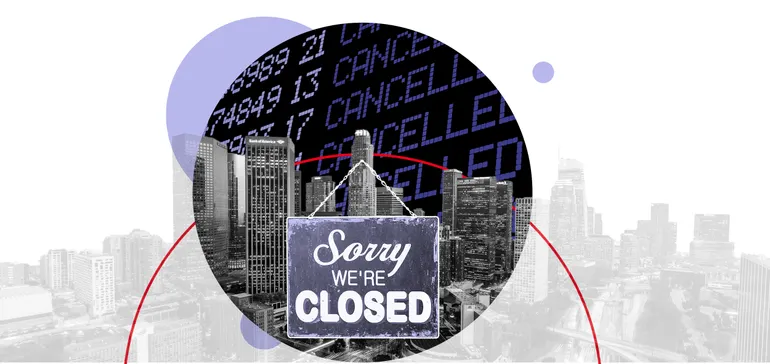
Are cities on the brink of disaster, or will they recover successfully after the COVID-19 pandemic? Both predictions have appeared in assessments of the post-pandemic era by urban planners, developers, and academics. But the core question remains unresolved: Where are the cities we know today headed in the future?
Although most cities are likely to 'bounce back' from the crisis, many experts agree that when this modern-day rebirth occurs, the urban landscape will be vastly different from what it was before the pandemic—especially in downtown areas.
Kevin Gillen, a senior research fellow at Drexel University's Lindy Institute for Urban Innovation, said, 'There's no reason to think the current pandemic will end cities.' He cited the history of Rome, London, and Athens, noting that these major cities have all experienced and emerged from 'devastating plagues, wars, or natural disasters.'
However, to avoid catastrophic scenarios, the future of cities depends on wise decision-making, available funding, and openness to different planning and operational models.
'We have an old saying: cities don't die of natural causes, and they aren't murdered,' Gillen said. 'They often commit suicide.'
Current State of Downtowns: Vacancy and Stagnation
Currently, office buildings, retail shops, restaurants, and performance venues in most central business districts and downtown areas are largely vacant.
'Everything is at a standstill,' said Alan Bernstein, owner of Alan Bernstein Realty Services, a Manhattan commercial real estate firm. 'People aren't coming into the city like they used to, and if they don't have to, they don't want to rent there. It's a house of cards on many levels.'
Bill Fulton, director of the Kinder Institute for Urban Research at Rice University in Houston, agrees. 'There's currently a trend away from cities,' he said. 'When people do everything from home, they reassess how much real estate they need, which prompts them to move to cheaper areas.'
This outward migration has ripple effects: in New York City alone, the number of restaurant and bar closures has alreadyreached the thousands, along with the loss of jobs and tax revenue. In Philadelphia, public services are particularly vulnerable because fiscal revenue relies on wage and business taxes. In Washington, D.C., according to theDowntownDC Economic Update Report, only 5% of office workers had returned to the downtown area as of this summer.
'The coming months will remain difficult for Washington, D.C., and other downtowns,' said Gerry Widdicombe, director of economic development for DowntownDC. 'It's hard to make long-term predictions right now, especially for the office market.'
Repurposing Commercial Office Space
A Galluppoll from mid-Octobershows that one-third of Americans are still working from home during the pandemic, and two-thirds of remote workers hope to continue working remotely after the economic recovery. Therefore, the question of future office occupancy rates has become one of the most difficult topics to answer.

'Obviously, we know people can work from home,' Widdicombe said. 'My guess is that demand for office space will be lower in the future, but how much lower? No one knows.'
According to real estate services firm JLL, global direct commercial real estate investment in the first six months of 2020fell nearly 30%. If demand continues to decline, city governments may need to rezone commercial office space; but if the cost per square foot drops simultaneously, it could also bring new opportunities.
'I think converting office buildings into residential space will create a market,' Fulton said. 'Three to five years from now, people will once again crave the amenities that cities offer.'
Bernstein said that converting office interiors for other uses is 'not structurally difficult,' but challenges may arise in 'navigating the bureaucracy of the approval process.'
Gillen believes that the high cost of urban real estate was already driving changes in building use, and the pandemic has only accelerated this trend. 'We're already seeing demand for multi-functional spaces,' he said. 'Municipalities are rezoning to allow residential spaces to include offices, gyms, and restaurants, which will partially offset losses in the commercial sector and serve as a silver lining.'
Restaurant and Retail Space
David Downey, president and CEO of the International Downtown Association (IDA), said downtown retail space will be difficult to repurpose. He noted that before the pandemic, most cities had retail space per capita that was overbuilt by up to 5%, and brick-and-mortar stores were already struggling to survive in the e-commerce era. 'The best way to repurpose such space is to be more inclusive and target emerging small businesses.'
Additionally, how to utilize vacant restaurant space and prevent further losses in the industry remains an unresolved issue. Many cities have alreadyallowed adjustmentsto let dining establishments expand onto sidewalks and streets, but as winter approaches, cities are evaluating whether they can continue to provide safe outdoor dining options.
'This is the immediate challenge,' Downey said. 'From a design perspective, we need to continue exploring flexible use of outdoor space. If the pandemic extends into next summer, providing cooler outdoor spaces in warmer climates will be equally important.'
However, Fulton noted that many municipalities quickly adjusted ordinances to allow outdoor dining options, painting an optimistic picture for the future use of various spaces.
'Small adjustments to regulations can often save a bad situation,' he said. 'There have been many cases in the past where cities successfully responded to demand by changing zoning and being creative, and that approach will work in the future as well.'
Downey said the pandemic has brought about the arrival of 'tactical urbanism.'
'Cities have proven they can act with light-touch interventions rather than permanent changes, and it works,' he said.
Expansion of Green Spaces
The pandemic has also driven Americans to be more enthusiastic about outdoor activities to comply with social distancing guidelines. Parks and greenways have seen more visitors, and summerpoint-of-sale datashows a significant surge in purchases of bicycles, kayaks, and other outdoor gear.
'It's definitely not too early to think about expanding park space now,' Downey said. 'Cities understand that creating and expanding public recreational spaces is popular.'
'Small adjustments to regulations can often save a bad situation.'

Bill Fulton
Director, Kinder Institute for Urban Research, Rice University, Houston
Fulton said that a large amount of underutilized or vacant space could be used to develop parks. He also noted that before the pandemic, many cities were already expanding cycling and walking paths along waterways and greenways.
'For example, Houston has been reclaiming greenway space for years,reclaiming greenway spaceand now has over 100 miles,' Fulton said. 'During the pandemic, I can't imagine how people would have coped without those spaces.'
The demand for more green space is real, but Siddhartha Sen, associate dean and professor at Morgan State University's School of Architecture and Planning, questions whether there is broad political will for such expansion.
'Cities need support from the federal and local governments to achieve this on a large scale,' he said. 'History shows that although open spaces are beneficial to cities, there is a lack of political will to repurpose them.'
The Role of Technology
Efficient technology and broader public Wi-Fi access are crucial to driving the development of more flexible urban spaces. 'This is a big issue that needs to be addressed,' Sen said. 'We still have a huge gap in this area.'
'Technology plays an important role,' Fulton agreed. 'Cities are under greater pressure to provide public Wi-Fi to support work and recreation.'
Fulton also noted that this even affects how urban residents get around. 'We know public transit is vital to many workers... but people were reluctant to use it during the pandemic, so it took a huge hit. Technology can help with creative transportation solutions, like Uber ride-sharing.'
Widdicombe's hope is that, in addition to improving Wi-Fi access, governments will continue to provide small grants and other funding to offer relief and help businesses stay afloat. 'Cities must take on an underwriting role like banks,' he said. 'They have to take action to help (businesses) survive.'
The outlook for downtowns at this stage is undoubtedly clouded, but Widdicombe predicts that even as cities become more virtual, they will still play an important role in society.
'Cities have existed for thousands of years as crossroads where people gather to exchange ideas and goods,' Widdicombe said. 'Infrastructure will still influence where people go, even if the form is different.'
'History is clear on these things—the future is not predetermined,' Gillen echoed. 'As long as the value of location exists, cities will bounce back. The future is more in our hands than we realize.'