
California's First Autonomous Public Passenger Pilot Program May Reshape Industry Landscape and Market Trends
Cruise, under General Motors, is about to launch California's first autonomous passenger service pilot open to the public, initially offering free rides to passengers. The pilot was authorized by the California Public Utilities Commission (CPUC) in June and only permits autonomous vehicles with a capacity of fewer than 15 passengers. The industry widely focuses on data collection, public acceptance, and regulatory metrics during the pilot, believing that its success or failure will influence the subsequent promotion and commercial deployment pace of autonomous driving technology.
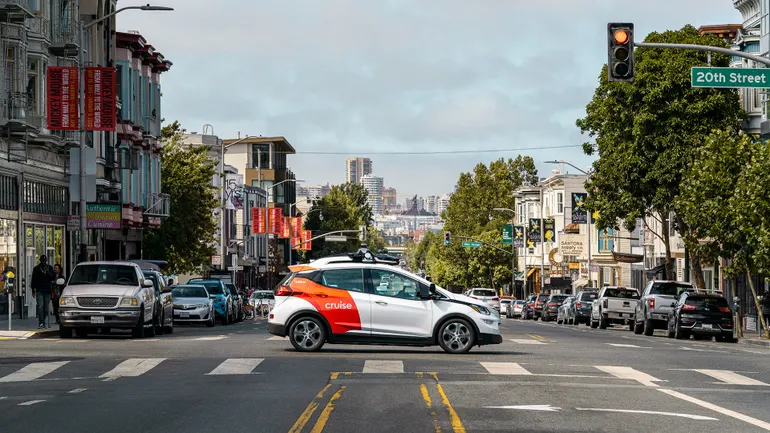
As General Motors' self-driving subsidiary Cruise prepares to launch California's first driverless passenger service for the public, industry and market attention is focused on this historic pilot. The pilot program, officially authorized by the California Public Utilities Commission (CPUC) in June, will initially be free for passengers. According to the permit documents, only autonomous vehicles (AVs) carrying fewer than 15 passengers are allowed to participate. As of now, no further details have been disclosed—Cruise did not respond to requests for additional comment, and a CPUC spokesperson declined to provide more information.
This pilot offers an attractive observation window for California and the entire autonomous driving industry. All parties will closely monitor public reactions to the service and how Cruise and state regulators define the criteria for "success." If the pilot goes well, it could encourage more competitors to follow suit and enter the driverless passenger service field.
The pilot builds on California's already active autonomous driving testing environment. Late last year, the state issued its first deployment permit to Nuro, allowing it to launch a fee-based driverless delivery service in two Bay Area counties. Given California's leading commitment to testing autonomous vehicles on public roads, experts say they are not surprised by this pilot and believe the collaboration with Cruise could accelerate the large-scale deployment of autonomous driving technology. However, industry observers also note that for the pilot to achieve long-term success, clear goals and metrics must be established.
"In many ways, California leads the nation in embracing and promoting autonomous vehicles," said Eric Tanenblatt, global chair of public policy and regulation at law firm Dentons, in an email. "What makes Cruise unique is that they clearly want to test in urban environments and experience the challenges of dense road traffic early on. In fact, these are precisely the environments where autonomous vehicles will truly serve the public."
Data collection will be key
During the pilot, CPUC requires Cruise to submit quarterly reports on "vehicle operations." Industry experts are eager to learn what types of data the company will collect and make public, beyond the already mandatory disengagement reports. Potential data could include encounters of autonomous vehicles on public roads and the frequency of public use.
Mark Rosekind, chief safety innovation officer at Cruise competitor Zoox, which is owned by Amazon, noted that the aviation industry's practice of sharing data to improve overall industry standards could serve as a model for the autonomous driving sector. Zoox also tests its autonomous vehicles in California.
"I'm not advocating for sharing all proprietary data, but rather safety data," Rosekind said. "The Tempe incident (where an Uber autonomous vehicle struck and killed a pedestrian in 2018), I call it 'never again.' Once something like that happens, all data gets shared. No company should have to go through that lesson to learn how to respond. Once is enough, and then never again."
Although California already requires autonomous vehicle companies to publish disengagement reports (reflecting how often safety drivers need to take control from the autonomous system), some experts want more information. The companies themselves also believe that disengagement reports are insufficient and do not deeply reflect whether the technology is mature enough for commercial deployment.
The industry could learn from Tesla. Tesla collects data through real-world visual recognition cameras and analyzes the various scenarios drivers encounter. However, this approach is also controversial, with experts concerned that drivers may not realize they are acting as testers for unvalidated software. According to Jason Marks, head of autonomous driving business development at software company NI, recording everything Cruise vehicles encounter on California streets—such as pedestrians, cyclists, cars, and other obstacles—could serve as an effective yardstick.
"In many ways, California leads the nation in embracing and promoting autonomous vehicles." —Eric Tanenblatt, global chair of public policy and regulation at Dentons
"Disengagement reports alone are far from sufficient to make a substantive judgment on a vehicle's success," Marks said. "I'm curious to see what they ultimately release. I think there are many truly good metrics to choose from... If the metric has a certain level of granularity, it will help genuinely move the industry forward."
Marks believes that one of the most revealing metrics for Cruise will be the frequency of public rides during the pilot. Although the company is not currently allowed to charge fares, public usage of the free autonomous vehicles still needs to be closely monitored to foster positive public opinion.
"I'm not sure what metrics would apply here," Marks said. "But if we can convince the public that these vehicles are compliant, safe, and a viable mode of transportation in the near term, then we can reignite this wave of enthusiasm—'We're back, we're moving forward, and people are excited about autonomous driving again.'"
Is public sentiment shifting?
Autonomous vehicles remain a focal point of public skepticism. Polls consistently show that many people are unwilling to try them due to safety concerns. Previous tests have also repeatedly sparked controversy. Some cities have attempted to bridge this gap with small-scale autonomous shuttles, but there is still a long way to go before they become widespread.
Meanwhile, CPUC officials said in a statement that the pilot could be another way to build consumer confidence in the technology, especially since Cruise has already obtained a driverless vehicle testing permit from the California Department of Motor Vehicles (DMV). Tanenblatt also noted that the CPUC program imposes strict safety standards on autonomous vehicles.
Under the CPUC permit, vehicles must comply with state highway and vehicle standards, and Cruise must submit a passenger safety plan and maintain valid insurance. If it offers commercial services in the future, it will also need a deployment permit, similar to the service Waymo operates in Phoenix.
According to the CPUC's decision approving the pilot, the passenger safety plan includes several requirements. Among them, Cruise must detail how it will "minimize passenger safety risks," including preventing assaults and harassment. The company must also explain how it will ensure passengers board and alight safely, and how it plans to educate the public. CPUC spokesperson Terrie Prosper said Cruise submitted the plan under a "confidentiality claim," so it will not be made public.
Zoox's Rosekind added that it is also crucial for CPUC and DMV regulators to personally participate in the pilot as passengers, as their public support could further enhance public trust.
"Some of the key people responsible for oversight or decision-making should have first-hand experience—perhaps not just with one company, but with several, to understand the differences and the current state of affairs," he said. "This is a way to bridge the current gap where you can't hail an autonomous vehicle at a street corner through an app."
An order issued by the National Highway Traffic Safety Administration (NHTSA) late last month may help convince the public of the safety of autonomous vehicles. The order requires manufacturers and vehicle operators to report crashes when using advanced driver assistance systems (ADAS) or autonomous driving systems.
Additionally, according to Marks, a shortage of drivers for ride-hailing services like Uber and Lyft could also increase public acceptance of autonomous vehicles in California. These companies face difficulties meeting passenger demand and seeking profitability, forcing them to raise prices.
"I think when enough people encounter situations like 'I'm at a bar, I shouldn't drive home, I want to call a ride, but Uber's surge pricing is $50 extra,' if I have the option to take a driverless car home, that would be a very compelling entry point for people to genuinely embrace this technology," he said.
Progress toward permanent service
Tanenblatt said that Cruise's autonomous fleet in California could potentially operate "almost like a public transportation system," directly aligning with passenger needs. But all autonomous vehicles still face technical and regulatory hurdles for widespread adoption, so such broad application may be easier said than done.
Cruise has already sought to lead in autonomous driving development. In May, the company said its first vehicle designed specifically for driverless operation, the Origin (pictured above), would begin production in 2023.
Rosekind, a former NHTSA administrator, noted that while the driverless passenger pilot is a rare opportunity for California, without a national autonomous vehicle regulatory law, the model may not be replicable in other states. He warned that state autonomous driving regulations would form a "patchwork."
"This means there will be no consistency at all," he said. "At the federal level, we have clear rules for all vehicle safety. But the state-level patchwork that people once feared is now unfolding. If you want to operate across states, there is currently no unified plan, rule, or policy regulatory system."
For Cruise, the most revealing aspect of this pilot—beyond technological evolution—may be its fleet utilization. This will help the company gauge public interest levels and calculate the pricing needed to achieve profitability. Jeff Phillips, global director of transportation market strategy at NI, said this could be the most important lesson for Cruise and its competitors.
"They won't earn revenue from carrying passengers, but they can build revenue models based on different utilization rates—what it might have been, or what it needs to be, to achieve positive capital returns," Phillips said. "Perhaps that's the ultimate lesson they really want to learn: where exactly should the price point be?"
Even so, once passenger service becomes permanent, many questions about payment methods for driverless vehicles will still remain.
"Imagine we offer shared rides with multiple passengers," said Andy Taylor, senior director of global strategy at transportation IT company Cubic Transportation Systems. "Who manages the passengers? Who provides additional security? ... Do we need to pull the vehicle over to wait for an inspector? Is that fair to other passengers?"
General Motors CEO Mary Barra said during a first-quarter earnings call in May that her vision for Cruise is a "strategy that is both revolutionary and evolutionary," including greater reliance on ADAS and gradually increasing automation levels as the business expands to more cities.
Despite the promising prospects of the new pilot, Mike Juran, CEO of automotive software company Altia, cautioned that managing expectations is crucial.
"Next year, we won't see autonomous vehicles or entire fleets of driverless taxis. No. If that's the goal, people will be disappointed." —Mike Juran, CEO of Altia
