
How Should Urban Transportation Policies Respond as the Pandemic Reshapes Car Ownership Patterns?
The pandemic has driven some urban residents toward private cars, leading to a surge in new car registrations in places like New York, while public transit ridership remains persistently low. Urban planners and experts are exploring ways to balance travel efficiency and sustainability goals through road redesign, promotion of shared mobility, and infrastructure investment.
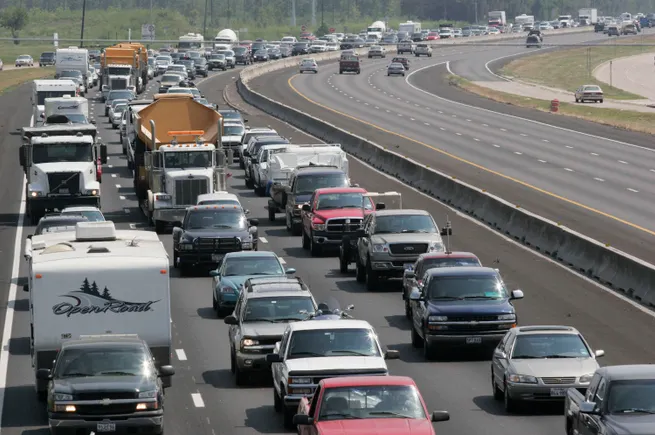
Last August, New York City Mayor Bill de Blasio gave blunt advice to residents at a COVID-19 press conference: "Don't buy a car; cars belong to the past." However, according to The New York Times, new car registrations in New York City in the summer of 2020 increased by 18% compared to the same period the previous year. IHS Markit data shows that nearly 900,000 new cars were registered in the New York metropolitan area in 2020; as of May 2021, an additional 437,548 registrations were added, accounting for about 7.5% of total new car registrations nationwide.
Meanwhile, public transit ridership in New York remains sluggish, with daily subway ridership at less than 50% of pre-pandemic levels. The New York Daily News cited Metropolitan Transportation Authority (MTA) Chief Financial Officer Bob Foran's statement to the board that if ridership does not fully recover, service may need to be cut by 15% in 2023. This poses a challenge to cities that have long pursued "de-automobilization" policies. Eric Beaton, Deputy Commissioner for Planning and Regulation at the New York City Department of Transportation, said: "Any increase in vehicle ownership is concerning. New York functions better when it encourages non-motorized travel."
New York is not alone. The pandemic has changed commuting patterns, reduced public transit ridership, and driven urban residents toward private cars. A McKinsey analysis from December 2020 noted that reducing infection risk became the primary factor in consumers' choice of travel mode, surpassing travel time and cost; the analysis suggested this could "maximally promote private car use, but micromobility and walking/cycling are also expected to grow."
David Keith, Assistant Professor of System Dynamics at MIT Sloan School of Management, has long studied car ownership issues, particularly focusing on "why the shared mobility vision has not yet been realized." A recent study he participated in found that Americans derive enormous value from simply owning a car, a feeling that has been especially pronounced over the past 18 months. Keith said: "During the pandemic, the idea that the car is in the driveway and you can jump in anytime to see the doctor or go to the supermarket is very powerful."
StreetLight Data's analysis of urban travel trends across the U.S. shows that despite many offices still being closed, vehicle miles traveled (VMT) rebounded in spring 2021. VMT in March 2021 was nearly 2% higher than February 2020 levels and 20% higher than March 2020 (when lockdowns began). Overall, VMT increased in 37 states in March 2021. Martin Morzynski, Vice President of Marketing at StreetLight Data, warned: "From a sustainability perspective, if we don't work with businesses, cities, and school districts to prevent everyone from returning to the roads at the same time, we could go back to pre-pandemic levels or worse."
Beaton knows well that once New Yorkers buy a private car, it becomes a "sunk cost, and people will use it." Therefore, as the city reopens, he is committed to making car-free travel more attractive, encouraging public transit, or expanding car-sharing opportunities. He said: "The pandemic has put many people in difficult situations regarding health, safety, and personal choices. Now, as problems are gradually resolved, we want to offer clean and efficient alternatives."
The "hidden value" of cars
Data released by IHS Markit in May shows that national light vehicle new registrations hit a decade high in March 2021, at 1.64 million units. Tom Libby, Associate Director of Automotive Loyalty and Industry Analysis at the firm, called the figure "remarkable, exceeding any single month from 2015 to 2018 (historically the four highest-selling years)." Experts caution that these numbers may reflect pent-up demand and supply shortages from 2020 due to manufacturing constraints.
Owning a car doesn't mean using it daily, but the purchase behavior reflects what Keith calls "hidden value." A study he co-authored, published in Nature Sustainability in June, surveyed drivers in four U.S. cities and found that even when cars sat idle, people still derived value from them. Keith said: "We found that Americans derive an estimated value from cars that is higher than the actual cost of ownership (including maintenance, insurance, fuel, and purchase price). Beyond actual usage time, there is substantial value. If I want to go out for ice cream or run errands, and there's a car in the driveway, that's a form of value."
Another pandemic trend is families moving to suburbs. A StreetLight Data blog post found that people who moved in March and April 2020 relocated to areas with 22% to 33% lower density on average, a significant increase from the previous year. Morzynski himself moved out of San Francisco, saying: "I personally drive more miles now, despite working remotely. San Francisco isn't car-friendly, but now I go into the city once or twice a week, driving 45 miles."
Redesigning roads
Rafael Prieto Curiel, Professor of Advanced Spatial Analysis at University College London, views urban travel as a game: "You want to compete with others in the city to make your trip as fast, cheap, or comfortable as possible." But he says what's best for an individual driver isn't optimal for everyone. In a paper published in July in Royal Society Open Science, he built a mathematical model of urban car use where residents can choose to drive or take public transit. When more people in the model switch to cars due to shorter travel times, a paradox emerges: the city experiences the worst congestion and longest commute times. The model found that the best way to reduce commute times afterward is to limit the number of people allowed to drive, through driving restrictions or increased bus use.
Curiel said: "We all selfishly want to minimize our own time, but selfish behavior leads to suboptimal outcomes for the city. The collective system that pushes you to drive is bad. If we want cities to be livable, this shouldn't happen."
Alex Engel, spokesperson for the National Association of City Transportation Officials (NACTO), said there is "a lot of discussion and concern" among members about the potential impact of pandemic recovery on transportation, especially after cities spent the past decade encouraging sustainable transport through road redesigns and introducing micromobility fleets. Early in the pandemic, many streets were designated for pedestrians and cyclists, and restaurants used curb space for outdoor dining. As businesses reopen, NACTO is working with cities to make some outdoor spaces permanent; the organization, with support from Bloomberg Philanthropies, distributed $50,000 to each of 10 cities for traffic calming and open streets projects, with an additional $60,000 to be allocated this year. The cycling boom is another bright spot in pandemic lifestyles.
New York's Beaton said his department strengthened bike lanes and car-free streets during the pandemic, with an eye toward permanence. Last summer, New York had 67 miles of open streets under a temporary program, which has been extended through 2021. The city is also testing streets restricted to buses or certain types of traffic, using the pandemic as a testing ground for more lasting changes. Beaton said: "We're working to make these measures permanent. How do we preserve their benefits and make them last? People really want them to work."
"Old habits die hard"
The nonprofit Commute Seattle works with businesses and property managers to encourage sustainable transportation policies and benefits, such as transit benefits or bike facilities. Executive Director Kevin Futhey said that before the pandemic, remote work in the city had increased significantly, although only 6% of downtown commuters reported telecommuting in commute surveys. This is a positive signal for reducing peak-hour congestion, and it may persist as more workers and managers have become accustomed to working from home.
However, Futhey worries that if people aren't encouraged to use transit, Seattle could see excessive traffic when it reopens. According to the 2019 commute survey, transit ridership (accounting for 46% of downtown commutes) didn't increase significantly, while solo driving commutes rose slightly (which Futhey says may be statistical noise). He said: "If employers require a return to the office before people are ready to take buses or rail, we could see a bad situation. To restore ridership, transit will be very crowded. People might prefer to drive, worsening traffic."
Futhey is focused on encouraging employers to maintain remote work policies long-term (keeping commuters off the road entirely) or stagger work hours to reduce peak congestion. He said strategies that reduce peak pressure can curb driving by making commutes more pleasant.
Some long-term strategies may be shelved, such as New York's long-awaited congestion pricing (charging drivers entering Manhattan's central business district). After being blocked by the Trump administration, it may not be implemented until at least 2022.
But cities can take more direct measures, starting with getting people back on transit. Boston offered 1,000 workers $60 transit credits and bike-share passes. The Regional Transportation Commission of Southern Nevada gave free weekly transit passes in May to new or returning workers. The Chicago Transit Authority halved the price of summer day passes. The American Rescue Plan, passed in March, provided $30.5 billion in emergency funding for transit agencies, helping to avoid service cuts and fund ridership recovery programs.
Some agencies are rebuilding networks around their most frequent riders. For example, the San Francisco Municipal Transportation Agency used pandemic data to identify essential workers' commute patterns, applying an "equity toolkit" based on ridership in nine neighborhoods to its transit recovery plan, aiming to reduce commute times and increase service for essential workers.
Experts say the infrastructure bill under consideration in Congress presents a prime opportunity for major transportation shifts. The Senate is expected to pass a $1 trillion infrastructure bill, including $39 billion for transit and establishing programs to reconnect divided communities through street redesigns and highway removals (the bill also includes $110 billion for roads, bridges, and highways). Democrats hope to advance another $3.5 trillion package, including climate spending that could boost sustainable transportation funding.
StreetLight's Morzynski said reversing pandemic-era driving trends with these funds requires coordinated efforts from city officials, planners, and businesses. Otherwise, "human nature" may keep people in their cars. He said: "Old habits die hard. If we get these funds, we need to provide infrastructure suited to the present, not go back to plans from a decade ago."