
Can Sun Belt Cities Shift from Pedestrian Danger Zones to Walk-Friendly?
Data shows that pedestrian traffic fatality rates in U.S. Sun Belt cities are significantly higher than in northern cities, with Memphis recording 13.5 pedestrian deaths per 100,000 people in 2022, compared to just 0.77 in Boston. Despite continued population growth and car-oriented urban design, cities such as Tucson, Jacksonville, and Los Angeles have begun implementing targeted measures, including investing $150 million in street safety improvements, adding sidewalks and bike lanes in underserved areas, and reducing speed limits and optimizing signal timing, to improve pedestrian safety.
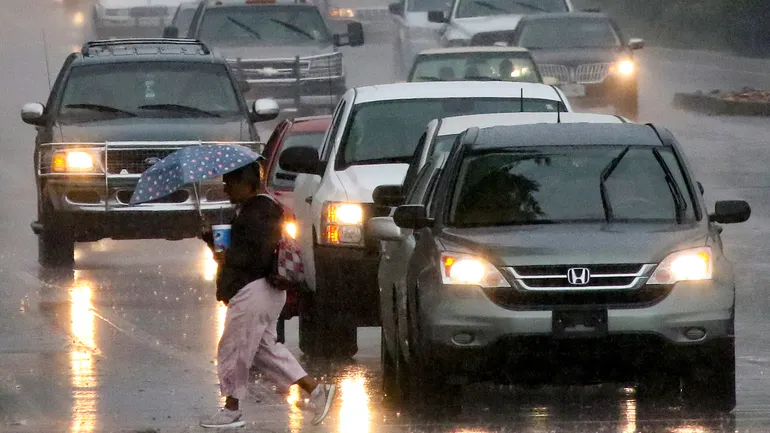
A pedestrian in Memphis, Tennessee, is about 17 times more likely to die in a traffic accident than one in Boston. In 2022, the pedestrian fatality rate in this "Home of the Blues" reached 13.5 per 100,000 people, compared to just 0.77 in Boston.
According to a 2022 report by Smart Growth America, nine of the ten most dangerous states for pedestrians nationwide are in the Sun Belt. A 2020 study by Rice University's Kinder Institute for Urban Research found that Sun Belt metropolitan areas are growing faster than the rest of the United States. The report noted that in these "car-oriented" cities, the low-income population is also growing faster than the rest of the country, and low-income neighborhoods are "located in inconvenient, remote areas, far from jobs, and difficult for public transit to reach."
Sun Belt cities often have higher pedestrian fatality rates
According to an analysis by the Eno Center for Transportation, Southern cities lacking robust public transit have higher overall traffic fatality rates. An analysis by Streetlight Data shows that many Sun Belt cities have higher average vehicle speeds than Northern cities like Boston, Chicago, or Seattle.
"A variety of social trends are converging, all of which have a negative impact on pedestrian safety," said Angie Schmitt. She is the author of "Right of Way: Race, Class, and the Silent Epidemic of Pedestrian Deaths in America" and founder of a consulting firm focused on pedestrian safety. "People are moving to places that are slightly more dangerous," she said.
But these cities are not unaware of the crisis on their streets. Here are examples of how three Sun Belt cities are taking steps to create a fairer environment for pedestrians and road users.

Tucson invests $150 million in street safety
Tucson, Arizona, is one of the booming Sun Belt cities. Between 1990 and 2021, its population grew by 30%, and nearly 20% of residents live below the poverty line. Nearly three-quarters of commuters drive to work alone, only 5% walk or bike, and 3.4% rely on public transit.

According to an analysis by Smart Cities Dive, nearly 50 pedestrians were killed in Tucson last year. In May 2022, voters approved extending a half-cent sales tax for 10 years for street improvements, with $150 million "specifically dedicated to safety improvements that benefit all users and modes of travel... including street lighting, sidewalks, bicycle network enhancements, traffic signal technology upgrades, and traffic calming measures," a project website stated. In June, the city designated and began scheduling three phases of work.
"A few years ago, our pedestrian deaths were around 20, so this number has risen sharply," said Patrick Hartley, Complete Streets Program Coordinator for Tucson's Department of Transportation and Mobility. Tucson's pedestrian fatality rate in 2022 was 8.96 per 100,000 people, ranking second only to Memphis among cities with populations of at least 500,000.
When asked about the reasons for the increase in pedestrian deaths, Hartley described it as a "toxic cocktail," including speeding on city streets, high-speed roads lacking adequate crosswalks, poor street lighting, and substance abuse among pedestrians. A 2022 analysis by the Pima County Medical Examiner's Office found that of 72 pedestrian deaths in the county (where Tucson is located), 71% of victims underwent toxicology screening, and over three-quarters of those tested positive for methamphetamine, fentanyl, or other substances.
Tucson's new funding comes after several other street safety improvement projects. The city has installed over 90 High-intensity Activated crossWalK (HAWK) signals, which warn drivers to stop when activated by pedestrians or cyclists. Hartley said these signals are "extremely effective" but expensive. Each costs up to $100,000, compared to a few thousand dollars for a marked crosswalk and up to about $30,000 for a raised crosswalk. Another project involves upgrading permissive left-turn signals, which turn red when pedestrians press a button to cross the perpendicular street.
Hartley said the most important change is a shift in attitude. "Historically, we were in the phase of widening roads," he said, "but recently we have stopped doing that." The city is now considering introducing "road diets" with bike lanes and safer crossing facilities to reduce traffic flow and lower speeds, aiming to "improve the pedestrian experience on these roads while reducing vehicle collisions," Hartley said. In February, the U.S. Department of Transportation awarded Pima County, where Tucson is located, $1.5 million under the "Safe Streets and Roads for All" program to develop an action plan to improve road safety.

Jacksonville tackles 'persistent poverty areas'
Jacksonville, Florida, is a rapidly growing city with a "very car-centric environment," said Greer Gillis, Senior Vice President and Chief Infrastructure and Development Officer at the Jacksonville Transportation Authority. According to the latest U.S. Census Bureau data, Jacksonville's poverty rate is nearly 15%.
Gillis said persistent poverty areas "are exactly the hotspots for bicycle and pedestrian crashes and fatalities." She cited issues such as a lack of sidewalks, inadequate lighting at intersections and crosswalks, and crosswalks located too far from bus stops.
Gillis said the Jacksonville Transportation Authority is working with the City of Jacksonville, the North Florida Transportation Planning Organization, and the Florida Department of Transportation to place more emphasis on pedestrians rather than cars when building more roads. Gillis said part of the work involves construction along high-ridership transit corridors, where passengers may not have convenient sidewalks or crosswalks to safely reach bus stops.
One project built new sidewalks and bike lanes for residents of the McDuff Avenue and Fifth Street community on both sides of the street. "Residents have already said it's a significant improvement because now they can walk out their front door and come directly to our bus stops," Gillis said.

Los Angeles lowers speed limits
On the West Coast, pedestrian deaths within the city of Los Angeles jumped from 124 in 2020 to 152 last year, an increase of more than 21%. The city's pedestrian fatality rate in 2022 was 3.98 per 100,000 people. Colin Sweeney, Public Information Officer for the Los Angeles Department of Transportation, said in an email that 2022 was a particularly deadly year for traffic fatalities.
"Sadly, traffic violence disproportionately affects the most vulnerable—children, older adults, and unhoused individuals in communities of color that already bear higher poverty rates," Sweeney said.
Vehicle speed correlates with pedestrian fatality risk
The deaths continue: On October 17, a driver charged by prosecutors with traveling at 104 miles per hour lost control of his vehicle and struck and killed four women—all seniors—on the Pacific Coast Highway in Malibu, California (within Los Angeles County), where the speed limit was 45 miles per hour.
For Los Angeles County, the Department of Public Works oversees transportation, including roads, sidewalks, bike lanes, and other infrastructure. Matthew Dubiel, Chief Engineer at the Department of Public Works, explained that its jurisdiction covers various unincorporated cities, suburban, and rural communities. Therefore, "in terms of the solutions we need to propose, it's not one-size-fits-all," he said.
Dubiel said that on county-maintained roads, half of all fatal and severe injury crashes occur on just 4% of the roads. "Speed is a factor," he said, affecting the number and severity of crashes across all areas.
In the county's more urbanized communities, the Department of Public Works is implementing strategies to improve pedestrian safety, including curb extensions to slow vehicle right turns, high-visibility crosswalks, and traffic signals that provide extra crossing time for pedestrians, Dubiel said, adding that these projects "can really start to have an effect at a large population level."
Thanks to a new state law amending the California Vehicle Code, giving cities more flexibility in setting safer speed limits, the Los Angeles Department of Transportation lowered speed limits on 177 miles of streets in the city in 2022. As of April 2022, Los Angeles had also adjusted traffic signal timing at over 800 locations to give pedestrians more crossing time, reducing pedestrian crashes by up to 33%; and installed 79 flashing beacons at crosswalks, reducing pedestrian crashes at those locations by 50%, according to LADOT.
"LADOT is responding to this urgent public health crisis by placing people at the center of all decisions, reversing a historical legacy that prioritized vehicle speed and flow," Sweeney said.
There are also more communities, large and small, working to make streets safer for pedestrians. America Walks, a nonprofit focused on walkable communities, highlights efforts in Durham, North Carolina; Indianapolis; and Boise, Idaho. Other cities, including Nashville, Tennessee, are upgrading crosswalks, eliminating right-turn-on-red, and building bike and pedestrian paths.