
Advocates look to federal funding to curb rising pedestrian deaths
Pedestrian deaths in the U.S. continue to climb, rising 77% from 2010 to 2021, the highest since 1981. Advocates believe federal funding such as the 'Safe Streets and Roads for All' program could offer solutions, but obstacles like outdated design standards and uneven fund distribution must be overcome.
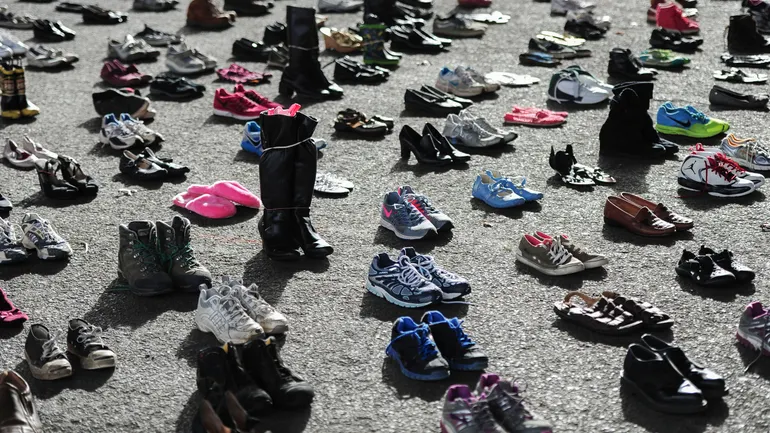
In the United States, walking itself can be fraught with danger: among the 34 countries analyzed by the International Transport Forum, between 2010 and 2019, only Argentina saw a greater increase in pedestrian deaths than the United States. "We are the most dangerous country in the developed world," said Beth Osborne, director of Transportation for America.
The number of pedestrians killed in traffic crashes in the United States each year soared by 77% from 2010 to 2021. "This is the highest number we've seen since 1981, and that is truly disappointing," said Lynda Tran, Director of Public Engagement and Senior Advisor to the Secretary at the U.S. Department of Transportation, during an October 23 webinar.
Pedestrian deaths are rising much faster than overall fatalities
Pedestrian deaths are growing faster than overall traffic fatalities. Officials, advocates, and researchers point to distracted driving, reduced traffic enforcement, larger and heavier vehicles, more dangerous driving behaviors, and increased rates of drunk driving as contributing factors. Pedestrian infrastructure also plays a significant role. Additionally, the National Association of City Transportation Officials (NACTO) notes that outdated federal regulations governing street design and traffic control devices are "full of seemingly arbitrary and functionally dangerous rules."
Numerous efforts are underway to reduce the national traffic fatality epidemic, including Complete Streets initiatives, Vision Zero strategies, the National Roadway Safety Strategy, and the $5 billion Safe Streets and Roads for All federal grant program. However, according to preliminary data released by the Governors Highway Safety Association (GHSA), more than 7,500 people were still killed in road crashes in 2022, and pedestrian deaths continue to rise. Below are some methods commonly used by U.S. cities to improve pedestrian safety, the limitations that transportation officials and other safety experts see, and the steps the Biden administration is taking to advance progress.

Complete Streets and Vision Zero
Complete Streets policies focus on street design to improve safety for pedestrians, cyclists, motorists, and transit users of all ages and abilities. This approach is at least 20 years old, and local governments and metropolitan planning organizations have adopted more than 1,700 such policies.
Deeply entrenched federal and state legislation and policies that prioritize traffic speed over safety may limit the success of Complete Streets initiatives, according to a report released in May by the advocacy group Smart Growth America. "We advocate for legislative and policy changes. We still see barriers to designing and building safer roads for all users," said Osborne of Transportation for America. The report states that federal road funding is primarily provided to states as flexible block grants "with few requirements to prioritize safe travel for everyone."
Vision Zero — a strategy that acknowledges road users make mistakes, so roads should be designed to prevent serious injuries and deaths — was first adopted in the United States by New York City in 2014, after proving successful in Sweden. Since then, more than 50 U.S. cities, counties, and metropolitan planning organizations have adopted Vision Zero plans.
A Smart Cities Dive investigation found that some cities that pledged Vision Zero on their websites have made little progress. "Some cities announce Vision Zero but don't really implement it," said Angie Schmitt, author of "Right of Way: Race, Class, and the Silent Epidemic of Pedestrian Deaths in America."
Most large U.S. cities saw recent increases in pedestrian deaths
Some communities say lack of funding hinders progress. Patrick Hartley, Complete Streets coordinator for the Tucson Department of Transportation and Mobility, said Tucson hesitated to launch a Vision Zero plan "because we didn't have enough resources to support it." But that may be changing. In 2022, the U.S. Department of Transportation awarded $1.5 million to Pima County, which includes Tucson, for its road safety plan under the Safe Streets and Roads for All program. That same year, Tucson voters approved extending a half-cent sales tax for 10 years, which will provide $150 million over a decade for local street safety projects such as street lighting, sidewalks, bicycle improvements, traffic signal upgrades, and traffic calming measures.
In other cities, commitment to Vision Zero depends on political winds. "I've noticed in some cities, changes in high-level political leadership or shifts in commitment have caused Vision Zero efforts to slow down or stall completely," said Leah Shahum, founder and director of the nonprofit Vision Zero Network.
Baruch Feigenbaum, senior managing director of transportation policy at the Reason Foundation, said that although many cities have adopted one or more of these plans, "the results are very, very mixed." Referring to Vision Zero strategies, he said, "The lesson I've learned is that American cities, especially Sun Belt cities, are fundamentally different from many European cities." He explained that while older northern cities were built around public transit, "trying to retrofit" car-centric southern cities to encourage walking and cycling can be politically and economically challenging.

Billions in funding for a Safe System Approach
The federal government's latest attempt to reduce traffic deaths is the Safe System Approach, adopted by the U.S. Department of Transportation in January 2022. Similar to Vision Zero, the Safe System Approach recognizes that people make mistakes, so it argues that the responsibility for reducing deaths and serious injuries is shared by all road users, and that only certain injuries are survivable. It focuses on five categories of interventions: safe vehicles, safe roads, safe speeds, safety for all road users, and post-crash medical care.
"One of the most important things states are doing is embracing the Safe System Approach," said Adam Snider, director of communications at GHSA. According to GHSA, the Safe System Approach "is a shift from traditional road safety thinking" designed to "create a multi-layered safety net, so that if one countermeasure fails, another will help prevent a crash, or reduce the likelihood of serious injury or death when a crash occurs."

Snider said states are "working to update and modernize road designs to better accommodate pedestrian safety" and building more redesigned roads, intersections, and crosswalks. He added that "equitable traffic enforcement" is important, especially in places with higher numbers of pedestrian injuries or deaths.
The 2021 infrastructure law provides $5 billion for the Safe Streets and Roads for All discretionary grant program and increases funding for the Highway Safety Improvement Program (HSIP). The law now allows states to use up to 10% of HSIP funds for certain safety projects.
"Cities have a pretty good understanding of what needs to be done," said Jenny O'Connell, deputy director of programs at the National Association of City Transportation Officials (NACTO). But, she added, "they face many barriers in implementing these changes."
These barriers include political forces seeking to maintain the status quo that prioritizes vehicle traffic, insufficient funding for pedestrian safety improvements, outdated federal traffic manuals, and federal funds distributed through state governments, which O'Connell said "can really change how money is used in cities."
Testifying before Congress last year, Elaine Clegg, then-president of the Boise City Council in Idaho, said: "Federal, state, and local governments must be willing to work together to adjust our road design and speed rules to save lives."


City resources
O'Connell said NACTO advocates for safer streets and provides cities with policy and design resources to help them improve road safety. The organization also helps cities share best practices: "There's a lot of good work in cities, and they can learn from each other." City transportation planners can connect through online forums and NACTO in-person meetings.
The Vision Zero Network also provides resources and peer-learning opportunities for cities. Shahum said the network organizes group "peer exchange" meetings, hosts webinars, and offers online guidance and phone coaching. "We really share what we believe are best practices, models, and templates to support strong Vision Zero work."
GHSA provides publications, webinars, and events for state highway safety offices to share their successes and innovations.
GHSA's Snider stressed that continued progress is crucial. "Behind every number is a human life," he said. "It could be a mother, a father, a son, a community member, or our friends and family. Twenty people a day die simply because they went out for a walk."