
Montgomery County, Maryland Pioneers Air Conditioning Regulations: Reshaping Summer Tenant Rights Protection
Montgomery County, Maryland's 2020 passage of the region's first tenant air conditioning protection law requires landlords to provide cooling equipment capable of lowering indoor temperatures below 80 degrees Fahrenheit from June to September. The law originated from public testimony by tenant Victoria Price in 2019. Although it faced challenges in retrofitting older buildings during implementation, it has operated smoothly overall, providing a reference model for areas such as New York City and Los Angeles County seeking similar legislation.
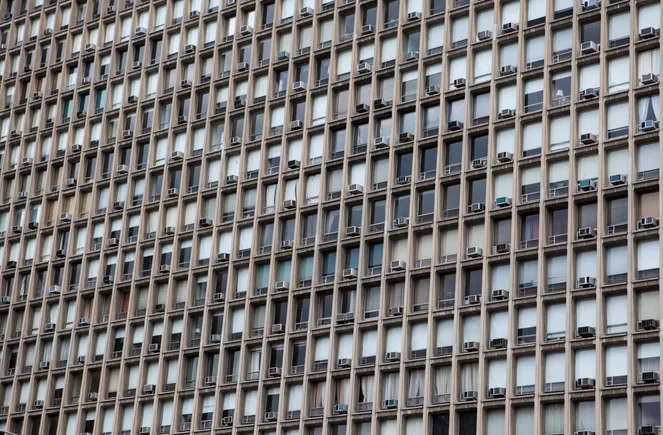
Editor's note: This article is the second in a series of three reports focusing on local policies that grant tenants the right to cooling equipment.Click hereto read the first article,Click hereand read the third article.
About five years ago, Victoria Price urged lawmakers in Montgomery County, Maryland, to pass a policy unprecedented in the region: requiring landlords to provide cooling for tenants in the summer, just as they must provide heating in the winter.
At a public hearing in 2019, Price, then 69, recounted her nearly 14 years as a tenant in a senior apartment building over 50 years old. She said the building's cooling system frequently broke down and sometimes was out of service for extended periods. She mentioned residents hospitalized for heat-related illness, people fainting, and even a neighbor who died from overheating because the air conditioning in their unit did not work.

Her testimony revealed what can happen whenvulnerable groups—such as the elderly, young children, and those with underlying health conditions—lack indoor cooling. As climate change drives record heat in cities that previously rarely saw extreme temperatures, this has become an increasingly importantissue。
Montgomery County in 2020passedthe law supported by Price and local tenant advocates. Under the new policy, many landlords must provide air conditioning from June 1 to September 30 each year, with equipment capable of cooling units to at least 80 degrees Fahrenheit (about 26.7 degrees Celsius). Previously, the county had no maximum indoor temperature standard, only requiring landlords to maintain air conditioning in "normal working order" if it already existed in a unit.
The final air conditioning mandate was scaled back from County Councilmember Tom Hucker'soriginal proposal—which would have required landlords to provide working air conditioning in May as well.The final lawalso exempted single-family homes and some historic buildings. Even so, the law marked a significant shift in the community's perception of cooling: it is no longer a luxury but a necessity, said Matt Losak, executive director of the Montgomery County Renters Alliance. "The purpose of the law is not to make life more luxurious," he said, "but to address health hazards."
As communities from New York City to Los Angeles County follow Montgomery County's lead, the county's experience implementing this rule could offer lessons for local leaders nationwide.
Early implementation challenges
According to county officials and real estate industry representatives, Montgomery County has tens of thousands of multifamily rental units, most of which already had air conditioning. A 2020 estimate by the Greater Capital Area Association of Realtors suggested the new law could affect 300 to 1,400 units. Even so, the first summer after the regulation took effect was "a bit bumpy"—landlords who had not previously provided cooling had to figure out how to install it in their buildings, recalled Tamala Robinson, code enforcement manager for the county's Department of Housing and Community Affairs.
For landlords needing to install air conditioning, the county offered electrification and weatherization funding to help cover costs, said Nathan Bovelle, community development supervisor for the county's Department of Housing and Community Affairs.
"In my estimation, the resistance before implementation was much greater than the actual impact after implementation," said Earl Stoddard, the county's assistant chief administrative officer. "No buildings went out of business, and nothing major happened."
County officials do not track the exact number of tenants who gained working air conditioning because of the law—it is not a metric they monitor. They assume landlords have largely complied, as they have received no feedback to the contrary. "If landlords were having trouble with retrofits, we would hear about it through tenant complaints," Stoddard said.
Losak of the Renters Alliance said landlords seem to have been more diligent about maintaining air conditioning since the law took effect. "We no longer see the kind of disregard for complaints that we saw in the past," he wrote in an email. He credits Montgomery County's regulation with holding landlords more accountable, but added that the improved response to air conditioning issues may partly stem from this summer's extreme heat—which can pose serious health risks to tenants, especially the elderly.
Robinson explained the complaint reporting process: after a tenant calls the county to report that air conditioning is not working, an inspector visits the unit the same day to check and measure the indoor temperature. If the temperature is above 80 degrees Fahrenheit, the county notifies the landlord and recommends action within 24 hours, although technically they have up to five days to fix the problem. If repairs will take longer than five days, the county recommends the landlord provide temporary cooling equipment—Robinson said most landlords comply. If the air conditioning is not repaired within five days, the county issues a citation with a $500 fine, and a judge can double or reduce the fine depending on the severity of the case.
Robinson said few complaints go through the entire process. The few landlords who have received citations so far resolved the issues before their court dates.
Older buildings, more challenges
Brian Anleu has seen both sides of the fight over requiring landlords to provide air conditioning.
He helped draft the Montgomery County bill as a staffer for Councilmember Hucker, the bill's sponsor. Today, he represents the local real estate industry as vice president of Maryland government affairs for the Apartment and Office Building Association of Metropolitan Washington.
He believes one major barrier to providing adequate cooling for tenants in hot weather is older buildings with outdated HVAC systems. These buildings, constructed in the 1960s and 1970s, are often also the affordable ones housing "the county's least affluent and most in-need populations," Anleu said.
Anleu recalled that Hucker's office began pushing the air conditioning requirement precisely because of ongoing complaints from residents of several such older buildings. "Four years later, would I tell you those buildings are always fully compliant?" he said. "Probably not, because those are truly old buildings with truly old systems."
Officials explained that in some older HVAC systems in multifamily buildings, residents cannot simply adjust the thermostat to switch between heating and cooling as the weather changes. The entire building must be switched seasonally from heating to cooling mode (or vice versa), a process that can take up to a week. "If you get a week of hot weather followed by a week of cool weather—like often happens in April and May—that can be very tricky," Stoddard said.
Bovelle recalled that this April, Montgomery County saw near-90-degree Fahrenheit days, triggering a wave of tenant complaints about non-working air conditioning. A few days later, temperatures dropped back into the 40s and 50s.
If landlords turn off heating during hot weather and then the weather turns cool, "they get complaints about it being too cold," Bovelle said.
This dilemma has prompted county officials to engage in lengthy discussions about how to better help landlords determine the optimal time each year to switch HVAC systems from heating to cooling—perhaps by referencing the National Weather Service or other trusted weather sources, Stoddard said.
Owners could upgrade to more modern HVAC systems, but that can be costly, time-consuming, and disruptive to residents, Bovelle said. Additionally, owners often pass costs on to tenants through higher rents, Anleu added. Montgomery County's approvedbuilding performance standards(related to energy use or greenhouse gas emissions) impose an additional burden by requiring landlords to reduce energy consumption while upgrading cooling equipment, he said.
"We keep hearing... there are billions of (federal) dollars available to fund these energy efficiency projects," Anleu said, but the funds must go through a convoluted bureaucratic process involving multiple government agencies before reaching property owners.
"Better than ten people dying"
Robinson said she receives numerous calls from other jurisdictions. A common question: why did Montgomery County exempt single-family rental properties from the regulation? She explained that the intent was to keep these properties as affordable as possible for tenants, but she suggested other local governments consider implementing regulations that apply to all rental properties. "There should be no difference in residents' health and safety... whether you live in a single-family townhouse, a single-family detached home, or a multifamily unit," Bovelle added.
He also noted that Montgomery County could have considered including some historic buildings (some of which are in low-income neighborhoods) in the regulation, for example by working with historic preservation societies to allow structural modifications.
Stoddard suggested that jurisdictions not yet highly built out should strive to "get it right from the start," such as requiring new buildings to be energy-efficient and equipped with air conditioning. For communities like Montgomery County that are already highly built out, mandating cooling and other building upgrades without driving up rents is more challenging. Governments in these communities may need to subsidize retrofits, he said.
Price, the tenant who pushed for the county's air conditioning requirement in 2019, told Smart Cities Dive this June that she has moved out of the building where she testified. But she still remembers the cooling tricks she used when her 12th-floor apartment overheated—from closing all the blinds and using fans to covering windows with poster board. Sometimes she would leave her home and go to her brother's in a neighboring county, she said.
When asked whether she thinks Montgomery County's air conditioning requirement has made a difference, Price answered affirmatively. Even if the law helped only 100 people, she said, "that's better than ten people dying from extreme heat."
"Why would anyone oppose something like this?"