
Is High-Speed Rail in the U.S. Gaining Momentum? Series Report Part 1: From Vision to Reality
High-speed rail development in the U.S. has faced many setbacks, but multiple projects are now moving forward. Transportation Secretary Buttigieg stated that once completed, high-speed rail will spark nationwide demand. This is the first article in a series, outlining historical context and current opportunities.
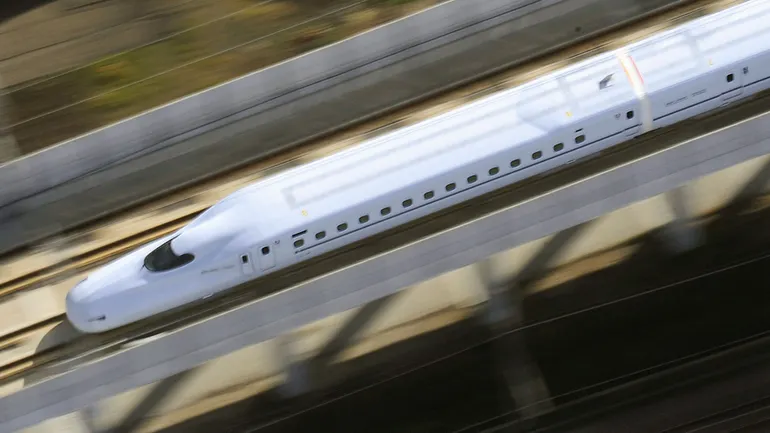
Editor's note: This article is the first in a series by Smart Cities Dive on the future of high-speed rail in the United States. The second article will delve intohigh-speed rail projects under construction or planned in the U.S.The third article analyzes the challenges of building a national high-speed rail network.
In just four years, trains traveling nearly 200 miles per hour could carry passengers from the entertainment capital, Las Vegas, to Los Angeles, the host city of the 2028 Summer Olympics. U.S. Transportation Secretary Pete Buttigieg said in an interview, "Once that happens, people across the country will ask, 'Why can't we have this mode of transportation here?'"
Currently, high-speed rail projects in California and Nevada are under construction, while projects in the Pacific Northwest, Southeast, and Texas are in the planning stage. This summer and fall, government officials, industry leaders, labor representatives, and rail advocates have pointed out that momentum is building in the U.S. to develop true high-speed rail, similar to systems in Europe, Japan, and China.
However, the history of high-speed rail in the U.S. is full of twists and turns, not a smooth fast journey. When Japan introduced theworld's first bullet trainin 1964, some in Lyndon Johnson's administration called for a similar service between Boston and Washington, D.C. Sixty years later, that corridor still lacks high-speed rail.
TheHigh-Speed Ground Transportation Act of 1965authorized high-speed rail research and development, focusing on the Northeast Corridor. Outcomes included the development of the electric-powered automated train (Metroliner) for the Washington-to-New York segment (already electrified), and the gas turbine train (TurboTrain) for the New York-to-Boston segment (not fully electrified at the time). Both entered service in 1969.

Although the Metroliner was designed to reach speeds of 160 miles per hour, it was limited to a maximum of 120 miles per hour due to track conditions and electrical issues. Even so, it reduced travel time between Washington and New York by nearly an hour. Despite the poor reliability of the TurboTrain and Metroliner, by 1971, an Amtrak survey found that half of Metroliner passengers had switched from other modes of transportation.
In 1992, the Federal Railroad Administration (FRA) designated five corridors as having potential for high-speed rail development, including lines connecting Chicago with other Midwestern cities, and a Florida line connecting Miami with Orlando and Tampa. In the late 1990s and early 2000s, the agency added more potential high-speed corridors. In 2009, the Obama administration provided federal funding for intercity rail projects and prioritized high-speed rail. However,Republican governors in Florida, Ohio, and Wisconsin rejected the funding. In 2011, after Republicans took control of the House of Representatives,most funding for high-speed and intercity rail was canceled。
A decade later, with the passage of the bipartisan Infrastructure Investment and Jobs Act, high-speed rail got back on track. This year, federal grants have been awarded totwo projects under construction: a California project aiming to connect San Francisco and Los Angeles, and the Brightline West project that will quickly transport passengers between Las Vegas and Southern California.Five other projectseach received up to $500,000 in planning funds, while other projects received congressional appropriations for planning.
Supporters argue that these high-speed rail projects could mark the beginning of a new high-tech manufacturing industry in the U.S. and drive economic development along the routes. They could also offer passengers safer, more sustainable new travel options. But high costs and unpredictable political winds remain concerns.

Expected economic, engineering, and environmental benefits
Buttigieg said, "The high-speed rail industry we are building in the U.S. now could become an important part of the American economy for the rest of the 21st century." Advocates of this model point to numerous potential benefits.
"High-speed rail is one of the fastest-growing transportation industries in the world," said Democratic Rep. Seth Moulton of Massachusetts. "The U.S. should be part of that industry."
"There will be significant ripple effects within the rail industry and its derivatives—whether in rolling stock, infrastructure, or related services," said Michael Cahill, President of Rolling Stock for Siemens Mobility North America. Siemens manufactures locomotives, light rail vehicles, and passenger trains in Sacramento, California, employing over 2,500 people. The company has been designated as thepreferred supplier for Brightline West's train setsand plans to build a production facility in Horseheads, New YorkDespite these benefits, Moulton believes the biggest job growth from high-speed rail comes from secondary investments—new real estate development and commercial activity.。
Despite these benefits, Moulton believes the biggest job growth from high-speed rail comes from secondary investments—new real estate development and commercial activity.

Dani Simons, Vice President of Communications and Public Affairs at rolling stock manufacturer Alstom, said that beyond job creation, high-speed rail investment helps build domestic manufacturing capacity and expertise in advanced trains, signaling systems, and related technologies. According to Amtrak President Roger Harris, the latest Alstom-built Acela trains will enter service on the Northeast Corridor this winter, reaching speeds of 160 miles per hour on some sections of the corridor for the first time. Both Alstom and Siemens Mobility are bidding on the California High-Speed Rail Authority's train set contract.
"We are creating a new industry," said Greg Regan, president of the Transportation Trades Department at the AFL-CIO. "We are investing not only in the most advanced rail systems but also in people." Both the California project and Brightline West have signed agreements committing to hiring union workers for rail construction, operation, and maintenance.
But high-speed rail is about much more than jobs and manufacturing. "It's a cleaner, safer way to travel," said billionaire Wes Edens. He is co-owner of the Milwaukee Bucks basketball team, co-founder of Fortress Investment Group, and founder of Brightline, whichsupports Brightline West。
High-speed trains are typically powered by overhead electric wires. Brightline West says it plans to power its trains with zero-emission energy by 2045. The company claims that by attracting passengers from cars and planes to bullet trains, it can avoid more than 400,000 metric tons of carbon dioxide emissions annually. The California High-Speed Rail Authority says the first year of operation will reduce greenhouse gas emissions in the state's Central Valley by 92,000 metric tons.
In terms of safety, dedicated high-speed rail lines—such as those under construction in the U.S. and those in Japan and Europe—mostly operate in closed corridors without grade crossings, pedestrian walkways, or rail intersections. Japan's Shinkansen bullet trains have had no fatal accidents in 60 years of operation.

Breaking the speed barrier
Those familiar with America's faster trains, such as Amtrak's Acela on the Northeast Corridor or Brightline's service in Florida, might think the U.S. already has high-speed rail. While Acela trains can reach speeds up to 150 miles per hour (160 after the newest trains enter service), they operate onrail lines built in the 19th centurywith many curves, tunnels, and bridges that limit speed. They share tracks with slower commuter trains and even freight trains. This year, they have also been plagued by climate change-related challenges, including power outages during extreme heat and flooding from severe storms. Brightline's Florida line has a maximum speed of 125 miles per hour.
According to the International Union of Railways, true high-speed rail refers to rail lines that allow trains to reach speeds of 155 miles per hour or more, which almost always requires dedicated, purpose-built tracks. Dedicated high-speed rail projects are expensive, and planning, environmental review, and construction can take years. Terry Hines, a lawyer representing the proposed Texas Central project (connecting Houston and Dallas), said many projects "may fall by the wayside because they are very expensive proposals."
Hines said that completing environmental review and permitting alone could take seven to eight years, and local opposition is inevitable. "Without exclusive federal jurisdiction over these projects, people can use state and local laws to create obstacles."
Politics can also hinder high-speed rail development. "There are clearly people in government who want to puncture this balloon," said labor leader Regan. "They want to kill the momentum we have." But high-speed rail supporters believe the current momentum is enough to overcome any obstacles.
Siemens' Cahill believes support for passenger rail is becoming more consistent across political groups. Edens agreed: "I think high-speed rail is likely to sustain support, not changing with administrations or political winds, because getting this done is a truly important step for the country."
Buttigieg sees a future tipping point: "There's a lot of momentum, excitement, and enthusiasm now, but what I really think has to happen is that people need to see it and experience it firsthand."
For the latest high-speed rail news, check out ourU.S. high-speed rail project tracker, and subscribe to our newsletter to get updates via email.