
Federal $10 Billion Child Care Funding in Limbo, Local U.S. Counties and Cities Face Budget Shock
A federal judge's temporary restraining order against the Trump administration's freeze on over $10 billion in family assistance funds for five states expires this Friday, leaving local counties, cities, and aid agencies facing an uncertain financial outlook. The five states—California, Colorado, Illinois, Minnesota, and New York—filed a lawsuit on January 8 in response to the freeze announced by the U.S. Department of Health and Human Services on January 6. Clare Sanford, vice president of government relations at the Minnesota Child Care Association, said the funding freeze has caused "quite a bit of confusion and fear" locally.
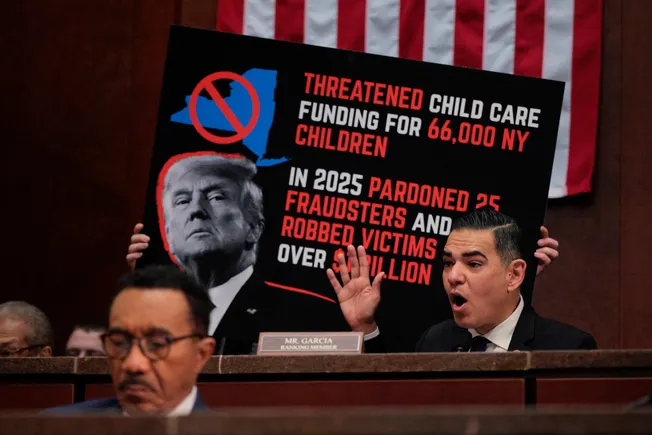
A temporary restraining order issued by a federal judge against the Trump administration's freeze of over $10 billion in family assistance funds for five states expires this Friday, leaving local counties, cities, and aid agencies facing an uncertain financial outlook. The order involves California, Colorado, Illinois, Minnesota, and New York.
Clare Sanford, vice president of government relations at the Minnesota Child Care Association, said the funding freeze has caused "quite a bit of chaos and fear" in the state. Minnesota is one of the states affected by the freeze.
This temporary restraining order stems from a lawsuit filed by the five states on January 8, in response to a January 6 announcement by the U.S. Department of Health and Human Services. The department announced that the five states would not be allowed to use three federal child care and family assistance funds, specifically including:
- Child Care and Development Fund (CCDF):Nearly $2.4 billion, used to help states support child care services for low-income working families.
- Temporary Assistance for Needy Families (TANF):$7.35 billion, used to help states fund programs for low-income families, including employment assistance and child care.
- Social Services Block Grant (SSBG):$869 million, used for child welfare programs and services such as adult education and job training.
The Administration for Children and Families (ACF), under the U.S. Department of Health and Human Services, attributed the funding pause to "serious concerns about widespread fraud and abuse of taxpayer funds in state-administered programs." The agency required the five states to "submit justifications and collection documents before disbursing any federal funds."
California Attorney General Rob Bonta responded that the Department of Health and Human Services "provided no factual or legal basis to block the disbursement of these critical funds and targeted five Democratic-led states based solely on unsubstantiated and baseless allegations of 'fraud'."
Local Government Responses
In addition to the January 8 lawsuit, responses from the five states and their counties and cities include the following:
Minnesota:The state is at the center of the Trump administration's allegations of fraud in child care funding. On December 26, a social media influencer posted a video claiming that some day care centers operated by Somali residents had misappropriated over $100 million in public funds. Federal and state governments are investigating the matter. The Minnesota Department of Children, Youth, and Families (DCYF) announced in early January that investigators from its Office of Inspector General, along with the Minnesota Bureau of Criminal Apprehension, would conduct additional unannounced compliance checks at child care centers statewide.
Sanford said Minnesota is better positioned than some states to absorb the funding shock because the state has allocated "significant state funds" for the child care subsidy program, covering part of the costs for low-income families. State funds are currently keeping Minnesota's Child Care Assistance Program (CCAP) running as usual. In a January 6 program update, DCYF said: "State funds are sufficient to support CCAP services for several months, during which DCYF will work to respond to federal requirements." However, Sanford noted that local child care providers are worried about what comes next.
"Our child care providers already operate on extremely thin margins. For smaller providers, margins can be as low as 1% or even zero," she said. "Because of state-mandated staff-to-child ratios, labor costs account for 60% to 70% of a child care center's budget." Sanford said local governments are already feeling pressure from "declining state assistance amounts," but there are still ways to build resilience in child care funding. She mentioned that some rural communities in Minnesota are working with local employers, counties, and school systems to modify or suspend zoning regulations to allow child care facilities, and to purchase or renovate vacant buildings or schools to help lower operating costs for child care businesses. Sanford also encouraged local leaders to explain to state and federal officials the direct impact of child care funding cuts on their communities. "When local governments say 'this is becoming a macro problem,' it carries weight," she said.
Colorado:According to Colorado Attorney General Phil Weiser, the state received $140 million from CCDF and $135 million from TANF in 2025. Weiser said losing these funds would be "devastating." In a statement, he said: "Families will lose reliable child care, forcing parents and caregivers into impossible situations—either missing work or leaving children in potentially unsafe environments. Child care providers will lose critical funding, and even children not receiving ACF-funded care may be affected as centers are forced to cut staff or close. Employers will lose valuable workers, harming state economies, and families will lose critical cash assistance, unable to afford necessities like gas, groceries, and rent."
Denver's Child Care Assistance Program (CCAP) said it is operating as usual for now but advised users to "plan carefully for January benefits" in case of changes to TANF funding. Denver CCAP has also frozen enrollment for new applicants. CCAP said: "This freeze is implemented due to increased program spending exceeding available funds."
California:According to Bonta, of the roughly $10 billion in federal funds potentially frozen, about $5 billion is designated for California. Los Angeles Mayor Karen Bass said the city is working closely with government partners at all levels to respond to the federal funding freeze. Bass said the Los Angeles Community Investment for Families Department is connecting families affected by the funding cuts with FamilySource centers to provide food distribution, utility, and rent assistance. The city is also working with WorkSource centers to support low-income workers or job seekers.
Illinois:According to Illinois Action for Children, Illinois' Child Care Assistance Program serves more than 150,000 children, funded by both federal and state governments. Ireta Gasner, vice president of Illinois policy at the children's nonprofit Start Early, said: "Illinois funding is still flowing, payments are being made, and the state says there won't be a funding issue in the short term. But uncertainty and fear hang over our organization and families across the state. There is no local or state substitute for these federal funds." Gasner said local communities can help organizations like Start Early explain the economic impact of child care programs to members of Congress and the federal government. "Municipal leaders are great advocates. They want healthy communities, strong local economies, and adequate local employment," and accessible child care is a key part of achieving that, Gasner said. She also advised municipal leaders to proactively reach out to local child care providers. "Know who these players are," she said. "Many child care programs operate as small businesses, so these funding disruptions affect them faster or more destructively."
New York State:According to state comptroller data, New York's child care assistance program received over $1.1 billion from TANF and CCDF last year. In January 2025, more than 95,000 children in New York City benefited from CCAP services. The New York State Association of Counties (NYSAC) said that if federal funds do not come through, the state's counties and New York City will bear the primary burden of financing the state CCAP. NYSAC President and Oswego County Administrator Philip Church said: "This funding freeze could have devastating consequences for innocent children and families who rely on child care subsidies, local taxpayers, and the counties that administer these programs. While we all support rigorous oversight and fraud prevention and work to ensure taxpayer dollars are used appropriately, a one-size-fits-all withholding of funds is the wrong approach, and the collateral damage will far outweigh any fraud concerns."