
Downtown Revival: Leveraging 'Tactical Urbanism' to Rebuild Post-Pandemic Cities
As cities grapple with the pandemic's impact, planners and researchers examine strategies for downtown recovery, including converting offices to residential use, repurposing retail, expanding greenspace, and enhancing digital infrastructure, with an emphasis on 'tactical urbanism' and adaptive policy changes.
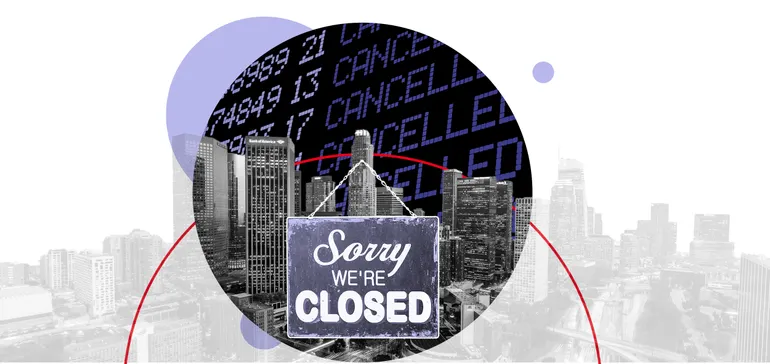
Urban centers stand at a crossroads: some predict imminent decline, while others foresee a robust recovery in the wake of the COVID-19 pandemic. These divergent forecasts have fueled debates among urban planners, developers, and academics about the post-pandemic trajectory of cities. The central question remains: what will become of the cities we know today?
While most cities are likely to "bounce back" from the crisis, many experts concur that this modern rebirth will reshape urban landscapes—particularly downtown districts—in ways that differ from the pre-pandemic era.
Kevin Gillen, senior research fellow at the Lindy Institute for Urban Innovation at Drexel University, asserted that "there’s no reason to think that the current pandemic will kill cities." He cited historical precedents, noting that Rome, London, and Athens have all recovered from "devastating plagues, wars, or natural disasters." However, to avert a catastrophic outcome, cities must rely on prudent decision-making, adequate funding, and openness to innovative planning and operational models.
"We have a saying: Cities don’t die of natural causes, nor are they murdered," Gillen said. "They commit suicide."
The Current State of Downtowns
Today, many urban downtowns and business districts are marked by vacant offices, retail spaces, restaurants, and performance venues.
"Things are at a standstill," said Alan Bernstein, owner of Alan Bernstein Realty Services in Manhattan. "People aren’t coming into the city as they used to, and if they don’t have to, they don’t want to rent in the city. It’s a house of cards on many levels."
Bill Fulton, director of the Kinder Institute for Urban Research at Rice University in Houston, echoed this sentiment: "There’s currently a movement away from cities. People are rethinking the amount of real estate they need if they’re staying home for everything, which pushes them out to cheaper areas."
This exodus triggers a ripple effect. In New York City alone, restaurant and bar closures number into the thousands, taking jobs and tax revenue with them. In Philadelphia, where revenue derives from wage and business taxes, funding for public services is in a precarious state. In Washington, DC, only 5% of office workers had returned as of summer 2020, according to the DowntownDC Economy Update.
"The next few months will continue to be difficult for DC and other downtowns," said Gerry Widdicombe, director of economic development at DowntownDC. "Longer-term projections are very difficult to make at this time, particularly regarding the office market."
Adapting Commercial Office Space
A mid-October Gallup poll found that one-third of Americans are still working from home amid COVID-19, with two-thirds of those remote workers hoping to continue remote work as economies recover. Thus, the question of future office occupancy rates remains one of the toughest to answer.

"Clearly, we know that people can work from home," said Widdicombe. "My guess would be we’ll have lower demand for office space in the future, but how much lower? Nobody knows."
Direct commercial real estate investment fell nearly 30% globally in the first six months of 2020, according to real estate services company JLL. City governments may need to repurpose commercial office spaces if demand continues to drop, but opportunities could arise if square footage costs dip as well.
"I think there will be a market to convert office buildings into residential space," said Fulton. "Three to five years down the road, people will again want access to the amenities that cities afford."
Bernstein noted that it's "not structurally difficult" to convert interior office spaces for alternative uses, but challenges may arise in "dealing with the bureaucracy to get approval."
According to Gillen, the high cost of city real estate was already forcing changes to building usage, and the pandemic accelerated that trend. "We were seeing demand for multi-use space," he said. "Municipalities are rezoning so that residential spaces now include office space, gyms, and restaurants, which will be a silver lining to balance the loss in the commercial sector."
Restaurants and Retail
Retail space will be hard to repurpose in a city's downtown, said David Downey, president and CEO of the International Downtown Association (IDA). He noted that retail space was overbuilt by up to 5% per capita in most cities pre-pandemic, as brick-and-mortar stores struggled to stay afloat in the age of e-commerce. "The best way to reuse that space is to be more inclusive and to target new, smaller businesses," he said.
There’s also the question of how to utilize vacant restaurant space and prevent further losses. Many cities have permitted changes allowing eateries to spill onto sidewalks and streets, but cities are now determining whether they can continue offering safe outdoor dining as winter approaches.
"This is the immediate challenge here," said Downey. "From a design perspective, there’s work to be done to continue flexible use of outdoor space. If the pandemic continues into next summer, the same will hold true for providing cooler outdoor spaces in warmer climates."
Yet the rapid pace at which many municipalities adjusted ordinances to allow outdoor dining paints an optimistic picture for the utilization of various spaces moving forward, Fulton said.
"Small changes to codes is often all it takes to salvage a bad situation," he said. "There are multiple instances in the past where cities have successfully addressed needs by changing zoning, and getting creative, and that can work moving forward, too."
Downey said that the pandemic has served as an advent of "tactical urbanism."
"Cities have demonstrated they can go in with a light touch, instead of making a permanent change, and be effective," he said.
Greenspace Expansion
The pandemic has also spurred greater adoption of outdoor activities as Americans seek pastimes that adhere to social distancing guidelines. Parks and greenways are welcoming more visitors, and summer point-of-sales data show significant jumps in purchases of bikes, kayaks, and other outdoor gear.
"It’s absolutely not too early to be thinking about expansion of park space," said Downey. "Cities understand that creating and expanding public play space is desirable."
"Small changes to codes is often all it takes to salvage a bad situation."

Bill Fulton
Director, Kinder Institute for Urban Research at Rice University, Houston
Plenty of underused or vacant space can be tapped for park development, Fulton said. He also noted that in many cities, space along waterways and greenways was expanding with biking and walking paths before the pandemic.
"Houston, for instance, has been reclaiming greenway space for several years, and there are more than 100 miles of it now," Fulton said. "With the pandemic, I’m not quite sure what people would have done without it."
The demand for more greenspace is evident, but Siddhartha Sen, associate dean and professor at Morgan State University's School of Architecture and Planning, questions the widespread political will for such expansions.
"Cities need federal and local government support on a large scale to make this happen," he said. "History suggests there is a lack of will to repurpose open spaces, even though it is good for cities."
The Role of Technology
Efficient technology and increased public access to Wi-Fi will be crucial to advance the development of more flexible spaces in cities. "This is a big issue that needs to be addressed," said Sen. "We still have wide disparities in this regard."
"Tech plays an important role," agreed Fulton. "There’s a lot more pressure to provide public Wi-Fi for work and play in a city."
This even extends to urban mobility, Fulton said. "We know public transit is essential for many workers ... But it has taken an enormous hit because people don’t want to use it during a pandemic. So tech can assist in creative transportation, like Uber pools."
Widdicombe’s hope is that, in addition to boosting Wi-Fi access, governments will continue to offer micro-grants and other funding to provide relief and help businesses stay afloat. "Cities will have to become underwriters like banks," he said. "They have to take action to help with survival."
The crystal ball for downtowns is certainly foggy at this stage, but Widdicombe predicts that even as cities become more virtual, they will continue to play an important role in society.
"Cities have been around for thousands of years and serve as a crossroads where people get together to exchange ideas and goods," Widdicombe said. "The infrastructure will still influence where people go, even if that looks different."
"History is clear on these things — the future's not preordained," Gillen echoed. "As long as the location value is there, cities will bounce back. The future is much more in our hands than we realize."