
Texas, Florida and Phoenix Heat Safety Rules Face First Real-World Test This Summer
This summer marks the first real-world test of divergent heat safety policies for outdoor workers. Texas and Florida have enacted laws prohibiting local governments from requiring employer-provided water breaks, while Phoenix has adopted a city ordinance mandating heat safety plans for contractors. Meanwhile, OSHA advances toward a federal heat standard.
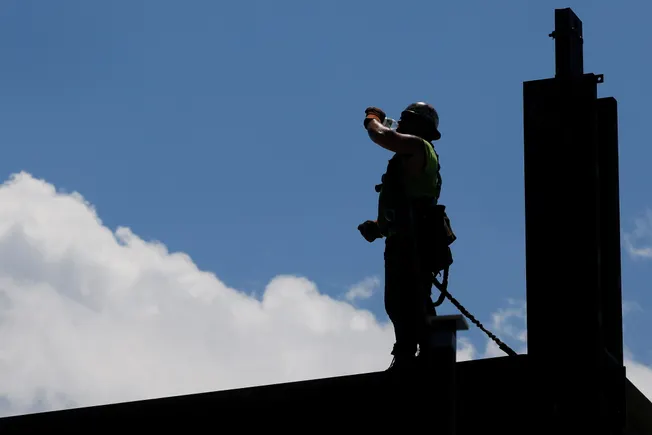
As the calendar turns to Memorial Day, the traditional start of summer, longer daylight hours often help contractors accelerate project timelines compared with winter months. Yet summer also brings intense heat across much of the United States, posing serious health risks to outdoor laborers. The safety of workers in hot climates has drawn national attention in recent years, particularly as research indicates global air temperatures are rising and will continue to do so.
According to NASA, last summer was the hottest in 2,000 years in many parts of the world. Miami recorded its hottest July ever, El Paso saw temperatures exceed 100 degrees on 70 occasions, and Phoenix hit 110 degrees 54 times.
For outdoor workers in certain states, this summer will be the first under new rules—and in some cases, new prohibitions against mandates—governing water breaks. Texas and Florida have passed laws preventing municipalities within their borders from requiring employers to provide water breaks to workers.
In Florida, Gov. Ron DeSantis signed House Bill 433, which will bar cities and counties from enacting their own heat safety regulations starting in July. The Texas law, dubbed “The Death Star Bill” by opponents, is currently in effect, though cities including Houston and San Antonio have filed lawsuits over the legislation.
These laws do not preclude employers from voluntarily offering breaks; they simply prohibit local governments from mandating them. Conversely, one municipality has recently moved to strengthen worker protections. In March, the Phoenix City Council unanimously adopted an ordinance requiring companies working on city contracts—including subcontractors—to have a documented heat safety plan. The plans must include:
- Availability of free, cool drinking water.
- The ability to take regular, necessary breaks.
- Access to shade or air conditioning.
- Acclimatization practices.
- Training on heat illness and injury.
The rationale for state-level preemption is to avoid subjecting companies to a patchwork of local regulations, where one jobsite might require breaks and another might not. “I empathize with that [argument], but these requirements are very basic. They’re not strenuous, they’re not overly burdensome,” Florida State Rep. Anna Eskamani, a Democrat, told Construction Dive around the time of House Bill 433’s passage. She added that companies operating across broad regions often have the resources to track varied rules.
Opponents of the no-mandate laws, such as the American Civil Liberties Union, argue they strip away worker safeguards, making it easier for employers to deny breaks and other protections.
Protecting workers
As state and local governments diverge on heat protections, OSHA has begun developing federal guidance. The agency has specific standards for hazards like falls, trench excavation, steel erection, and handling volatile substances, but it lacks a dedicated rule for heat exposure.
OSHA is advancing a heat safety standard, and in April it cleared a procedural hurdle in the rulemaking process. The agency’s head has indicated it is a priority. “We are working diligently on getting out a proposed rule,” Doug Parker, assistant secretary of labor for occupational safety and health, told Construction Dive at a construction safety event earlier this month.
Under the Occupational Safety and Health Act of 1970, employers are required to abate hazards, maintaining workplaces free from “recognized hazards that are causing or are likely to cause death or serious physical harm.” In 2022, OSHA launched a national emphasis program that educates employers on the three primary abatements for extreme heat: water, rest, and shade.
Enforcement, however, remains limited. OSHA does not view itself as a punitive enforcer, and Parker has said the best way to curb industry hazards is not through citations but by partnering with industry leaders to raise awareness and embed safety into workplace culture. Still, OSHA can cite employers under its general duties clause—a 5(a)(1) citation—for failing to protect workers from extreme heat. Such violations cannot be used to establish repeat citations, which would increase fines for subsequent noncompliance.
Tips to beat the heat
Despite the absence of nationwide rules, most contractors follow commonsense practices to keep workers safe in summer. OSHA offers additional guidance. The agency notes that nearly three-quarters of heat-related injuries occur within the first week of working in heat, underscoring the importance of gradual acclimatization.
OSHA’s advice for acclimatization includes:
- Scheduling shorter shifts in the heat with more frequent breaks.
- Training workers on heat stress and its symptoms.
- Monitoring new workers for those symptoms.
- Using a buddy system.
- Allowing workers new to heat to stop working if they experience symptoms.
Safety officials also recommend drinking one cup of cool water every 20 minutes, even without thirst, wearing breathable clothing, monitoring for signs of heat illness, and taking frequent breaks in the shade. “This is a responsibility of everyone to take a values-driven approach to health and safety and embed it in the culture of their work, from the top of the organization to the bottom,” Parker told Construction Dive.

