
Wildfires and COVID-19 Double Impact on West Coast Cities in the United States
A wildfire sparked by a gender reveal party in San Bernardino County, California, has burned nearly 9,000 acres of land. Against the backdrop of the COVID-19 pandemic, the extended wildfire season, deteriorating air quality, and pandemic prevention measures are compounding, posing severe challenges to the health of residents in West Coast cities, firefighting manpower, and public resources. Local governments are adjusting shelter strategies and public awareness campaigns, and are attempting to mitigate long-term risks through investments in forest management.
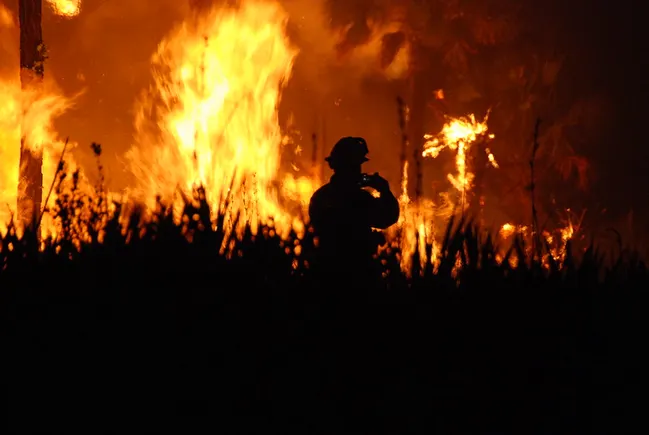
Last weekend, a gender reveal party's pyrotechnic device at El Dorado Ranch Park in San Bernardino County, Californiatriggered a massive wildfire, which had burned nearly 9,000 acres by Monday afternoon. As concerned California residentsturned to social mediato follow the events, the fire and its related health risks are rapidly spreading across an already stressed state.
So far this year, California has seen1.68 million acresburned, leading to over 100,000 evacuations and7 deaths, with thousands as far away as Idaho and Utah facing hazardous air pollution levels. On August 19, air quality in the San Francisco Bay Area was measured asthe worst in the world, with neighboring cities maintaining unhealthy levels of fine particulate matter (PM2.5) for consecutive days.
Even before August, dangerous PM2.5 levels had made national headlines, as high concentrations of particulate exposureare linked to chronic respiratory diseasesthat may make people more susceptible to COVID-19. Now, local officials are working to manage the added challenges and costs of a severe wildfire season amid the pandemic, striving to protect residents' health.
Clean air refuge options are dwindling
During wildfire season, burning trees and materials release a mix of gases and fine particles into surrounding communities. The wildfire season now lasts on averageabout 78 days longerthan in the late 1970s. According to theU.S. Centers for Disease Control and Prevention, even for healthy people, wildfire smoke can cause symptoms like coughing, difficulty breathing, and chest pain.
"Whether or not we're in a pandemic, we know smoke exposure is harmful to health—and smoke exposure can weaken our ability to fight COVID-19," said Nadire Dubuisson, an environmental toxicology expert at the Multnomah County Health Department in Portland, Oregon. "For high-risk groups, several consecutive days of smoke exposure will certainly increase vulnerability."
In non-pandemic years, people could take refuge from smoke in clean workplaces or rest in public places like libraries, malls, or cinemas equipped with HVAC systems with air purifiers. Shelley Tan, chief toxicologist at Public Health - Seattle & King County, said public health departments usually urge residents to adopt these practices, but doing so this year is less realistic.
Therefore, when asking residents to stay home to avoid smoke, city officialsmust considerwhether these people have cooled shelters in hot weather. Cooling centers, which typically serve as refuges during heat waves accompanying wildfires, have opened in some California cities. The California Department of Public Healthreleased COVID-19 guidelines for cooling centersin late spring, covering mask wearing, physical distancing, cleaning and disinfection, and screening measures.
Los Angelesand inland cities like Folsom, California, have operated cooling centers throughout the summer or part of it, while Multnomah County in Portlandopened cooling centers according to guidelines。
on two days in May when temperatures exceeded 90 degrees Fahrenheit. In the Pacific Northwest, although some areas (especiallyeastern Washington) have already seen unhealthy air quality, cooling centers may not open this year. According to Tan, Seattle is "unlikely" to open such centers during severe smoke events; she said doing so would create capacity issues because some municipal buildings typically used for air purification are currently housing people who are homeless due to the pandemic.
Workforce impacts
Beyond health concerns, COVID-19 has exacerbated labor shortages in fighting wildfires.
California relies in part on its prison population to help fight wildfires, a practicecriticized by criminal justice advocatesthan in the late 1970s. According to theThe California Department of Corrections and Rehabilitation (CDCR)earlier this season faced a shortage of firefighters as inmates were transferred or released early to prevent the spread of the coronavirus.
According to CDCR, about 2,200 inmates with fire-line qualifications are currently working in conservation camps or at fire scenes. Governor Gavin Newsomannounced in early Julythat the state would hire 858 additional firefighters and six California Conservation Corps (CCC) crews by October to fill the staffing gap.

.jpg)
Cities turn to new outreach methods
Due to COVID-19, local governments are conveying wildfire safety information to residents in different ways.
"This year we're asking people to stay home to avoid smoke—shelter in place," Tan said. "The best way to deal with both smoke and COVID-19 may be to stay home and try to create a clean air room."
Cities should also encourage residents to plan ahead. Tan said that before smoke arrives, residents should clean their HVAC systems and ensure they are set to the highest setting; purchaseCalifornia-certifiedportable air purifiers; and can evenmake DIY air cleaning devices with box fans and furnace filters.
Multnomah County in Portland has distributed 200 box fans and furnace filters to vulnerable groups to "raise awareness" of this relatively inexpensive air cleaning method, Dubuisson said. Recipients include members of communities of color, those over 60, pregnant women, or people with certain medical conditions.
Seattle is also working with thePuget Sound Clean Air Agency, which covers four counties, to provide a "limited number" of box fans and furnace filters to communities that cannot afford them, Tan said.
Although residents are accustomed to wearing cotton or paper masks to prevent COVID-19, masks cannot be relied upon to protect against wildfire smoke. In heavy smoke, it's best to stay indoors: "Don't get a false sense of security just because you have a bandana over your face," Dubuisson said.
Financial and emotional costs
States are trying to address wildfire spread through effective investments.
Washington State Public Lands Commissioner Hilary Franzintroduced a billproposing to spend $63 million annually on wildfire response. Meanwhile, Oregon Governor Kate Brown releaseda draft planto "treat" about 300,000 acres of forestland annually through logging, prescribed burns, and ecosystem restoration projects to reduce wildfire fuels. The $4 billion proposal aims to treat about 5.6 million acres statewide over the next 20 years.
In October 2019, Governor Newsomallocated$210 million from the Greenhouse Gas Reduction Fund for forest health and fire prevention projects, enabling state fire agencies to reduce dry kindling in forests. The fund also implemented a forestry corps program operating four crews to carry out forest health and projects reducing dry woody material in high-risk fire areas.
In terms of emotional costs, the risks to residents this year may be particularly pronounced.
David Eisenman, associate professor at UCLA and director of the Center for Public Health and Disasters, said that if more wildfires in the West cannot be prevented, "we will face weeks of wildfire and smoke events, forced to stay indoors, with limited activities and gray summer skies."
"After months of lockdown, with limited indoor and outdoor spaces available, you enter a new kind of lockdown," he said. "You go back home, staring at the same four walls and noisy kids—that must be tough. Especially if it lasts a long time, it can become a real problem."
"People can endure a few days or a week," Eisenman said, "but if you can't go out to exercise or can't go to the woods or a park on Saturday, it becomes a more emotionally difficult situation."
Editor's note: This story has been updated to reflect air quality changes in the Pacific Northwest.