
Five Clean Energy Ballot Initiatives Poised to Push U.S. States and Cities Toward 100% Renewable Energy
During the 2020 U.S. elections, multiple local clean energy ballot initiatives were passed, covering Nevada, New Mexico, Columbus, Denver, and Boulder, aiming to push states and cities toward 100% clean energy goals.
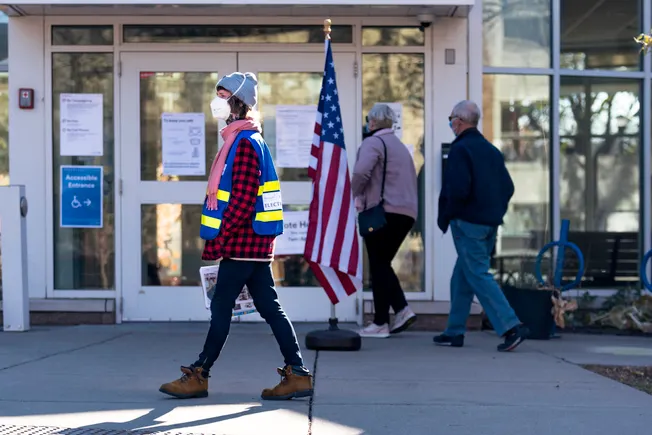
As vote counts in several battleground states were released, former Vice President Joe Biden held a narrow lead over President Donald Trump. Meanwhile, Republicans were likely to retain their Senate majority and flipped eight House seats, reducing the Democrats' previous 35-seat majority.
At the local level, as in previous elections, energy issues were less influenced by partisan politics.
Two state-level clean energy ballot initiatives passed. One initiative in Nevada strengthened the renewable portfolio standard (RPS) adopted through a recent wave of state clean energy commitments. Another initiative in New Mexico will reorganize the state's regulatory agency, which had been seen by the governor, legislature, and clean energy advocates as attempting to undermine the state's clean energy laws.
Meanwhile, cities continued to advance aggressive clean energy goals. Columbus, Ohio established a community choice aggregation program that will provide the city with net 100% renewable energy by 2023 through American Electric Power (AEP). Denver voters approved a sales tax increase to fund emission reduction projects.
According to Farrell, local control over energy appears to be the best path to achieving 100% renewable energy goals. Only cities with control over their energy systems have succeeded so far, while "for everyone else, it's just an aspiration," he said.
"I'm disappointed with the outcome of Boulder's Measure 2C," said John Farrell, co-director of the Institute for Local Self-Reliance (ILSR) and director of its Energy Democracy Initiative, in an email. Local advocates said the city will not stop pushing Xcel Energy to move faster and deeper toward its 100% carbon-free energy goal. Farrell credited the city's years of effort for the state's broader push on clean energy.
"I attribute much of Colorado's progress on clean energy to the pressure Boulder has put on Xcel through the municipalization campaign," he said. "In the absence of market competition, the takeover campaign was an important check on Xcel's monopoly power. It also focused on the local economic benefits of transitioning to renewable energy, and I worry that this issue won't be as important to Xcel Energy even if it invests in wind or solar."
Nearly 200 local governments have committed to transitioning to 100% renewable energy, and eight states have committed to carbon-free energy. Here are five ballot initiatives that passed or could pass this year, aimed at helping states and cities make this transition.
Nevada Question 6: Strengthen the state's RPS standard
Nevada's Question 6 sets a goal of achieving a 50% renewable portfolio standard by 2030, requiring the state's utilities to source half of their electricity from renewable sources—including solar, geothermal, wind, biomass, and hydropower—by then.
As of Thursday morning, Question 6 had support from 56.4% of voters across 75% of precincts reporting.
Although Nevada passed Senate Bill 358 in 2019, requiring its utilities to generate 50% of their electricity from renewable sources by 2030 and strive for 100% carbon-free resources by 2050, this ballot initiative would write that goal into the state constitution to protect it from future political headwinds, according to advocates of the measure.
Similar to the 2019 law, Question 6 would require the RPS to increase annually until 2050, although SB 358 set a more aggressive pace, requiring a 29% RPS by 2023, while the constitutional amendment requires a 26% RPS by 2023.
NV Energy, the state's major utility, plans to double its renewable energy by 2023 and ultimately supported the 2019 law.
On October 27, the utility requested bids for new renewable energy projects to add to its portfolio, specifically seeking projects that meet the state's RPS standard. It said it would also consider standalone energy storage systems and proposals combining storage with renewables. Bids are due by January 6, 2021.
The utility did not respond to a request for comment on the ballot initiative.
Question 6 also appeared on the 2018 ballot—after Democrats swept the executive and legislative branches, it passed with 59.28% of the vote. In Nevada, ballot initiatives must pass twice to become part of the constitution. Former Nevada Governor Ryan Sandoval (R) vetoed a bill similar to SB 358 before being defeated by Democratic Governor Steve Sisolak in 2018.
According to the U.S. Energy Information Administration, Nevada has the strongest solar potential in the nation, along with strong geothermal potential. Currently, natural gas powers most of the state's electricity—62.8% in 2018—while renewables account for 28.6%.
New Mexico Amendment 1: Depoliticize the utility regulator
New Mexico's amendment would change the state's Public Regulation Commission from a five-member elected body to a three-member commission appointed by the governor and confirmed by the state Senate.
As of Thursday morning, the measure had 55.6% support across 97% of precincts reporting.
Amendment 1 reflects the growing tension in recent years between state lawmakers, the governor, and the regulatory commission.
In 2019, the state legislature passed a joint resolution to place the amendment on the 2020 ballot. But Governor Michelle Lujan Grisham (D) said in August that she wanted to speed up the process, because the ballot initiative, if passed, would not take effect until 2023. The governor's office did not clarify whether it would continue to seek to expedite the change if Amendment 1 is assumed to pass.
She and members of the legislature were frustrated with the commission for "killing job creation" because it slowed the retirement of the San Juan coal plant and the adoption of renewables—the legislature had passed the Energy Transition Act earlier that year, requiring the state to achieve 100% carbon-free electricity by 2045. Just a week after the governor's announcement, legislative attorneys began exploring impeachment proceedings against three commissioners, initiated by state Senator Jacob Candelaria (D).
Commissioner Cynthia Hall said last year that the root problem was that the commission had become too politicized. She was one of those in the state pushing for commissioners to return from elected to appointed positions.
"My impression is that when commissioners were industry professionals, they seemed better prepared for the job," she said in an August 2019 interview. "Their level of competence was higher."
Opponents of the measure include Commissioners Theresa Becenti-Aguilar and Jeff Byrd, as well as Chairman Steve Fischmann. Byrd and Becenti-Aguilar were two of the three commissioners who faced impeachment last year, the other being Commissioner Valerie Espinoza.
"Perhaps special interests have decided that influencing the appointment process might be easier than influencing elections where the public has the final say. We believe it is inappropriate for regulated entities to choose their own regulators," Byrd and Becenti-Aguilar wrote in a March 2019 op-ed. According to Ballotpedia, eleven states, including New Mexico, have elected utility regulators, while 28 states have governor-appointed bodies and one state has a legislature-appointed body.
Lujan Grisham said in a statement that she was "relieved" by the passage of the amendment.
"[We] need regulators with qualifications and experience to ensure reliable, affordable energy for our families and businesses—not career politicians," she said. "When the Public Regulation Commission is guided by qualified independent experts with professional backgrounds and technical skills in energy, technology, finance, and law, all New Mexicans will benefit."
Columbus Issue 1: Achieve 100% renewable energy by 2023
Columbus, Ohio voted by a 75.6% majority to allow the city to establish a program to aggregate retail electricity load within municipal boundaries. The program would allow the city to procure 100% of its electricity from renewable sources by 2023, although it provides an opt-out option.
The city's aggregated load would enter into a supply contract with American Electric Power (AEP), which would build new projects within the state. AEP Ohio did not respond to a request for comment on implementation details, but the Columbus Dispatch reported that, due to potential regulatory hurdles in siting new projects, the utility might need to temporarily purchase credits over the next three years to bring the city to 100% renewable energy.
The mayor of this city of nearly 900,000 set a goal earlier this year to achieve carbon neutrality by 2050, and this initiative is expected to be a cost-effective way for the city to meet that goal. According to the Dispatch, rates under the program have not yet been set, but advocates said they do not expect rate increases.
"Cost considerations are very important when planning the way forward. And this aggregation program won't raise electricity bills," said Stefan Schaffer, urban strategist for the Natural Resources Defense Council's American Cities Challenge program.
According to Farrell, local control over energy appears to be the best path to achieving 100% renewable energy goals. Only cities with control over their energy systems have succeeded so far, while "for everyone else, it's just an aspiration," he said.
Schaffer said Columbus would become the third-largest U.S. city to form such a program, indicating greater demand for clean energy progress in the region. Hundreds of other cities in the state have adopted community choice aggregation programs, and Cincinnati announced plans earlier this year to build the nation's largest municipal solar array—a 100-megawatt, 1,000-acre project located 40 miles east of downtown.
"What's exciting about the passage of this ballot initiative in Columbus is that it reflects a broader trend in the state and region that is almost detached from the polarization pattern," Schaffer said. "People on both political wings see it as... an opportunity on the path to broader economic recovery."
Denver Ballot Measure 2A: Raise taxes to address emissions
Denver, Colorado's Measure 2A proposes an additional 0.25% sales tax within the city and county for climate-related initiatives, including investments in new solar and storage projects, as well as job training in renewable energy. Overall, the initiative is expected to add $40 million annually for climate projects and raise the sales tax from 8.31% to 8.56%.
As of Wednesday afternoon, the initiative had support from 63.87% of voters.
Denver aims to cut carbon emissions by 40% by 2025, 60% by 2030, and achieve 100% net-zero emissions by 2040. The city council voted in August to put the tax increase before voters via the November ballot, replacing an earlier proposal that taxed energy use by homes and businesses. A similar initiative in Berkeley, California appeared to have failed Wednesday afternoon.
Other initiatives supported by the measure include community-based environmental justice projects, resilience projects for vulnerable communities, clean transportation projects, and energy efficiency. The measure does not increase taxes on essentials such as food, water, fuel, medical supplies, and feminine hygiene products.
"There are still many ballots to count, but so far Denver residents seem to have shown with their votes how much they value our climate and future," said Denver City Councilmember Jolon Clark, who supported the measure, in an email. "2A funding will allow us to act quickly to protect our land, air, and water while leading how cities tackle these challenges head-on. Our frontline and communities of color are disproportionately harmed by climate change, and when 2A passes, it sets a new standard for addressing climate change while tackling inequality."
Boulder Ballot Measure 2C: Compromise with Xcel on municipalization
Boulder, Colorado's Measure 2C will decide whether the city should enter into a 20-year franchise agreement with its current utility, Xcel Energy, or continue efforts to create a city-owned utility. The ballot initiative is part of an ongoing settlement agreement between the city and the utility.
As of Wednesday evening, 53% of voters supported the agreement with Xcel, according to the Boulder Daily Camera.
Driven by budget pressures from the COVID-19 pandemic, the city reached a settlement with the utility in August, after discussions began in April. Boulder has been trying to form its own municipal utility since 2015 but has encountered numerous obstacles, including resistance from the utility and customers over projected costs.
Under the franchise agreement, if approved by the city, Boulder would still have the right to opt out of Xcel's service in 2026, 2031, or 2036 and resume pursuing a municipal utility. The city could also terminate the agreement in 2022, 2024, or 2028 if Xcel Energy fails to meet key emission benchmarks.
Advocates in the city who opposed the settlement agreement said they would continue to work toward more ambitious climate goals for Boulder.
"Boulder has learned that there are alternative electricity providers ready to bring 80% to 100% renewable power to our city at significant savings compared to Xcel," said Julie Zaniseer, an advocate with EmpowerOurFuture.org, the group opposing 2C, in an email. "If Xcel is unwilling to pick up the pace and make its prices more competitive, we will continue to fight for a more competitive system for Colorado."
Boulder's mayor acknowledged in a statement how divisive the issue has been for the city.
"We appreciate the passionate efforts on both sides of this issue and recognize that while many in our community celebrate, others are disappointed," said Mayor Sam Weaver. "I am committed to redoubling efforts to unite our community. Climate and energy issues are urgent and difficult to face in division, and I hope we can come together as a community to meet the challenge and seize the opportunity."
Xcel said it was "pleased" with the likely passage of 2C.
"We are stronger working together to advance our shared goal of reducing carbon emissions, and we believe we can serve Boulder and achieve its energy goals," the utility said.
Correction: According to Farrell, only cities with control over their energy systems have successfully implemented 100% renewable energy goals. An earlier version incorrectly stated Farrell's position on community choice aggregation.