
Bike-friendly cities actively respond to increasingly rampant theft problems
During the pandemic, bicycle sales in the United States surged, and theft cases rose by 68% simultaneously. Police in many areas have implemented measures such as registration systems and special task forces to curb crime, but funding and manpower shortages remain challenges.
Ian Kennedy, executive director of the Arts and Culture Council for Columbia, Maryland's downtown, is an avid cyclist with multiple bikes. One of his favorite activities is mountain biking with his daughter, who has inherited his passion.
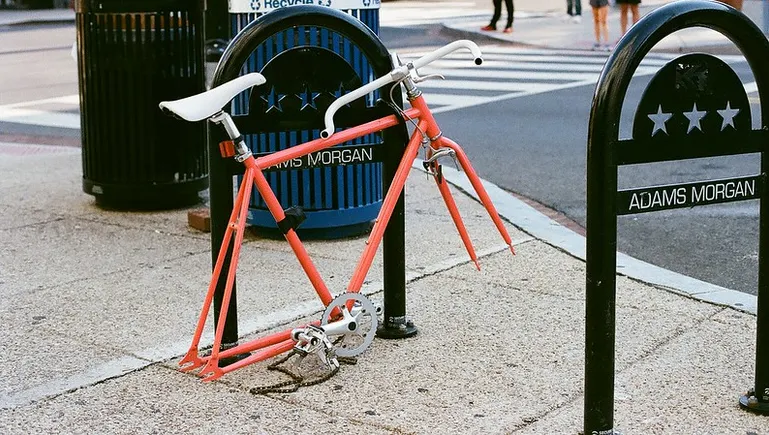
One fall morning, after a ride, the two loaded their bikes into a van and returned home, parking it on the street in front of their house. Unfortunately, Kennedy forgot to lock the van door. Later that evening, he found the van's rear door ajar and the bikes gone. The Kennedy family thus became a statistic in a rapidly growing trend during the COVID-19 pandemic—bicycle theft.
Sales and theft surge in tandem
As Americans increasingly turned to alternative commuting and transportation options during the health crisis, bicycle sales in the U.S. soared. In April alone, sales were up compared to the same period in 2019by 75%. According to Bryan Hance, co-founder of the registration agency Bike Index, thefts increasedby 68%。
In an era of widespread budget constraints for cities, prioritizing bicycle theft can be challenging. Faced with more significant issues and crimes, city managers and local police departments often lack the manpower and funds to focus on what is seen as a very low-level, low-value crime.
But this runs counter to the investment and effort many local governments have made to create bike-friendly areas. If residents lack confidence in safely parking their bikes—or recovering them after theft—they may be less willing to use thebike lanesand greenways that many cities have spent heavily to build.
Efforts to mitigate bicycle theft can start with a dedicated officer who sets aside a few hours each week to handle such cases. In some instances, police departments form specialized task forces to focus on the issue. When equipped with the right tools and determination, some departments are seeing results.
"Arrests alone won't solve this problem"
Stealing a bicycle is often extremely easy—and typically a crime of opportunity. "Bad guys are more organized than good guys," said J. Allard, founder of the bicycle registration and theft reporting toolProject 529, "Thieves know there are many factors in their favor."
One such advantage is that, according to Officer Dave Sanders of the Portland, Oregon, Central Precinct bike unit, on average only one in ten bicycle owners reports a stolen bike. Bicycle theft also provides a quick and easy getaway vehicle, making it a secondary crime in many cases.
"A week later, I did see someone riding my daughter's bike," Kennedy said of his experience. "I said something to him, and he rode off. There was nothing I could do."
According to Allard, this black market itself is growing into a multi-billion-dollar industry. Thieves often turn to sites like Craigslist or Facebook Marketplace to sell stolen goods, and owners often have no concrete way to claim ownership other than comparing serial numbers—if they even have a record of that number. Other issues include poorly designed locks or user error when locking up—such as only securing the wheel without attaching the bike to a sturdy object like a lamppost.
Portland is especially "notorious" for bicycle theft. Sanders said conservative estimates put 2,500 bikes stolen annually, but the actual number could be higher, as only about a quarter of owners report to police. To address this widespread problem, the Portland Police Bureau established atask force。
in 2015. "There's no dedicated funding or positions, but it's a sub-unit within the bureau, and about six of us are actively involved," Sanders said. "We all have other duties, but we wear multiple hats."
He went on to emphasize the importance of measures like community education and engagement to make bicycle theft mitigation a collaborative effort. "We initially focused on offenders, but arrests alone won't solve this problem," Sanders stated.
Registration systems
Over the past five years, the Portland Police Bureau's task force has continually adjusted its approach to bicycle theft, placing significant emphasis on bicycle registration. Sanders calls this crucial. Every bike has its own unique serial number—similar to a vehicle's VIN—but most owners are unaware of it. "This is the piece that has to be in place to change the problem," he said. "It's the long-term solution to the issue."
While Kennedy has registered his own serial number and hopes it will be searchable in the local police system, he has not yet completed the registration process for his daughter's bike. "Local police have access to a statewide database, so at least my bike has a chance of turning up at a pawn shop or on a website," he said. "But in the end, we came up empty."
The department also partners with Allard's Project 529, which collaborates with law enforcement agencies, bike shops, cycling advocacy groups, and citizens. After purchasing a bike, owners can register the serial number and photos into the system. "If your bike is stolen, you open the app, and the information automatically spreads to police and social media, broadcasting within a six-to-nine-mile radius," Allard explained.
Rob Brunt, an officer with the Vancouver Police Department in British Columbia, Canada, is also an advocate for bicycle registration and works with 529. "Six years ago, I was assigned to the property office after a car accident," he said. "That's where I saw how many stolen bikes the department was holding."
Brunt was astonished to see a sophisticated conveyor system—purchased by the city for up to $750,000—managing a warehouse holding nearly 1,000 bikes. Like many cities, Vancouver sells these bikes at auction, and Brunt estimates about $1 million annually returns to the city budget. "I'm a cyclist myself, and I saw an extremely rare and expensive bike there," he said. "I decided I had to help solve this problem."
With 529, Brunt and his team helped register 1,300 bikes in the first five days of operation. "The average recovered bike is worth about $700, and we know that for every ten people whose bikes are stolen, two give up cycling and stop riding," he said. "If a city sets aside $7,000 a year for a registration program like 529, that's a huge savings."
Breaking down barriers
The Milwaukee Police Department created theMilwaukee Bike Theft Reduction Program(MKEBTR) in 2018, taking a multi-pronged approach to bicycle theft. MKEBTR's dedicated website educates residents on how to properly lock bikes, register them, and report thefts.
Before the pandemic, Captain Timothy Letske enjoyed going into the community to discuss these three key points face-to-face with residents. "Ensuring outreach is equitable across all communities is crucial," he noted. "In lower-income areas, bikes are just as important as in areas where they're often used for recreation."
Letske said the program was making progress until 2020 arrived, "but the pandemic slowed us down considerably."
Services likeBikeLink, which offer low-cost, secure bike storage, can be a good resource for cities addressing bike theft during the pandemic. Jack Masler, BikeLink's manager of public-private partnerships, said the company manages sites in 95 jurisdictions, with San Francisco's BART system being one of its first partners.
"We cover 39 stations there," Masler said of the BART system. "Our data shows that using our lockers is 25,000 to 1 safer than parking on the street." While about 75% of BikeLink users are "first mile/last mile" commuters, Masler said BikeLink services can be an important resource for a city's overall bike usage.
Letske remains determined to gradually curb the theft trend, but he acknowledges frustration. "Bicycle theft can be an underappreciated problem," he said. "Old mindsets often create barriers. But if you catch the bad guys, lock your bike properly, report thefts, and register, it can make a big difference."
Whether bike usage will continue to grow after the pandemic is anyone's guess, but for cities looking to make the most of bike-friendly infrastructure, investing time and money in theft prevention is a value proposition. "Bicycle theft is perhaps one of the easiest problems to solve in a community," Sanders said. "It should be given higher priority."