
Rate design innovation accelerates the energy transition process
The latest evaluation of Maryland's time-of-use electricity pricing pilot shows that dynamic rates effectively cut peak load and lowered customer electricity costs. With the widespread adoption of smart meters and the growth of distributed energy resources, rate design is evolving from fixed rates to more granular real-time pricing, providing key support for the energy transition.
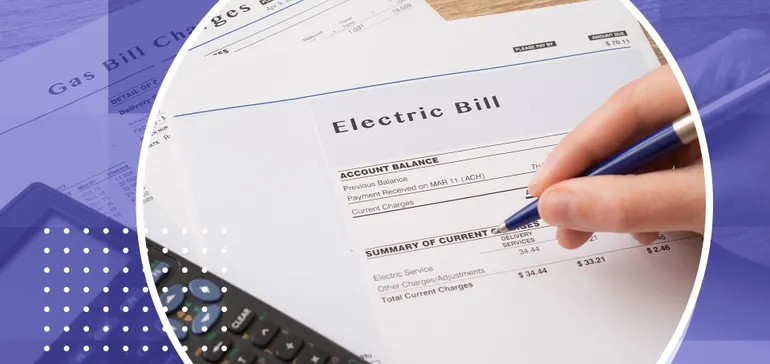
Maryland's new round of time-of-use (TOU) pilots shows that dynamic rates are effective in shaving peaks and reducing customer bills, while also revealing the early stages of rate design evolution.
According to an evaluation released by the Brattle Group in September 2020, new time-of-use pilots implemented by three investor-owned utilities (IOUs) in Maryland significantly reduced peak demand and customer bills. The study noted that this success is due to the power system's transition to variable and distributed renewable energy, as well as customers' increased exposure to smart technology and improved ability to respond to price signals.
"The accuracy of price signals conveyed to customers varies greatly across rate designs, ranging from fixed rates to real-time pricing," said Scott Murtishaw, senior regulatory advisor for the California Solar & Storage Association and a rate design authority. "The more precise the price signal, the more customers can use flexible loads and storage to help manage variable energy, thereby accelerating decarbonization."
Maryland leads other jurisdictions in "advanced metering and technologies that link customer savings opportunities with savings that benefit all ratepayers."
Jason M. Stanek
Chairman of the Maryland Public Service Commission
Brattle principal Sanem Sergici, who led the pilot study, noted that Maryland was ready for the new rates because it has deployed smart meters, customers are familiar with alternative rates, and distributed energy resources (DER) are growing. The success of these new rates is moving Maryland along the energy transition path recently blazed by states such as Hawaii, California, and South Carolina.
The experience of these states shows that successful TOU pilots can enable utilities to begin integrating more variable and distributed generation, and lead to more refined dynamic rates. These more refined rates, in turn, allow higher penetrations of variable and distributed generation, further advancing the energy transition.
Maryland's time-of-use pilots
Time-of-use rates set higher prices during peak periods, guiding customers to shift usage to lower-priced off-peak periods, thereby reducing individual customer bills. At the same time, reducing utility investments needed to meet peak demand can also lower bills for all customers.
In Maryland and many other states, the implementation of TOU and other new rate designs has been enabled by the deployment of advanced metering infrastructure (AMI). An Edison Foundation report from December 2019 noted that the "digital connection" established by AMI between utilities and customers supports "expanded services" such as home energy management, usage alerts, and "dynamic rates."
Maryland Public Service Commission (PSC) Chairman Jason M. Stanek said via email that Maryland leads other jurisdictions in "advanced metering and technologies that link customer savings opportunities with savings that benefit all ratepayers." Additionally, through the state's Peak Time Rebate (PTR) program implemented in 2008, customers learned to "save money by reducing usage."
The PTR program rewards customers who voluntarily reduce usage when notified in advance of upcoming demand peaks, and Brattle's Sergici called it "the most successful program of its kind in the United States." She said, "Since 2014, about 1.5 million Maryland customers have participated," significantly cutting usage during these intermittent critical peak periods.
Sergici noted that the high customer satisfaction with the PTR program "may have made the Commission willing to offer more innovative programs." She added that a 2017 PSC order showed commissioners saw an opportunity to prepare for the next challenge.
With the emergence of customer-side distributed energy resources, Maryland can begin to assess the potential of dynamic rate price signals in empowering "customers, utilities, and all other stakeholders," said the order initiating the PC44 grid modernization docket.
In response, Maryland's utilities—Baltimore Gas and Electric, Pepco, and Delmarva Power and Light—implemented still-ongoing TOU pilots with summer peak rates four to six times higher than off-peak rates, according to Brattle's study of impacts from June 2019 to May 2020.
Stakeholders agreed that customers who chose to participate were well represented among both low- and moderate-income (LMI) and non-LMI groups. Brattle found that across all utility programs and customer types, summer peak demand decreased by 10.2% to 14.8%, non-summer peak demand fell by 5.1% to 6.1%, and bills were reduced by 5% to 10%.
Ratepayer advocates often oppose TOU rates because they may disadvantage LMI customers who have less flexibility in usage and less access to smart technology, the Brattle report said. But these results provide "strong evidence that LMI customers respond to TOU rates as much as or nearly as much as non-LMI customers."
David Littell, a former Maine utility commissioner and now an energy and environmental attorney at Bernstein Shur, said Brattle's findings are preliminary but important, showing that rate design follows the availability of technologies like AMI and customer familiarity with rate options. Littell co-chaired the PC44 rate design working group.
William Fields, an attorney with the Maryland Office of People's Counsel, added that the preliminary findings show TOU rates can affect some system costs, but more pilots and research are needed. Fields was the lead advocate for ratepayers in the pilots.
Sergici said about two-thirds of customers who chose to participate received bill reductions even without changing behavior, but "they found ways to get more savings." "This is important because customers typically only opt in when they expect to benefit, and these benefits do not add actual system value."
She added that the PSC's initial order explicitly required opt-in pilots, "which seems to indicate the PSC will not immediately move to default TOU rates." "But the success of the pilots, especially for LMI customers, could lead to next steps."
Autumn Proudlove, senior policy program director at the North Carolina Clean Energy Technology Center (NCCETC), said many states with rising penetrations of variable and distributed renewable energy are piloting rate designs with "more complex and refined elements."
The observations of Littell and Proudlove suggest that rate design evolves with changes in the energy resource mix, the spread of smart technology, and customer readiness. Recent implementations of innovative rate designs also confirm this.
Advancing time-of-use rates
Other states are also demonstrating the evolution of rate design.
South Carolina's Act 62 of 2019 limited distributed energy growth without adjusting rate design, and stakeholders believe this is not a sustainable approach to its growing distributed energy penetration. A potentially more durable rate design solution based on dynamic rates, proposed by Duke Energy and distributed energy advocates, is currently pending before South Carolina regulators.
The proposal combines TOU rates with a more dynamic version of peak pricing found in Maryland's PTR rates, and provides incentives for participating in Duke's demand response and energy efficiency programs. Proudlove said that if approved, it could become an advanced rate design that promotes distributed energy growth, reduces utility peak demand challenges, does not shift costs to other customers, and supports policy goals.
Hawaii has struggled for years to design a TOU rate that achieves these goals, as Utility Dive has reported. Recent data suggests it may have found the answer.
"If barriers to smart and enabling technologies and services are overcome, more customers may find the simplicity of subscription rates—'set it and forget it'—more attractive, and utilities might use them as effectively as other rate designs."
Autumn Proudlove
Senior Policy Program Director, North Carolina Clean Energy Technology Center
In October 2015, the Hawaii Public Utilities Commission changed the fixed retail rate compensating solar customers to a TOU design, aiming to push new solar customers to add battery storage. But batteries were expensive at the time, and by May 2016, solar installation permits had fallen 27.3% year over year.
A restructuring of the TOU design in October 2017 was more successful. In the first nine months of 2020, 75.2% of photovoltaic systems in the Honolulu metropolitan area were paired with battery storage, as reported by Pacific Business News in October 2020.
TOU rates worked, but "Hawaii waited too long to implement solar rate designs with smart price signals," said Lon Huber, Duke Energy's vice president of rate design and strategic solutions, at the time. "States need to stay ahead of solar penetration through forward-looking rate design."
California, which has piloted TOU rates since 2003 and has implemented successful TOU rates for solar customers to drive battery growth, may be ready to "lead" the next step in rate design evolution.
Moving toward real-time pricing
Stakeholders say California's next step toward more dynamic rates could further demonstrate the link between rate design, resource mix, enabling technologies, and customer readiness.
Brattle principal Ahmad Faruqui, a researcher of rate design history, recalled that the state has worked for decades to address demand peaks and high rates. Customer demand for lower bills prompted California's retail restructuring, but at the time there were no enabling technologies or new energy resources to lower rates. After the 1999-2001 energy crisis, state policymakers restored regulation, "which pushed more dynamic pricing and smart meters."
Faruqui said that after years of pilots similar to Maryland's current ones, and with rapid growth in increasingly dynamic supply and demand, California may be ready to implement real-time pricing (RTP). But he added that implementation will depend on the availability of enabling technologies.
"Those customers who give utilities more control over their loads should be compensated more for providing greater system benefits, because critical peak event days are very much like 'ask not what the grid can do for you, but what you can do for the grid' events."
Lon Huber
Vice President of Rate Design and Strategic Solutions, Duke Energy
Brattle's Sergici said regulators at the California Energy Commission (CEC) and California Public Utilities Commission (CPUC) want to advance real-time pricing pilots in multiple proceedings to prepare the grid to support its zero-emission goals. The CEC, in a January 10 action that initiated load management stakeholder research, recognized real-time pricing as a potential solution to load and supply variability and rising costs. In response, California utilities called in a March 16 filing to the CEC for "comprehensive pilot studies to fully assess the costs and benefits of real-time rates."
Murtishaw of the California Solar & Storage Association said real-time pricing would be particularly effective in addressing price volatility from California's variable supply and flexible loads. Murtishaw, responding to a July 17 CPUC ruling that rejected San Diego Gas & Electric's 2019 systemwide real-time pricing proposal, noted that over 100,000 Oklahoma Gas & Electric residential customers and over 40,000 Illinois residential customers have already opted into real-time rates. In an August 31 testimony, Murtishaw proposed a scaled-down real-time pricing pilot, adding that nearly 1.1 million California customers voluntarily participate in demand response programs, showing they can respond to price signals.
Murtishaw said a pilot would demonstrate the favorable impacts of real-time pricing on load, utility costs, and customer bills, and promote investment in the needed automation enabling technologies and aggregation services. But without these technologies and services, California customers' limited experience with real-time pricing would lead to regulator skepticism and utility resistance. He added that real-time pricing is "not essential," but can cost-effectively address California's steep demand peaks, high price volatility from variable and distributed renewables, and unpredictable emergencies. As enabling technologies and services are further deployed, real-time pricing "will become more viable."
Beyond real-time pricing, there is a further step in rate design evolution that could leverage these services and technologies to reverse the price signal.
Subscription rates
A newer rate design could eventually encompass everything from Maryland's basic TOU rates to California's real-time pricing, or allow utility experts to implement more refined pricing.
NCCETC's Proudlove acknowledged that rate design is evolving toward dynamic rates. But "if barriers to smart and enabling technologies and services are overcome, more customers may find the simplicity of subscription rates—'set it and forget it'—more attractive, and utilities might use them as effectively as other rate designs."
Duke's Huber said advanced TOU rates with peak pricing "may not be for everyone," and he proposed one of the first modern subscription rates among U.S. utilities. "But why should utilities only send price signals to consumers? Utilities should also have the opportunity to receive price signals and learn from customer choices," he said.
He added that subscription rates recognize that some customers will allow utilities limited control over their usage if utilities provide pre-settable smart technology. "The foundation of subscription rates would be a very refined rate design managed by the utility." Utility experts can optimize supply and demand in response to wholesale market prices and use all available resources to meet customer needs more cost-effectively than most residential customers.
Huber said the energy transition will require "all the demand- and supply-side solutions we have, and rate design-driven load flexibility will be a key tool." "Those customers who give utilities more control over their loads should be compensated more for providing greater system benefits, because critical peak event days are very much like 'ask not what the grid can do for you, but what you can do for the grid' events."


