
5G Health Concerns Persist: From Arson to Local Moratoriums, Public Trust Under Scrutiny
In 2020, over 70 mobile phone towers in the UK and Europe were set on fire due to conspiracy theories linking 5G to the COVID-19 pandemic, drawing strong condemnation from the industry and scientific community. In the US, although no similar arson incidents have occurred, the Department of Homeland Security and the Communications Infrastructure Contractors Association have issued warnings. Meanwhile, some local officials have passed non-binding resolutions calling for a moratorium on 5G deployment until more research is completed. The scientific controversy over the health effects of radiofrequency energy persists: the US National Toxicology Program's 2018 study found "clear evidence" that specific frequencies could increase cancer risk in rats, but the FDA and FCC maintain that current standards are sufficient to protect public health. Divisions among industry, scientists, and activist groups, coupled with an information vacuum, provide fertile ground for the spread of misinformation.
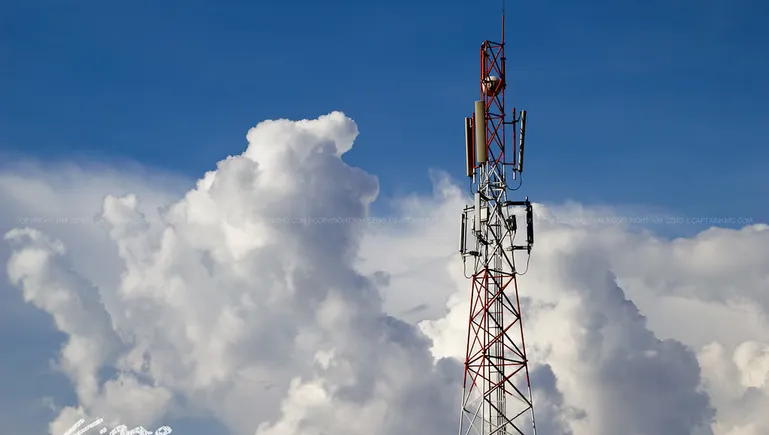
In early 2020, the COVID-19 pandemic unexpectedly intersected with 5G technology: in the UK and Europe, more than 70 cell towers were set on fire because some people incorrectly linked 5G network deployment to the spread of the virus. Such incidents drew strong condemnation from industry organizations.
Mobile UK, an industry group representing UK telecom operators, called the attacks "meaningless" in a statement, noting that "the link between 5G and COVID-19 is false and has been repeatedly refuted by scientists." Mobile UK spokesperson Gareth Elliott said via email that there were 130 arson attacks and more than 200 "verbal abuse incidents against staff," but did not provide an estimate of the cost of repairing the base stations.
These extreme behaviors stem from rumors spread on social media and other online channels. Although there have been no similar reports of cell tower arson in the United States, both the Department of Homeland Security and NATE (the National Association of Tower Erectors) have issued warnings about such activities, especially around the "5G Global Protest Day" on June 6, 2020.
Some local leaders in the United States have passed resolutions urging a pause on 5G deployment until more research is completed—a move uncommon among municipal officials. A state-level committee in New Hampshire also issued a report calling for stricter limits until health effects are clarified. Meanwhile, the spread of misinformation worries technology experts, who fear that public reaction could become more intense as 5G expands further into cities. In response, the industry has called for enhanced technology education, but so far there has been little public action.
Dan Hays, a partner at PwC, said: "We believe there is a huge opportunity for the mobile industry as a whole to better educate the public about 5G, including its capabilities and health effects. However, there is a general lack of trust in mobile industry companies. I think this is why government becomes particularly important in public education, especially regarding health effects. Yet we are also in an era of declining trust in government health information."
Health concerns create uncertainty
The uncertainty surrounding 5G technology largely stems from concerns about its health effects. Critics argue that telecom companies and the federal government have not adequately addressed these issues. The main criticism focuses on the effects of exposure to radiofrequency (RF) energy from mobile phones, which has been linked to various diseases including cancer, reproductive and neurological complications (including in children), and is also said to have potential environmental impacts.
A widely cited 2018 study by the U.S. National Toxicology Program (NTP) found "clear evidence" that specific radiofrequencies increased the risk of cancer in rats and mice. NTP is part of the National Institute of Environmental Health Sciences, under the National Institutes of Health. However, Jeffrey Shuren, director of the FDA's Center for Devices and Radiological Health, said in a statement that these findings "should not be applied to human cell phone use" and disagreed with the conclusion that there was "clear evidence" of carcinogenic activity in rodents exposed to RF energy. Shuren said the animal studies "help inform our discussions on this topic" but cannot be directly extrapolated to humans.
Several groups have further amplified these health concerns, including the Environmental Health Trust (EHT), which has sued the Federal Communications Commission (FCC), challenging its RF standards and rulemaking process. EHT Executive Director Theodora Scarato criticized Shuren's conclusions. With the increase in wireless infrastructure such as small cells and antennas needed for 5G coverage, Scarato said the effects of radiation could multiply. Currently, only the heating effects of wireless devices are evaluated, which Scarato believes is insufficient.
"We will have more wireless antennas and more wireless devices in the Internet of Things (IoT)," Scarato said. "We expect overall RF levels in the environment to rise."
Americans for Responsible Technology (ART) has also raised similar concerns. Its founder and director, Doug Wood, said that under an FCC order streamlining the deployment process, RF exposure levels could rise as 5G infrastructure is rapidly built out. "While we can't yet draw a straight line between specific exposures and health outcomes, there is a large body of scientific evidence showing that wireless radiation, even below FCC guideline levels, can cause biological changes."
The FCC has dismissed these allegations. In December 2020, the commission voted unanimously to maintain existing RF standards, partly based on FDA recommendations. FCC spokesperson Will Wiquist said in an email: "5G is as safe as previous generations of wireless technology. The commission reaffirmed that existing RF standards fully protect public health."
External experts point out that the health risks associated with 5G are no different from those of previous generations of wireless technology, because the new generation builds on older technology rather than completely replacing it. "The reality is that 5G primarily operates on frequency bands that cellular networks have used for years, or on bands historically used by other technologies," Hays said.
Medical professionals counter health fears
Christopher Collins, a professor in the Department of Radiology at NYU Grossman School of Medicine, said the health risks from 5G technology and wireless radiation are minimal. "The short answer is that there is no evidence that electromagnetic fields associated with mobile phone technology have adverse health effects." Collins added: "There are indeed many studies suggesting possible health effects or potential effects, but if you read the literature carefully, the only studies that can be reliably replicated involve power levels far higher than those used in communications technology, where significant tissue heating occurs. Relatedly, if different researchers cannot replicate results, then a pile of studies reporting various effects from various types of electromagnetic fields doesn't tell us anything."
Kenneth Foster, a professor in the Department of Bioengineering at the University of Pennsylvania, said concerns about 5G health effects are "a distinctly minority view on this issue." He noted that numerous government reports have refuted these concerns. "A more balanced approach is to look at reports from health agencies, which have consistently failed to find evidence of clear harm from RF energy below U.S. and international limits."
The Committee on Man and Radiation (COMAR), under the Institute of Electrical and Electronics Engineers (IEEE), holds a similar view. The committee consists of 30 professionals from fields including engineering, biology, and medicine. COMAR found that when exposure levels remain below established guidelines, research does not support the idea that RF exposure, including from 5G systems, is associated with adverse health effects. IEEE declined to comment further.
Initial responses at the local level
At the local and state levels, health concerns and uncertainty about 5G technology have prompted a small number of elected officials to take action, passing non-binding resolutions urging a pause on 5G deployment to allow for more research.
The town of Easton, Connecticut, is one such place, passing such a resolution in May 2020. The resolution, effective until December 31, 2020, called on telecom companies and utilities to halt construction "until these technologies are proven safe for human health and the environment through independent research and testing." At the meeting where the Easton Board of Selectmen unanimously approved the resolution, Selectman Robert Lessler said the pause would give local officials a chance to "hit the brakes" and "do more due diligence."
Although the resolution was set to expire at the end of the year, First Selectman David Bindelglass said its expiration would mean the issue would be revisited. Bindelglass did not respond to requests for comment about the resolution's future status. "Personally, I have questions about the argument that 5G is unsafe," Bindelglass said at the time. "That said, I have to admit that there are influential and intelligent people who are more concerned than I am, and I respect that. I don't think we lose anything by doing this."
The Hawaii County Council passed a similar resolution in July 2020, which Councilman Matt Kaneali`i-Kleinfelder described as a "precautionary measure." "Let me put it this way: to date, no study has shown that this technology is safe," Kaneali`i-Kleinfelder said in meeting minutes. The resolution was supported by ART through its "5G Crisis" project. Wood said these efforts aim to shape public opinion. "We won't win in Washington, we won't get congressional hearings, we won't get Congress to do much, and we won't get the FCC to do much. The purpose of non-binding resolutions is to show that not everyone thinks 5G is a good idea."
New Hampshire has also sought to act on these health concerns. Last year, the state established a "Commission to Study the Environmental and Health Effects of Evolving 5G Technology," which released a report last month stating that "a substantial body of research indicates potential health risks" and that "more research is needed." The commission made a series of recommendations, including strengthening public education on RF energy risks and reviewing the Telecommunications Act of 1996, arguing that its RF standards have not kept pace with technological developments.
Kent Chamberlin, chair of the Department of Electrical and Computer Engineering at the University of New Hampshire and a commission member, said no member wanted to "stop 5G or abolish 5G," but rather to better understand the associated risks. "I like to use the analogy of the cars we drive," Chamberlin said. "We lose a lot of lives on the highway due to car accidents, and many people are injured. But we consider it a price worth paying relative to the benefits of driving. There's a similar feeling on the commission. Yes, there are some negative effects and potential health effects, but we don't know how serious they are."
Penn professor Foster particularly objected to one commission recommendation, which suggested that "all new phones and other wireless devices should be sold with updated software that stops radiating when held close to the body." "Of course," Foster responded, "why not design cars to turn off when someone is inside?".
A minority on the commission also disagreed with the report's recommendations. The minority report stated: "The consensus of the U.S. and international scientific community is that there are no known adverse health risks from RF energy at the frequencies used by wireless devices (including phones) and facilities (including small cells)." State Senator James Gray, one of the three commission members who issued the minority report, declined to comment further on the report's contents in a brief interview.
CTIA, an industry group representing U.S. telecom operators, has sent letters to local governments that have passed non-binding resolutions opposing 5G deployment. In its letters, the association said these resolutions conflict with federal law, as the FCC has stated that pausing infrastructure deployment is "clearly illegal." CTIA said the health concerns used to justify the resolutions are "based on inaccurate scientific claims," and that "the weight of scientific evidence shows that exposure to wireless antennas or devices has no known adverse health effects on humans."
Information vacuum breeds misinformation
Disagreement over the science of RF exposure and the health effects of 5G has instead fueled the spread of technology-related misinformation. Rumors about the role of 5G in the spread of COVID-19 circulated online and were amplified by figures such as former British TV presenter David Icke, leading to Icke being banned from social media. YouTube also tightened its rules, banning all videos linking 5G to the spread of COVID-19.
The International Commission on Non-Ionizing Radiation Protection (ICNIRP) issued a statement in April 2020, calling claims linking COVID-19 infection to 5G "not plausible." Scarato and Wood both claimed that telecom companies highlighted the arson incidents to discredit scientific concerns about 5G, although Wood acknowledged that those promoting conspiracy theories have actually undermined their message. Industry representatives did not directly respond to these allegations but called for calm. "Attacks on cell towers pose a significant risk to wireless industry employees and public safety," a CTIA spokesperson said in an email. "We urge everyone to take this seriously."

However, according to a recent Deloitte study, public unease with technology persists. The survey, conducted in May 2020, assessed the digital attitudes of 4,150 respondents aged 16 to 75 and found that 43% of UK consumers were "confident" that 5G poses no health risks, while 14% believed the technology poses health risks. Paul Lee, global head of technology, media, and telecommunications research at Deloitte, said most health concerns stem from a lack of understanding of how mobile networks work. This lack of understanding creates a vacuum that misinformation can fill. "We've been using mobile phones for a quarter of a century and have never really needed to understand how they work," Lee said. "We just need to know they work. Every time a new generation of mobile communications introduces new standards—whether 3G, 4G, or 5G—there are always a few people concerned about health effects."
Addressing misinformation
Lee said that to boost public confidence in 5G technology, governments may need to consider activities such as public information campaigns. The BBC once aired a television program called "Tomorrow's World" aimed at explaining future technology and innovation. Lee believes that similar programs with mass appeal could serve as good vehicles for public education, and noted that 30-second educational ads could also be produced. "On one hand, you have people with large followings spreading misinformation," Lee said. "You need someone to counter that. That person needs to explain without being condescending, because it's very complex... A good ad with 30 seconds is enough to convey a message that changes minds."
PwC's Hays said it is the responsibility of the average person to educate themselves about 5G technology and cut through misinformation, including seeking out authoritative sources. As telecom and technology companies launch 5G phones, Hays believes 5G will enter the mainstream more quickly. "I think consumers can absolutely seek out authoritative sources to better understand 5G technology and its associated risks and benefits," Hays said. "Frankly, the recent release of more mainstream 5G mobile devices will almost force the public's understanding of 5G to be tested. We don't expect this to happen overnight, but over the next year or two, public awareness of 5G should really begin to improve."
The minority report of the New Hampshire 5G Commission noted the need for greater public education on the benefits of the technology, stating that the commission had promised to study this but failed to do so. "If it had, the commission would have learned about the enormous economic and social benefits 5G is expected to bring," the minority report said. Some elected leaders said the issue may not truly disappear even as 5G technology becomes more widespread. "This is almost like climate change, I think," Easton Selectman Robert Lessler said at the May meeting. "Some people will never be convinced."