
Arizona Legislature vs. Regulators: The Constitutional Battle Over Zero-Emission Mandates
Arizona lawmakers have proposed SB 1175, aiming to restrict the authority of the Arizona Corporation Commission (ACC) and make its November 2020 zero-emission mandate for 2050 unconstitutional. The bill has sparked intense debate over the ACC's constitutional powers and the conflict between the 2011 Miller case and the 2020 Johnson case precedent. Supporters argue that the legislature holds ultimate policy authority, while opponents claim the bill seeks to overturn clean energy rules. The bill is currently stalled in the Senate, has passed the House, and may ultimately be taken to the Supreme Court.
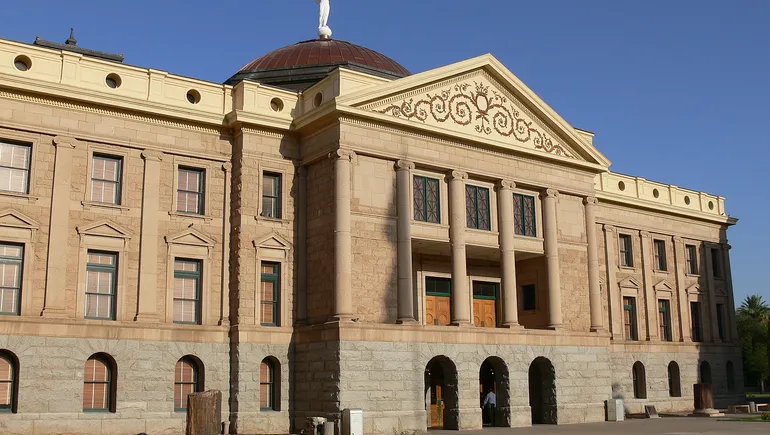
A controversial legislative proposal in Arizona seeks to limit the power of the state's elected utility regulators and puts its recently adopted landmark zero-emissions mandate at risk of being declared unconstitutional. The bill reflects long-standing concerns among some lawmakers about overreach by the Arizona Corporation Commission (ACC), concerns that were heightened after the ACC approved draft energy rules in November that include a 2050 zero-emissions requirement.
Senate Bill 1175 (SB 1175)follows the position of Republican Governor Doug Ducey, who has sought to change state law to prevent the ACC from exercising its constitutional authority to set policies for "critical energy generation." Ducey told the Arizona Chamber of Commerce on January 15: "I want the Corporation Commission to be responsible for setting rates, and the Legislature to be responsible for energy policy, and I hope this session will sort that out."
The ACC approved the draft rules by a 4-1 vote on November 13, with three Republicans and one Democrat voting in favor, and only Republican Commissioner Justin Olson dissenting. But the debate over SB 1175 has become highly partisan, with opponents arguing that its introduction stems primarily from the November vote.
Democratic Senator Kirsten Engel, who is leading opposition to the bill, noted: "The bill seems to target clean energy rules rather than constitutional issues, because it retroactively applies to June 30, just before ACC staff submitted the rules in July. The constitutional arguments of Republican supporters have not convinced me; the essence appears to be opposition to clean energy rules."
The business community generally believes the 2050 mandate can promote economic and job growth in Arizona, but supporters of SB 1175 argue the rules could drive up electricity prices. The debate centers on constitutional interpretation, with both sides acknowledging that the Arizona Supreme Court may ultimately need to decide through a prolonged legal battle.
Why Arizona? Why now?
According to Ballotpedia, only 11 states, including Arizona, have elected regulators and independent commissions similar to the ACC. A 2020 constitutional amendment in New Mexico will change its commission to gubernatorial appointments after 2022. In the other 39 states, regulators are appointed by the governor or the legislature.
The ACC's constitutional independence has enabled it to advance numerous energy initiatives. The 2006 Renewable Energy Standard and Tariff (REST) required regulated utilities to source 15% of their annual energy sales from eligible renewable resources by 2025, a standard that prompted a landmark legal challenge. Then, as now, the fundamental question was whether imposing mandates on regulated utilities fell within the commission's authority. In 2011, the Arizona Court of Appeals ruled in Miller v. ACC that the ACC's "constitutional rate-setting authority" allowed it to approve the REST rules.
The ACC's update to the REST rules (Docket RU-00000A-18-0284) assumes it has the authority established in Miller. The new draft rules require regulated utilities to reduce greenhouse gas emissions by 50% from 2016-2018 levels by 2032 and by 100% by 2050, and require energy efficiency to meet 35% of 2020 peak demand by 2030.
Court Rich, a Republican representing renewable energy companies and senior partner and co-founder of the Rose Law Group, said: "Studies show new energy rules are good for business, jobs, and clean air. Domestic and international companies are seeking to locate in clean energy regions, and our leaders are causing Arizona to miss out on these opportunities."
Less than two months after the new draft rules were made public, SB 1175 and its companion House Bill 2248 (HB 2248) were introduced in January. The bills would amend state law, retroactively to June 30, 2020, prohibiting the ACC from adopting or enforcing "policy decisions or rules" regarding "critical" electricity generation without explicit legislative authorization. The bills state that energy is "essential to protecting public health and safety," but opponents say the wording is more about the ACC's constitutional authority.

The question facing lawmakers
At the heart of the debate is whether a 2020 Supreme Court ruling overturned the assumption of ACC energy policy authority established in the 2011 Miller case. The Arizona Supreme Court's July 31 ruling in Johnson Utilities v. ACC concerned ACC authority, but not energy policy. The Court held that the ACC's appointment of a temporary manager for Johnson Utilities to protect customers from mismanagement was necessary and appropriate.
Constitutionally, the ACC's rate-setting authority was not challenged. Johnson held that regulators also possess a more complex "permissive" authority that allows some but not all actions, but that this authority did not "divest the Legislature of its police power to protect public health, safety, and welfare in energy policy or other matters."
Opponents of the 2050 mandate hope Johnson will replace Miller as the precedent for ACC authority. Commissioner Olson wrote in a January 22 docket filing that Johnson "calls into question the Commission's authority to adopt the proposed rules," because its ruling challenges Miller's conclusions.
Current Supreme Court Justice Clint Bolick was vice president of litigation at the Goldwater Institute during the Miller challenge. In Johnson, he agreed with "the majority's analysis of the Commission's rate-setting authority" but dissented in part, arguing that the ACC's permissive authority was "too broad."
John Riches, national litigation director at the Goldwater Institute, testified at a January 27 Senate committee hearing that this partial dissent opened the door for replacing Miller as the controlling precedent. Johnson offers a different perspective on ACC authority, suggesting that the proposed bill requires the Legislature to exercise "more appropriate police power" over energy rules under the ACC's permissive authority. He agreed that the Arizona Constitution allows ACC rate-setting, but "if a commission rule conflicts with a legislative statute unrelated to rate-setting, the statute prevails."
But Autumn Johnson, Arizona government affairs manager for Western Resource Advocates (WRA), testified before the Senate that the Supreme Court in Johnson did not state that energy mandates exceed the ACC's rate-setting authority. She added that the ACC's "permissive authority is not granted by the Legislature but by the Constitution." She argued that the Legislature could only override proposed policy if it conflicts with legislative energy policy and falls within the Legislature's police power over public health and safety, which is not the case here.
Setting aside the question of lawmakers' authority, the companion bills are still advancing through the Legislature. SB 1175 passed the Senate Natural Resources, Energy, and Water Committee on January 27 but was held in the Senate Rules Committee for further debate. HB 2248 passed the House committee on January 26 and was temporarily delayed on February 1 after House Rules Committee attorney Tim Fleming found the legislation "constitutionally questionable." Fleming agreed that Johnson held "the Legislature has police power and final say in energy policy conflicts to protect health and safety," but it did not impose a "blanket prohibition" on commission actions. Despite Fleming's arguments, the House Rules Committee sent the bill to the full House on February 9, with debate possible as early as February 10.
The bill's constitutionality questions and Senate inaction cast doubt on its prospects. But if the House passes it and the Senate follows, it would eliminate the zero-carbon mandate and threaten ACC authority.
Possible outcomes
Stakeholders acknowledge that if supporters cannot get around Fleming's conclusions, the bill could be abandoned or fail to pass. WRA's Johnson noted that Republicans hold only a two-seat majority in both the House and Senate, and the party is divided over COVID-19 and certification of the 2020 presidential election results. If Democrats remain united, and moderate, pro-business Republicans decide to support the ACC's proposal, the bill could fail.
After the bill moved quickly through committees in both chambers, its chances of passage are currently 50-50. Shelby Stults, policy director at Advanced Energy Economy, said: "We are hopeful because the proposal is bad for Arizona's economy, but we are also prepared for the worst. Early indications suggest Governor Ducey will sign." Senator Engel said the governor "should consider what Arizona can gain from clean energy. When he sees businesses recognizing the investments this bill could prevent, his enthusiasm for signing may wane."
The next step toward Arizona's zero-carbon utility requirement is for an administrative law judge to propose final energy rules. If the commission approves them, formal certification by the Attorney General and/or Secretary of State would take 60 to 120 days. If the legislation passes, bill supporters would use it to challenge the rules' constitutionality in court. But if new ACC Chair Lea Marquez Peterson wants to avoid a court battle, she could decline to call a final commission vote, and the rules would expire after 120 days.
Peterson, when voting as a commissioner in favor of the draft rules, was joined by outgoing Republican Commissioners Robert Burns and Boyd Dunn. Now she is the deciding vote, as Republicans Olson and Jim O'Connor oppose the new rules, and Democrats Sandra Kennedy and Ana Tovar support them. She said: "I proposed the zero-carbon mandate because being technology-neutral, not picking winners and losers, and focusing on emissions is important. I support Governor Ducey, but we have constitutional authority to continue business as usual and advance energy rules." She added that no one likes expensive, time-consuming legal challenges, "but the Supreme Court may be the best way to clarify the issue. I want to make sure we are not breaking the law."
Former ACC Chair Kristin Mayes faced similar pressure over the 2006 renewable energy standard and won in court thanks to Miller. She said: "The ACC is an independent branch of government. The Commission should continue its work, finalize the rules, ignore the unconstitutional bill, and let someone sue." Commissioner Olson disagrees, arguing the energy rules should not move forward. He said: "Arizona voters in 2018 clearly rejected a 50% renewable mandate on utilities by a 68.6% vote, fearing higher rates. I believe in limited government, and if lawmakers think these rules overturn the will of voters, I would not be surprised."
Olson added that last year's Johnson ruling shows the Supreme Court "has a much narrower view of the Commission's role than previous courts. I am reluctant to predict, but Johnson's message is clear, and voter will is another key factor." WRA's Johnson said that while current legislation is stalled, more bills could impede ACC proposed rule approval, unfairly disadvantage clean resources, or impose unreasonable fines on the Commission. She said: "This 'death by a thousand cuts' seems intended to intimidate the Commission, and whether it works is the question of the moment." Olson responded that concerns about ACC authority are not intimidation: "This is an appropriate check on the Commission's recent attempts to exceed its constitutional authority. The House and Senate check each other, the Governor checks both, and the courts check all. That is how most public policy should be made."
But Chair Peterson appears determined to move forward with the new rules. She said: "There has indeed been more focus on ACC authority this year. I worry this could create uncertainty for potential investors or industry groups, but Arizona is still embracing innovation, and the Commission is still conducting business as usual on energy rules."
Correction: A previous version misstated the party affiliations of the commissioners who voted on November 13 to approve the draft zero-emissions mandate.