
Flood risks constrain the legalization process of basement apartments in cities
Facing the housing affordability crisis, multiple cities are turning their attention to basement spaces. However, extreme weather intensified by climate change adds extra challenges to this strategy. After Hurricane Ida, New York City reflected on basement safety issues, with pilot projects progressing slowly; Chicago, Boston, and other places are exploring the legalization of accessory dwelling units (ADUs) while needing to address flood risks. All parties are seeking a balance between safety and housing supply through policy adjustments, insurance innovation, and risk assessment tools.
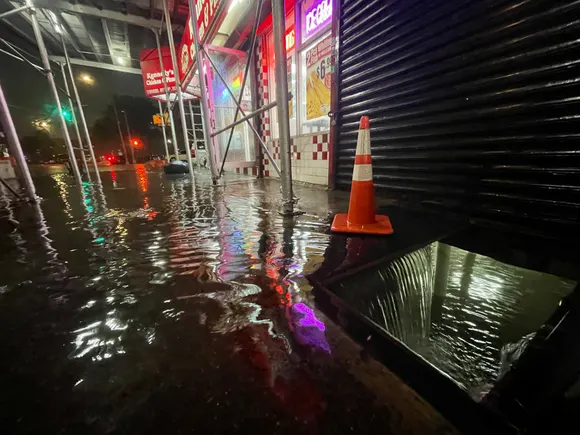
In response to the housing affordability crisis, many cities are turning their attention to underground space. However, while converting basements into living spaces can provide affordable rental units and generate additional income for small landlords, extreme weather caused by climate change is making this strategy more challenging.
In September 2021, heavy rainfall from the remnants of Hurricane Ida flooded New York City streets and buildings, killing 13 New Yorkers, 11 of whom lived in basement or cellar units. The city's extreme weather event report noted that basement units "pose an extremely complex challenge" because many were built without city oversight and lack safety features such as safe exits, ventilation, and protected electrical systems.
The report concluded: "Given these dangers, immediately legalizing all basement units is not safe for New Yorkers. However, due to the demand for affordable housing, basement apartments remain a significant part of the city's housing stock."
In 2019, the de Blasio administration launched a pilot program to help convert basements into safe apartments in the East New York neighborhood of Brooklyn, establishing new safety standards and assisting homeowners with renovations. However, the program was scaled back due to the COVID-19 pandemic, and only about 100 homeowners completed assessments out of 8,000 eligible units.
Rebecca Morris, senior project manager at the Pratt Center for Community Development and an advocate for the basement conversion pilot, said participants have been "desperately seeking" more support, but basement conversions have long struggled to gain widespread acceptance. She said, "I don't want to say this would have helped because it's a tragedy, and if the city had listened and taken basement apartments seriously 15 years ago, it might have been avoided. I hope this at least pushes the next administration to make this a priority area."
According to New York City data, at least 100,000 New Yorkers live in 50,000 or more illegal basement apartments. These residents are typically low-income and immigrant families who may need relatively inexpensive illegal apartments. According to the pilot, renovation costs are estimated between $275,000 and $375,000.
de Blasio told The New York Times in September: "I can tell you, we have no magic plan to solve the illegal basement problem overnight... We don't."
With the basement pilot largely on hold, New York City announced some immediate measures to protect basement residents from future flooding. The city will create a database of underground spaces by May 1, 2022, and provide enhanced communication to homeowners with basement apartments. The city will also train emergency responders to more effectively evacuate basements and use community organizers for door-to-door outreach to reach high-risk residents. Additionally, the city will work with homeowners to connect driveways to sewers to reduce residential flooding.
But Morris said the current situation—illegal apartments and uncontrolled flooding—highlights that poor and minority New Yorkers face the greatest risk in multiple crises. She said, "This precisely acknowledges that those who contribute least to climate change suffer the most and are hit hardest by the affordable housing crisis. Ida showed the cruelty of this intersection. I don't want to say this, but I expect this to continue."
ADUs offer an affordability solution
After the 2008 foreclosure crisis, Diane Limas began canvassing homeowners in Chicago's majority-minority Albany Park neighborhood as part of the Albany Park Neighborhood Council, whose priority was maintaining homeownership in the community. However, Limas and her team quickly discovered another group of high-risk residents: dozens of families living in illegal basement units who could easily become homeless if the homes above them were foreclosed. Limas remembers looking at those makeshift apartments with low pipes and small windows, wondering if they were truly safe places to live.
Limas said, "The response was often, 'If we didn't live here, at the rent we can currently afford, my family and I would be on the street.'" She said that overall, people pay between $400 and $600 per month, far less than the price of above-ground units.
The organization realized that legalizing these apartments could significantly increase the city's housing stock while providing small landlords with an additional income stream to help them stay afloat. The council, now renamed Communities United, is working with the City of Chicago to advance efforts to increase accessory dwelling units (ADUs). ADUs are independent living spaces with full kitchens and bathrooms, including not only basements but also granny flats, carriage houses, and cottages.
A Urban Land Institute report found that 2-4 unit apartment buildings—residential buildings typically stacked vertically with up to four apartments—account for nearly 30% of Chicago's total housing units, and many contain basement or garden units. While renting out these spaces is common, the report found these buildings are increasingly being demolished, contributing to affordability issues. The ADU program provides assistance to landlords for converting basement units, making ADUs a viable income source for landlords.
Although the solution seems obvious, many zoning regulations restrict ADU use. For example, limits on the number of residents in a single building, mandatory parking requirements, and a lack of financing tools make ADUs difficult to legalize.
This is changing. Utah lawmakers passed a bill this spring allowing most homeowners to rent out basement apartments in single-family homes to address the state's housing shortage. California has implemented several policies making it easier to build ADUs, significantly increasing housing supply. A University of California, Berkeley report found that ADU permits in the state increased from 6,000 in 2018 to nearly 16,000 in 2019, while completed units more than tripled from 2,000 to nearly 7,000 over the same period. Another UCLA study estimated that ADU legislation created the potential for nearly 1.5 million new housing units.
But ensuring these new units are safe may come with its own limitations. For example, Boston launched an ADU program in 2017 offering zero-interest loans to eligible owners to convert basements into living spaces. However, the city's regulations impose restrictions on basement units in homes located in Federal Emergency Management Agency (FEMA) flood zones. In October, Acting Mayor Kim Janey signed a zoning overlay restricting development in areas that could be flooded during a 40-inch sea level rise storm event (i.e., a 1% probability storm event). This will further restrict underground living spaces in these areas, requiring any space below the elevation standard to be used only for flood protection, storage, or parking.
Brian Golden, director of the Boston Planning & Development Agency, said in a statement: "For Boston to grow and thrive for generations to come, we must ensure that buildings constructed today are resilient and protected from climate change. By updating zoning regulations to go beyond FEMA flood maps, Boston is not only preparing for today's storms but also leading the way for tomorrow's."
Reducing risk
The flooding after Ida may be just a preview of the future. Research finds that as sea levels rise and storms intensify, coastal cities face significant flood risk. This reality poses a risk to homeowners—even those living outside traditional flood zones, who may not realize the risk until it's too late.
Currently, efforts are underway to protect homeowners when damage occurs, provide more repair funds for low-income residents, and offer much-needed safety information to homebuyers from the start.
In 2017, Sam Brody, director of the Texas A&M University at Galveston's Texas Beach and Shoreline Center, launched the "Buyer Beware" website, which aggregates advanced flood and pollution data to create risk scores for homes in multiple cities including Houston, New Orleans, Seattle, and Miami. He said the idea is to provide people with environmental information about homes similar to school and crime data, helping buyers make informed decisions.
Brody said, "We're trying to make clear that this isn't about discouraging someone from buying a home. I tell people, if my wife likes a house because it has a great kitchen, but I learn it's in a flood zone, at least I know what I'm getting into."
Under a contract with Texas, Brody's team will expand the website with new models and mitigation information, including a tool to help homeowners calculate how certain mitigation investments will reduce their flood damage risk.
But even knowledgeable homeowners face high bills, both in preparing homes and basements for flooding and in cleaning up after storms. According to real estate information company CoreLogic, Ida caused $16 billion to $24 billion in property damage in the Northeast.
Therefore, a new collaboration between the University of Pennsylvania's Wharton Risk Management and Decision Processes Center, the nonprofit New York City Neighborhood Center (CNYCN), and the Mayor's Office of Climate Resiliency aims to make flood insurance accessible to low- and moderate-income families. The pilot program is exploring an "inclusive insurance" model using parametric flood insurance policies that automatically pay policyholders after a community experiences a storm of a certain severity.
Jessica Wells-Hassan, vice president of development and external affairs at CNYCN, said the idea is to provide funds to homeowners quickly after a disaster, without receipts or weeks of paperwork. Wells-Hassan explained, "This money can be used by people in any way they see fit, for any necessary repairs or preparations."
CNYCN is also expanding research on community benefits of insurance and educating homeowners, helping them adjust flood insurance coverage and better articulate their own risk. Wells-Hassan said this will help high-risk homeowners prepare better while ensuring reduced safety barriers for basement residents.
She said, "We want every person renting a basement or owning a home with a basement to have flood insurance, no matter how good their other insurance policies are. Let's cut through the red tape so we're all better informed and get these apartments out of the illegal and unrecognized state."