
2023 may see a 'tipping point' for electric vehicles
The share of electric vehicles in new car sales in the U.S. has risen from about 2% in 2020 to over 6% in the third quarter of 2022. Industry experts believe that 2023 may bring the industry close to a 'tipping point,' but the implementation details of federal incentive policies, the progress of charging network construction, and grid connection bottlenecks remain major challenges.
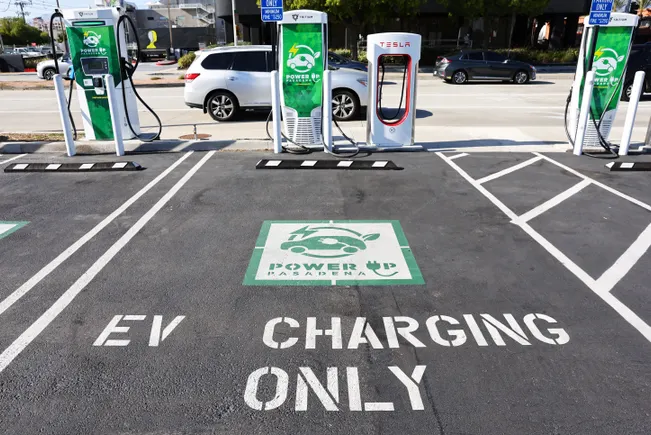
In 2022, electric vehicles accounted for more than 5% of new car sales in the United States, and experts expect the rapid growth momentum of transportation electrification to continue. Federal funds will be used to build a nationwide charging network and incentivize consumers to purchase dozens of new models launched by automakers.
The share of electric vehicles in new car sales has risen from about 2% in 2020to more than 6% in the third quarter of 2022。
"The current opportunity and momentum are extremely significant," said Ben Prochazka, executive director of the Electrification Coalition. The organization advocates for policies to accelerate the adoption of plug-in vehicles and believes the 2021 Bipartisan Infrastructure Law and last year's Inflation Reduction Act are key accelerators for the industry.
The infrastructure law provides$7.5 billion in funding for a network of 500,000 electric vehicle charging ports nationwide,while the Inflation Reduction Actextends the federal tax credit for vehicle purchases。
Prochazka said electric vehicles "seem to be at a tipping point," but "I think there are indeed challenges," including details such as how the specific structure of federal incentives will be determined.
"The transition takes time," said Joe Britton, founder and former executive director of the Zero Emission Transportation Association. The association'smembersinclude utility companies, charging companies, Tesla, Lucid, Sunrun, and other technology firms.
He said electric vehicles could reach 10% of U.S. car sales this year, but Britton does not believe sales will continue to grow at such a rapid pace.
U.S. President Joe Biden wants electric vehicles to make uphalf of new car sales in the United States by 2030. Experts consider this goal quite challenging, and whether it can be achieved will depend on the easing of supply chain bottlenecks and the implementation of federal incentives.
Stephen Engblom, senior managing director at commercial real estate firm CBRE, said that if the challenge of siting charging stations is resolved and the grid can support the added demand, he is "optimistic" about achieving the president's goal. "There must be energy, and there must be suitable sites," he said.
Engblom noted that building the EV charging network "is essentially a real estate challenge," requiring collaboration among automotive and charging companies, utilities, and commercial property owners. "I think real estate will fundamentally be the biggest challenge, and in the coming year I will focus on how these partnerships advance."
In New York City, Raghusimha Sudhakara, director of electric transportation and demonstration projects at utility Con Edison, said the company "has seen tremendous growth in just the past few months."
Sudhakara said the transition to electric vehicles "is something we think about every day," and "so far so good," with Con Edison able to meet every new charging service application. But the company is also considering proactively building out areas of its grid where large-scale fleet electrification may be needed.
The Edison Electric Institute, which represents investor-owned utilities, projects thatthere will be 26.4 million electric vehicles on U.S. roads by 2030, with annual sales nearing 5.6 million vehicles in 2030, accounting for about 32% of total light-duty vehicle sales.
"Last year our sales doubled, from 3% to 6%," Britton said. "Obviously, I'm not sure we can double every year, but we will see a lot of growth... I think we could sell 1.5 million units in 2023."
Industry observers say key factors accelerating EV adoption in the coming year include the implementation rules for vehicle tax credits, the disbursement of $5 billion in funds under the president's National Electric Vehicle Infrastructure formula program, and addressing potential utility bottlenecks in the electrification of charging stations.
Vehicle tax credit rules
The Inflation Reduction Act includes$369 billion in clean energy investments, which restores the electric vehicle tax credit. But the new tax credit is not simple: it isdivided into multiple parts, and eligibility depends on where the vehicle is assembled and the proportion of critical minerals used that are mined or processed in the United States.
"I think the changes to the tax credit right now may make it difficult for the average consumer to figure out which vehicles qualify," Prochazka said. "Any new policy with nuances like this will take time for consumers to digest; it takes a bit of time."
Part of the uncertainty revolves around which vehicles qualify for the credit, depending on mineral content and whether domestic assembly requirements are met.
The U.S. Treasury Department and the IRS issuedclarifying informationfor new vehicle purchases in December. Prochazka said proposed guidance on the new purchase provisions of the clean vehicle credit is expected to be released in March, along with a notice of proposed rulemaking.
Implementation details will "be a challenge for everyone," Britton said. "In the short term, we will all be trying to figure out who qualifies, whether these standards are achievable, and what benchmarks we use. We still have a lot of implementation work to do."
Charging network funds gradually disbursed
Another important factor this year is the disbursement of billions of dollars to states to build a nationwide charging network.
To receive the first $5 billion in funds, states, the District of Columbia, and Puerto Rico needed to submit charging plans. The Federal Highway Administration announced in September that all plans had beenapproved。
Prochazka said the initial funds have been distributed to states, laying the groundwork for developers to propose charging solutions. States are already developing requests for proposals to build new charging stations, "so that businesses can prepare and sign contracts, enabling them to build the infrastructure network."
"I think this is also very important for consumers, to start seeing the development of infrastructure and the progress associated with it," Prochazka said. "But it won't happen overnight; it requires a lot of effort."
"The speed at which states act, I think, depends in part on their maturity and experience. But with this Bipartisan Infrastructure Law funding, we could see significant progress in charging infrastructure over the next three to five years," Britton said.
Utility interconnection issues
Beyond vehicle sales and charging station development, there are utility interconnection issues—and delays have already emerged here.
"With grid upgrade queues extending into the 2030s," Jeffrey Douglass, market and research manager at Invinity Energy Systems, said in an email that utilities may consider solar and storage options to serve charging stations in some areas. The company is a utility-scale energy storage developer.
He said managing the electricity load associated with transportation electrification will help "maintain grid stability and accelerate the world's transition to net-zero emissions."
Britton said the electricity demand from EV adoption is unlikely to cause generation or capacity constraints, but some areas may require substation upgrades.
"Some of the biggest constraints in the market will come from utility grid capacity," said CBRE's Engblom. "Upgrading the grid to handle all this added high-speed charging demand will be a huge challenge."
Cathy Zoi, CEO of charging company EVgo, said on athird-quarter earnings callin November that it takes about 4 to 8 weeks for the company to build a new charging station. But she said the end-to-end time from site conception to energization is now about 18 months. That used to be about 12 months, but utility delays are lengthening the development cycle.
"There is a backlog of utility work related to transformer shortages," Zoi said. "When we build the current configuration—ultra-fast 350 kW charging stations with more charging stalls—transformer upgrades are almost always required."
The utility industry warned federal lawmakers last year thatdistribution transformer shortageswere depleting inventories of replacement equipment and causing delays or cancellations of some electrification projects.
"Ongoing utility labor shortages and transformer supply chain constraints are exacerbating the utility work backlog at both the front end and back end of the charging station development process," Zoi said. "We expect utility-related delays to continue to be an issue as power companies prepare for transportation electrification and work to make the power system resilient to climate change impacts."
Sudhakara said that as of the end of last year, about 2,300 Level 2 chargers and 140 DC fast chargers were installed in Con Edison's service territory. The company expects its Power Ready program to help rapidly increase those numbers, reaching 18,500 Level 2 chargers and more than 450 DC fast chargers by 2025. To meet the state's EV adoption goals, the company expects 400,000 chargers in its service territory by 2035.
"Given the growth we are experiencing, we are providing service relatively smoothly," he said. "But establishing a mechanism where we can reinforce the grid and build in high-density fleet areas would be helpful."
Sudhakara said the queue of chargers applying for service at Con Edison already includes more than 1,000 DC fast chargers.
"The timing for utilities to meet demand is challenging," Prochazka said, especially for those that may not yet have obtained prior regulatory authorization for necessary system construction. He said such approvals, along with streamlined permitting processes, can help utilities "clear hurdles more quickly."