
Delivery robot expansion hits a 'regulatory nightmare': inconsistent state regulations become the biggest obstacle
Regulations for sidewalk delivery robots vary greatly across U.S. states, from weight and speed to operational rules, posing severe challenges to tech companies' nationwide expansion. Industry leaders call for unified standards, but progress is slow.
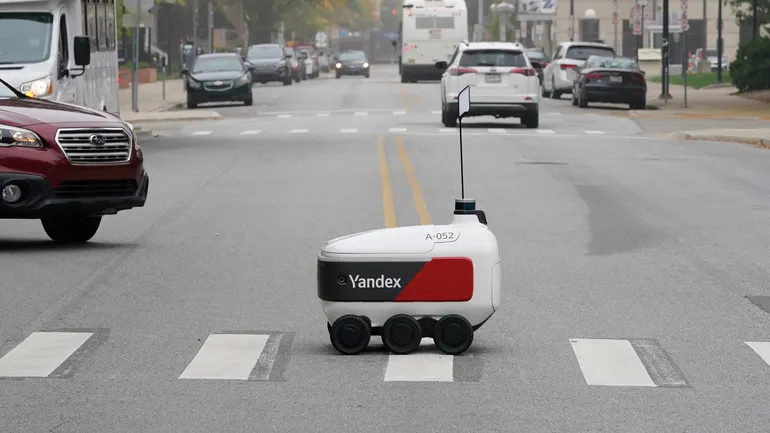
U.S. states have varying regulatory attitudes toward sidewalk delivery robots, causing significant obstacles for this emerging industry during its expansion. From Georgia allowing robots weighing up to 500 pounds and traveling at 4 miles per hour on sidewalks, to New Hampshire limiting robots to no more than 80 pounds but permitting speeds up to 10 miles per hour, the differences in state regulations are astonishing.
According to research data from the Pedestrian and Bicycle Information Center and Supply Chain Dive, as of the end of 2022, at least 23 U.S. states had enacted some form of regulation governing the operation of delivery robots within their borders. The proliferation of these regulations is a double-edged sword for technology developers: on one hand, companies can exert influence during the early stages of legislation; on the other hand, the fragmentation of state regulations makes nationwide expansion exceptionally complex.
"Getting all states to agree is a nightmare—the differences in state regulations are huge," said Ritukar Vijay, CEO and co-founder of delivery robot company Ottonomy.

Delivery robots enter state legislatures
Although no state explicitly bans delivery robots, technology developers tend to adopt a cautious expansion strategy rather than deploying large numbers of robots that could provoke public backlash. Ali Kashani, CEO and co-founder of Serve Robotics, noted: "We don't take an 'act first, ask later' approach." He mentioned that the rapid expansion of electric scooters ultimately led to deteriorating public sentiment, serving as a cautionary tale.
The legislative process often involves deep participation from delivery robot operators. Starship Technologies partnered with Grubhub to bring sidewalk robots to university campuses and worked with lawmakers to advance bills in Virginia, Idaho, Wisconsin, and other states. However, state legislatures are not always aligned with commercial interests, requiring robot developers to actively engage in the political process. Alastair Westgarth, CEO of Starship Technologies, said the company has seen proposals that, while aimed at ensuring safe deployment, could ultimately hinder delivery services.
Ultimately, companies must strike a balance between achieving commercial goals and addressing safety concerns. Westgarth added that this approach has helped Starship create value for customers and the communities where its robots operate. Political engagement also gives companies an advantage in ensuring their designs are deployed smoothly. Carl Hansen, vice president of government relations at delivery robot company Coco, pointed out that differences between state laws often depend on which robot operator drove the passage of a particular bill.
For example, when Starship pushed for legislation in 2017 and 2018, it targeted the characteristics of its robots, which could carry about 20 pounds of cargo. Hansen said that legislation pushed by Amazon and FedEx in 2019 and 2020 catered to the different use cases of their respective robots. FedEx's Roxo robot (a project the company has since canceled to prioritize near-term goals) had a payload capacity of 100 pounds.
But in some state legislatures, companies have had to face stronger resistance. Kansas Governor Laura Kelly vetoed a 2022 bill aimed at regulating the operation of sidewalk delivery robots. In her veto message, she stated that lawmakers still needed to address safety concerns, such as clarifying minimum liability provisions and who is responsible for enforcement. The bill was not reconsidered and also raised concerns about job security for delivery workers.
Despite some opposition, legislation on sidewalk delivery robots continues to show clear momentum in state legislatures. The push to regulate robot deployment is also relatively recent—all bills signed into law were introduced in 2017 or later. Kansas State Senator Tom Holland, who opposed the bill, predicted: "New delivery robot legislation will continue to emerge."

The difficult transition from state legislatures to the sidewalk
Regulatory approval does not guarantee smooth deployment. Operators and regulators have learned some difficult but necessary lessons through multiple tests, some of which were conducted after laws were enacted. Pennsylvania signed a delivery robot bill in 2020, and the state's Department of Transportation authorized Kiwibot for deliveries in 2021. As part of the Urbanism Next Center's Knight Autonomous Vehicle Initiative, Kiwibot conducted delivery tests in Pittsburgh from September to December of that year. The initiative was a $5.25 million effort to help cities develop human-centered autonomous vehicle technology.
According to a report from the center, during the pilot, the robots were able to make deliveries for a food truck, a pharmacy, and a library in Pittsburgh's Bloomfield neighborhood. But the robots quickly encountered problems, unable to overcome obstacles such as cracked sidewalks or overgrown trees. Overall, Kiwibot completed 4 customer deliveries and 972 simulated deliveries during the pilot. The report stated that due to "infrastructure challenges," the company ultimately decided not to expand in that neighborhood.
In Detroit, Kiwibot also tested robot deliveries in partnership with the Knight AV Initiative. Tim Slusser, the city's director of mobility innovation, said a local restaurant had difficulty training staff to use the technology. When restaurant employees became familiar with the delivery robots, the business faced staffing challenges and reverted to standard systems to reduce disruptions. The pilot then moved to a second local restaurant, but new issues emerged—a lack of customer engagement.
Slusser said: "Frankly, I think it was mainly a lack of consumer awareness about the availability of this service. So we eventually worked with the Kiwibot team to help them simulate as many runs as possible from the different locations these restaurants typically deliver to." During the Detroit test, Kiwibot completed only 12 customer deliveries, but Slusser said the city has since become better prepared for new robot programs, such as Starship's deployment on Wayne State University's campus.
Experts say pilot projects like those in Pittsburgh and Detroit will be necessary to rule out potential deployment issues. Karen Lightman, executive director of Carnegie Mellon University's Metro21, said: "In many ways, this is not a technical issue. It's often the application, human factors, and policy that become complicated and somewhat messy."
News graphics developer Jasmine Ye Han and visuals editor Shaun Lucas also contributed to this report.
Correction: A previous version of this report misspelled the name of Starship Technologies CEO Alastair Westgarth.