
Data Center Expansion Raises Urban Energy and Water Challenges: Kansas Health Institute Report
The Kansas Health Institute (KHI) has released a report revealing the rapid growth of U.S. data centers in energy and water consumption and its impacts on public health and the environment. The report shows that in 2024, U.S. data centers consumed 183 TWh of electricity, accounting for over 4% of total national electricity use, and this is expected to rise to 426 TWh by 2030. In terms of water, direct consumption was 17 billion gallons in 2023, potentially quadrupling by 2028. The report also notes that data center expansion is delaying the retirement of coal-fired power plants and exacerbating power generation capacity shortages.
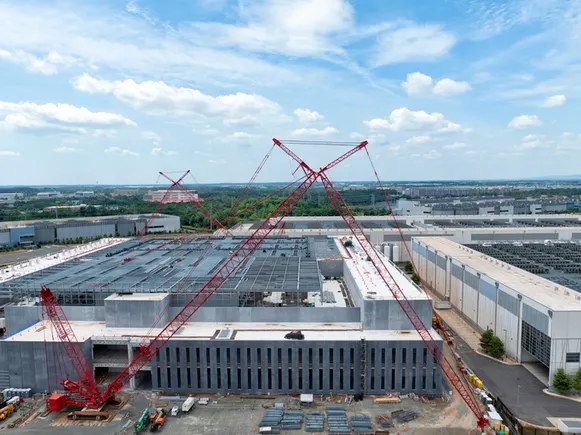
A new report recently released by the Kansas Health Institute (KHI) points out that data centers serving artificial intelligence and other digital application scenarios are seeing continuously rising energy and water consumption, which makes it more complex for policymakers and community planners to make decisions regarding the protection of residents' health and safety.
Report data shows that in 2024, data center electricity consumption in the United States was estimated at 183 terawatt-hours (TWh), accounting for more than 4% of total national electricity use. KHI cites projections from the Lawrence Berkeley National Laboratory, predicting that by 2030, this demand is expected to grow by 133%, reaching 426 terawatt-hours.
Water consumption is also raising growing concerns. KHI notes that in 2023, direct water consumption by U.S. data centers was estimated at 17 billion gallons, and "according to a series of scenarios modeled by the Lawrence Berkeley National Laboratory, this usage could double or even quadruple by 2028." The report also mentions that as recently as five years ago, 20% of data centers nationwide were already located in areas experiencing water stress.
Emma Uridge, a KHI analyst and lead author of the report, stated in a release that the institute's analysis "is intended to provide policymakers, public health professionals, and communities with objective information about the environmental and public health considerations involved in data center development, so that they can make informed decisions."
The report shows that of the electricity currently powering data centers, 56% comes from fossil fuels, 22% from renewable energy, and 21% from nuclear power.
The report finds that the expansion of data centers is "delaying the retirement of coal-fired power plants and slowing or even hindering national, state, and local priorities for transitioning to clean energy." "Renewable energy is insufficient to meet the needs of both hyperscale data centers and existing customers."
Meanwhile, a report from analysts at Bank of America points out that data center developers are facing a shortage of power generation capacity. These analysts expect that the United States will need to add more than 230 gigawatts (GW) of new power generation capacity over the next five years, but regulated utility companies are expected to add only about 93 GW of certified supply, leaving a gap of more than 100 GW. Bank of America analysts also stated that data centers alone could add approximately 125 GW to U.S. electricity load by 2031.
Resistance to data center development is intensifying across the country. Last week, New York became the first state to impose a moratorium on data center development, halting construction of large projects for one year while their environmental impacts are assessed.
KHI notes: "Policy responses vary, often reflecting the tension between advancing state-level economic development interests and balancing local community health and environmental concerns. States have focused primarily on energy reporting, ratepayer protections, and environmental assessments. Local governments tend to act more directly on land use, zoning, and permitting, often driven by community opposition and the urgency of impacts on local resources."