
Nature-based solutions such as trees and rain gardens may become a cost-effective choice for urban climate adaptation
Facing frequent extreme weather, U.S. cities are re-examining the role of nature-based solutions such as trees and rain gardens in climate adaptation. Advocates say these measures offer both cost-effectiveness and multiple social and health benefits. Austin has adopted ordinances to protect native trees and promote green stormwater infrastructure, and the federal government has also released a roadmap to advance their adoption.
In early February this year, a winter storm hit Austin, Texas—a city known for extreme heat rather than ice storms—leaving more than100,000residents without power due to thishistoricweather event. It became the latest example of cities needing to prepare for climate change.
In the view of Katie Coyne, Austin's environmental affairs officer and assistant director of the Watershed Protection Department, climate adaptation requires rethinking the interaction between urban environments and so-called nature—trees, plants, and the ecosystems they support.
"Historically, we've thought of (environmental protection) as being at odds with development (and) urban areas," Coyne said. "Now there's a new focus: how do we think about embedding more ecosystem functions into urban cores, suburban communities, and even entire neighborhoods?" She believes that by thinking holistically about urban design, cities can help residents and ecosystems thrive together.
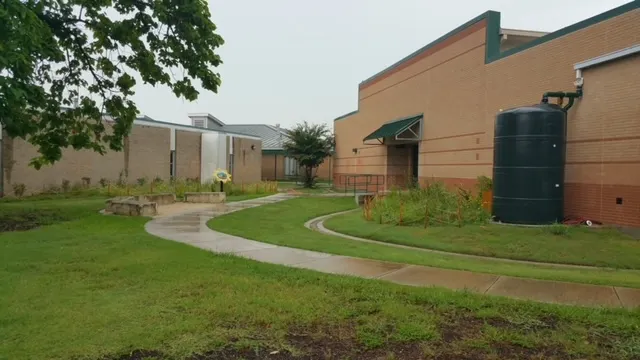
According to Coyne, Austin is advancing "urban nature solutions" in innovative and diverse ways. For example, urban trees can reduce stormwater runoff, promote rainwater infiltration into soil, provide cooling and shade, and sequester carbon. The city protects a variety of native trees through urban ordinances and has mappedtree planting priority maps, placing equity at the core of tree planting efforts—currently, the city's wealthier and predominantly white neighborhoods havehigher tree canopy coveragethan more diverse and lower-income communities. Additionally, developers arein most casesrequired to provide on-site stormwater treatment facilities, often using nature-based stormwater infrastructure such as bioswales and rain gardens.
Urban nature solutions using green (land) and blue (water) infrastructure may become more widespread across the United States. In November 2022, the White Housereleased a roadmapaimed at "making nature-based solutions a first-choice approach to tackling climate change." The initiative promotes implementation through measures such as easing access to funding and updating federal guidelines and policies.
Advocates of urban nature solutions say that leveraging blue-green infrastructure can help cities achieve multiple climate, social, and health benefits for residents.
Costs and Benefits
"Urban nature is an effective climate mitigation tool that can help local governments save energy, reduce emissions, and cut costs," said Julia Meisel, manager of the Urban Nature Initiative at RMI and co-author of a relatedrecent report. "If you're a local government looking to use every tool available to achieve climate action or emissions reduction goals, we want to make sure nature is on your (list of) options."
If you're a local government looking to use every tool available to achieve climate action or emissions reduction goals, we want to make sure nature is on your (list of) options.
—Julia Meisel, Manager, Urban Nature Initiative, RMI
Laurian Farrell, North America Regional Director of the Resilient Cities Network, defines urban nature solutions as "infrastructure that serves a function in cities, (whose) foundation is built on existing natural functions—either mimicking or enhancing them—thereby integrating urban life with nature." These solutions include street trees, water bodies, parks, green stormwater infrastructure, urban forests, and more.
The Biden administration's roadmap andresource guidemark the first time the federal government has officially supported nature-based solutions. Farrell believes this "sends a very clear signal" about the value of these projects.
The RMI report estimated the investment required for various urban nature solutions in cost-benefit analyses and concluded that global annual investment in such solutions must increase rapidly. Large-scale climate mitigation strategies can be costly; RMI recommends global annual investment of $98 billion by 2050. The report also estimates that such investments could yield average annual net benefits of $2.1 trillion, with cumulative net benefits reaching $59 trillion by 2050.
The RMI report notes that beyond building urban climate resilience, urban nature solutions can also help cities achieve other goals. For example, access to nature can improve residents' physical and mental health, while investing in urban nature solutions can bring green workforce development and training opportunities to cities in need of jobs.
The best urban nature solutions for a particular city vary by city. A city like Austin, with scorching summers, might benefit from cooling solutions, such as planting trees near buildings to lower ambient temperatures and provide shade, thereby reducing air conditioning energy use. Street trees can also encourage people to drive less—walking, cycling, or waiting for buses in shaded areas is far safer than on hot, unshaded asphalt. The RMI report found that if tree coverage in Austin's underserved shaded areas increased to 40%, the city could reduce vehicle miles traveled by over 19 million miles over the next 12 years.
Cooling solutions can have significant positive impacts on economically and socially marginalized communities—which are oftenhotterthan comparable wealthier neighborhoods due to dense buildings and fewer natural resources like trees. (The Biden administration last yearannouncedan initiative to create more equitable access to parks and green spaces, partly to address disparities in access across race and class.)
Undoing Past Damage
David King, assistant professor in the School of Geographical Sciences and Urban Planning at Arizona State University, says some urban nature solutions target rapid urbanization problems, "aiming to reverse the mistake of paving everything over." For example, nature-based stormwater infrastructure can reduce flooding and water pollution by allowing rainwater to slowly infiltrate permeable surfaces like rain gardens and bioswales.

King notes that while building codes may include these stormwater landscape solutions, stormwater runoff itself stems from regulations requiring "huge parking lots"—regulations that increase the need to manage and filter runoff from impervious asphalt and concrete surfaces.
Such cases highlight the binary opposition between nature and urbanization that urban nature solutions seek to break down. RMI's Meisel says trees are especially valuable when cities consider priorities for urban nature work. In fact, RMI estimates that 72% of the total value of urban nature comes from street trees and urban forests.
But a few trees in a parking lot cannot sequester enough carbon to help reduce emissions. Although a few trees canprovide ample shade, significantly affecting human health, lowering temperatures, and changing transportation decisions, onlyvery dense canopyhas the potential to mitigate pollution—which is not feasible in some modern cities.
Urban planning experts emphasize that there is no "one-size-fits-all" model for urban nature solutions, and reaching consensus on the best approach for any single city is challenging. King's Phoenix—the hottest city in the United States—currently aims for at least 25% of the city to be covered by trees. "Is that the best approach?" he asks. "Or would it be better to actually remove some asphalt and concrete (to) mitigate some of the heat problems we face?"
Although every city will face its own issues when planning urban nature solutions, Meisel still urges cities to "value (urban nature) as much as any infrastructure."