
Accelerating Electric Vehicle Adoption: U.S. Utilities Deepen Cooperation with GM, BMW, Lyft and Other Automakers
The U.S. National Renewable Energy Laboratory predicts that by 2050, electric vehicles could drive a 38% increase in U.S. electricity demand. To address this trend, utility companies are building partnerships with automakers, dealers, and ride-hailing service providers to jointly tackle challenges such as grid upgrades, load management, and customer service. This article reviews specific cooperation cases involving PG&E, Con Edison, Dominion Energy, Xcel Energy, and Peninsula Clean Energy.
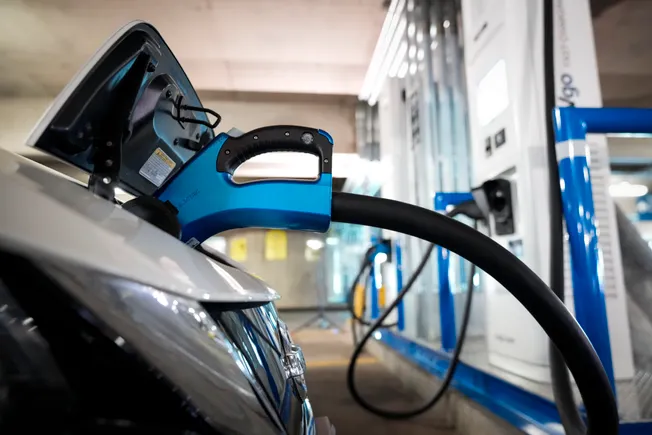
According to estimates from the U.S. National Renewable Energy Laboratory, electric vehicles could boost U.S. electricity consumption by 38% by 2050. This demand will bring new revenue for utilities, but it also requires distribution system upgrades and load management strategies to ensure that vehicle charging helps maintain grid reliability rather than overloading local power systems, experts say.
To determine where grid upgrades are needed, when to procure more renewable energy, and how to ensure customer satisfaction is not affected, utilities are increasingly partnering with various players in the automotive industry, including automakers, car dealers, and ride-hailing services.
"Because we don't manufacture cars or sell cars, we deeply understand that partnerships are crucial," said Nadia El Mallakh, vice president of clean transportation and strategic partnerships at Xcel Energy.
"These two groups never needed to interact before electric vehicles came along," said Joel Levin, executive director of Plug In America. Automakers and utilities "are now long-term partners whether they like it or not," he said. Decisions made by automakers "have a huge impact on utilities, and vice versa."
"We're seeing a rise in joint ventures across the board," said Leilani Gonzalez, policy director at the Zero Emission Transportation Association. "Utilities are at a stage where they're looking to decarbonize, and this is the path forward. They're ensuring we have a modern grid that can handle load fluctuations."
To better understand how utilities are working with the automotive industry, Utility Dive developed a partnership tracker and spoke with five utilities about their specific efforts. These collaborations cover topics including managing charging, vehicle-to-grid integration, matching demand with renewable energy supply, and ensuring a smooth customer transition to electric transportation.
PG&E and BMW expand partnership to explore V2X technology
Electric vehicles currently account for about 7% of new car sales, but growing consumer interest and state and federal standards are expected to drive rapid adoption. President Joe Biden wants EVs to make up 50% of new car sales by 2030. This means utilities will face a sharp rise in electricity demand from transportation, and higher peak loads could lead to reliability issues.
"From a utility perspective, you want the charging process to be smooth, without big peaks," Levin said. But automakers are producing EVs with more power, larger batteries, and faster charging speeds. A Level 2 home charger can draw up to 19 kilowatts, meaning that if not managed well, a few EVs in the same neighborhood could become "a huge demand spike," he said.
Pacific Gas and Electric (PG&E) began a smart charging pilot with BMW in 2015, initially with "some very basic features," said Adam Langton, energy services manager at BMW North America.
"We need these kinds of partnerships to make it work."
— Amy Costadone, lead product manager at Pacific Gas and Electric
"We started with demand response events, where we were just curtailing vehicle charging, and then we started doing more complex things, actually studying the impact on local distribution by simulating scenarios of how vehicles in a specific community respond to signals," Langton said.
In May, the two companies announced they would expand their partnership to further study the potential for EVs to feed power back to the grid or power homes or other buildings. Interest in vehicle-to-everything (V2X) technology is growing as utilities view EVs as similar to mobile distributed energy resources.
"We need these kinds of partnerships to make it work," said Amy Costadone, lead product manager at PG&E. The utility is also working with Ford and General Motors on bidirectional charging research.
Research partnerships are "critical" for the use of EVs as grid assets, Costadone said. "If we want this technology to be scalable, and not just for one EV manufacturer, we need to have wins for everyone," she said.
BMW and PG&E plan to conduct field trials of vehicle-to-grid applications at BMW's facility in Mountain View, California, and test other V2X applications at PG&E's Applied Technology Services lab in San Ramon.
"We typically each cover our own costs and carry out different activities," Langton said.
"We need to understand how customers really want to use this technology," Costadone said. "I'm satisfied with the partnerships we have, and the technology will come. It's achievable from an engineering standpoint."
Con Edison and GM Energy test new technologies
In New York City, Con Edison has multiple partnerships that allow it to test and implement new equipment connecting EVs to the grid. In October, the utility announced it would work with GM Energy, a new energy management division of General Motors, to test how EV chargers can track energy use and charging behavior without the need for a separate meter.
"This is more of a convenience arrangement," said Joe Morreale, manager of EV demonstration projects and managed charging at ConEd. "Both sides have things they want to learn, test, and experiment with that they couldn't do on their own."
ConEd wants a deeper understanding of GM's hardware to "understand its capabilities and how it can function as a distributed energy resource," he said. In turn, the partnership provides GM with access to test data and real-world grid conditions.
"Both sides have things they want to learn, test, and experiment with that they couldn't do on their own."
— Joe Morreale, manager of EV demonstration projects and managed charging at Con Edison
"This is truly an opportunity for both parties to learn from each other's expertise and develop products that serve the interests of end customers," Morreale said.
ConEd is also working with the FLO charging network and New York City to install curbside chargers and study how they are used and how public charging can advance EV adoption in the most populous city in the U.S. Whether EV-related partnerships involve public or private entities, "the overall goals are largely the same," Morreale said. "Both utilities and third parties recognize that sharing information collaboratively yields more benefits than acting alone."
For curbside charging, FLO brings expertise in EV charging equipment, while the city has the franchise rights to the streets.
"So, as a result, we can install hardware on city streets, which is not typically a place where we can install equipment," Morreale said.
"It's a perfect combination," he said. The private company provides the technology, the city provides the "laboratory," and the utility brings data, project management, and execution capabilities. "This is not something any one party could do unilaterally, and we are very satisfied with the results so far," he said.
Dominion Energy maintains close partnership with electric school bus dealer
Dominion Energy has multiple partnerships in the EV space, but its "largest and most fully implemented" is its electric school bus program and its partnership with dealer Sonny Merryman, said Kate Staples, the utility's director of electrification.
Dominion Energy launched the program in 2019 through a competitive request for proposals and selected Virginia-based fleet transportation dealer Sonny Merryman to deliver 50 electric school buses starting in 2020. Sonny Merryman also sells the necessary chargers to school districts and assists in supporting the installation of those chargers, said Whitney Kopanko, electric vehicle program manager and marketing director at Sonny Merryman.
The program is divided into two phases. In the first phase, Dominion Energy installs, owns, and maintains the charging infrastructure for school districts while also owning the batteries on the buses, Staples said.
Since electric buses are still more expensive than diesel buses, "we needed to provide a financial mechanism to help school districts overcome that hurdle," Staples said. "So the school district pays the traditional portion of the bus, and we pay the incremental portion, so we own the battery."
"At the end of the agreements with these school districts, we own the batteries and can take them out of the buses and use them as stationary storage," she added.
The last of the 50 buses covered by Dominion Energy's initial RFP was delivered in 2021, but Sonny Merryman "continues to work very closely with Dominion Energy on charger installations," Kopanko said.
"We work together on actually designing the sites and installing the chargers, and our salespeople and service personnel work alongside Dominion Energy," Kopanko said. Both parties conduct site visits to discuss customer locations and needs, as well as how the dealer and utility can support those expectations.
"Historically, many of our fleet customers are high-energy users. They are truly complex electricity users."
— Kate Staples, director of electrification at Dominion Energy
"Historically, many of our fleet customers are high-energy users. They are truly complex electricity users," Staples said. As school districts transition to electric buses, "we want to ensure we strengthen our relationships with them and make sure we meet their needs from an electricity perspective," she said.
"That's where the partnership with the dealer is key. Because the dealer understands the needs of these customers," Staples said. Sonny Merryman "has played an important role in connecting the utility with customers and ensuring customers get the education they need."
Xcel Energy in Colorado takes unique regulatory approach to EV partnerships
In Colorado, Xcel Energy uses a unique regulatory tool to quickly advance research pilots and partnerships, El Mallakh said. The Public Utilities Commission approved a portfolio that allows the utility to launch projects through a 60-day notice process.
"It's a $10 million program that supports partnerships, research, and innovation in the EV ecosystem," she said. The utility is conducting more than six collaborations through this portfolio and has proposed the same approach in Minnesota.
"It's like a small filing, very streamlined," she said. The 60-day notice outlines the collaboration's goals, Xcel's investment, and the resources brought by the partner.
In one of the projects, Xcel is working with Colorado CarShare to study how to reduce the upfront and operating costs of supporting car-sharing services in underserved communities.
Through this nearly $2.5 million initiative, Xcel will provide rebates to lower the cost of purchasing EVs for the project, conduct preparatory work for charging infrastructure, and provide charging equipment to multiple partners, including the Boulder County Housing Authority, the Town of Breckenridge, Colorado Mountain College, and the University of Colorado.
Peninsula Clean Energy leverages ride-hailing service for grid data
Energy suppliers that are not distribution system owners are also building partnerships to address EV growth.
Peninsula Clean Energy (PCE), a community choice aggregator operating in San Mateo County, California, aims to provide 100% clean energy by 2025. The county has about 45,000 EVs, representing about 34% of new car purchases, said Phillip Kobernick, PCE's senior transportation program manager.
PG&E delivers the electricity, but under California's community choice aggregation model, the supplier is responsible for ensuring the power supply.
"Our urgent issue is renewable matching," Kobernick said. "We want to provide 100% renewable energy every hour. There are certain hours that are more challenging... If there's a large spike in DC fast charging at 5 or 6 p.m. every day, that makes it more difficult."
In 2021, PCE partnered with Flexdrive, an independently managed subsidiary of Lyft, to exchange grid data for subsidized vehicle leases. PCE subsidizes the cost of 100 EVs that drivers can lease from Flexdrive, ensuring their cost is the same as a hybrid, and provides free charging.
"This is designed to deliver many benefits," Kobernick said. "We want to understand what it's like to use EVs in high-mileage service. How do drivers rate them, how do they charge, and what are the barriers to further expansion?"
Lyft published an interim evaluation in a blog post in March, analyzing data from more than 213,000 trips totaling over 2.72 million miles. The subsidized EVs consumed an average of about 3,000 kilowatt-hours of electricity per day collectively, "estimated to save 146 gallons of gasoline per day."
PCE receives utilization data monthly and load curve analysis less frequently. So far, it has identified time periods when providing clean energy to all customers could be challenging.
"We may need to explore alternatives to avoid people doing large-scale fast charging during those periods," Kobernick said. Alternatives could include off-peak charging incentives or battery swapping, he said.
PCE is also conducting a managed charging pilot for residential customers who charge at home. The effort is being done in partnership with EV Energy, and results will ultimately be shared with the University of California, Davis.
"We want to do our own analysis, but we also want to share with academic partners interested in studying energy and economics so they can conduct independent analysis," Kobernick said.
