
Housing

Fair housing construction accessibility complaints now have a deadline, HUD says
The U.S. Department of Housing and Urban Development (HUD) announced on Tuesday that it will limit the time to file accessibility violation complaints under the Fair Housing Act for multifamily housing design and construction to one year after the initial certificate of occupancy, reclassifying such violations as discrete acts rather than continuing violations. The National Association of Home Builders views this as adding certainty, but the National Fair Housing Alliance argues it weakens the rights of people with disabilities.

For affordable housing fund, Cleveland embraces private partnerships
Facing a shortage of over 50,000 affordable housing units, the City of Cleveland launched a housing investment fund using a public-private partnership model, securing $53 million in commitments and starting construction on 216 units. The fund is managed by LISC Fund, modeled after Detroit's approach, with support from multiple banks.

Social housing program gets city task force sign-off in Portland, Maine
The social housing working group established by the Portland, Maine City Council, after completing over a year of research and public meetings, formally recommended that the city create a social housing plan. The plan proposes establishing a social housing revolving fund and following principles such as public ownership, permanent affordability, and mixed-income rental housing. The City Council is scheduled to review the recommendation in September.

New Mexico is short 58K homes. Streamlined permitting can help, study says.
New Mexico faces a shortage of 58,000 housing units, with restrictive local regulations suppressing housing construction. The Mercatus Center report proposes five reform recommendations, including public participation at the policy level, by-right approval, periodic review, streamlined processes, and funding support, and calls for the establishment of a state housing department.

Rents are rising faster in Chicago than other US cities. The mayor wants rental reform.
Chicago's rent growth ranks first among major U.S. metropolitan areas. Mayor Brandon Johnson introduced the Tenant Protection Ordinance this summer, proposing measures such as banning hidden fees, establishing a regulatory agency, and strengthening eviction protections to provide more comprehensive safeguards for tenants. The proposal has sparked strong opposition from the real estate industry, and the City Council has introduced an alternative bill.

HUD's New Toolkit Shifts Focus from Housing-First to Treatment-First Approach
The U.S. Department of Housing and Urban Development (HUD) and partner agencies have introduced a 'Treatment First' toolkit aimed at guiding local leaders in addressing homelessness and addiction. The toolkit marks a departure from the traditional housing-first approach, prioritizing treatment and self-sufficiency. It has been met with criticism from disability rights advocates who view it as conditioning shelter on compliance. The toolkit outlines a five-phase recovery model and highlights successful outreach programs, such as LA County's Homeless Outreach Services Team.

Municipal facility planning amid funding and workforce scarcity
The aging of municipal facilities and the growing maintenance backlog are becoming increasingly severe, while federal funding support is shrinking and the skilled workforce is increasingly scarce. The National League of Cities (NLC) 2026 report shows that only 29% of municipalities rate the condition of their public buildings as good, and 25% rate them as "unsatisfactory." Meanwhile, 54% of state and local governments expect a large wave of retirements, but only 12% have formal succession plans in place. Facing these dual pressures, experts recommend that local governments shift toward digital, data-driven facility planning, using continuously updated facility condition assessments (FCA) to optimize capital allocation, mitigate risks from workforce turnover, and make more informed priority decisions under limited resources.

3 California cities sued over alleged violations of state housing rules
Housing advocacy groups have filed lawsuits against three California cities, alleging their measures violate state law SB 79, which aims to promote housing development near transit stops. The lawsuits claim San Diego, San Francisco, and Montebello improperly limit the law's scope, and other cities face similar litigation.
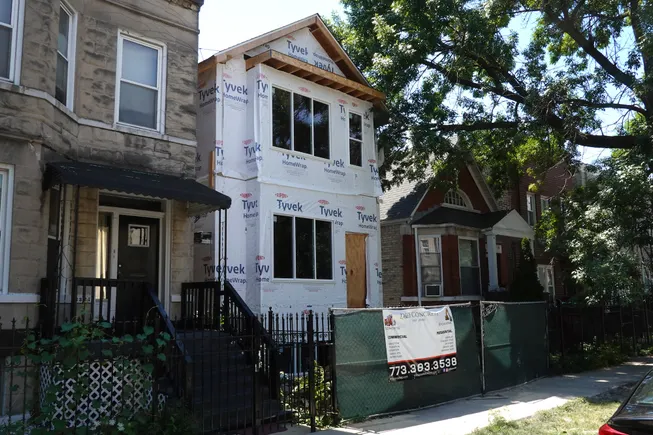
Illinois city leaders balked at statewide housing reforms. A Realtors group wants to work with them.
Illinois Realtors last week launched the Illinois Housing Supply Accelerator Program, a partnership initiative aimed at helping local governments identify and remove barriers to housing development. The program follows the shelving of a statewide zoning reform bill championed by Gov. JB Pritzker, which faced strong opposition from the Illinois Municipal League. Illinois faces a deficit of 142,000 homes and needs to build 227,000 units over the next five years to meet demand.

LA County ADU Completions Hit Record in 2025, Yet Housing Deficit Persists, Study Finds
Los Angeles County saw a record number of accessory dwelling unit completions in 2025, yet total housing production declined and the region still lags its 2029 state housing target, per a new report from the USC Lusk Center.